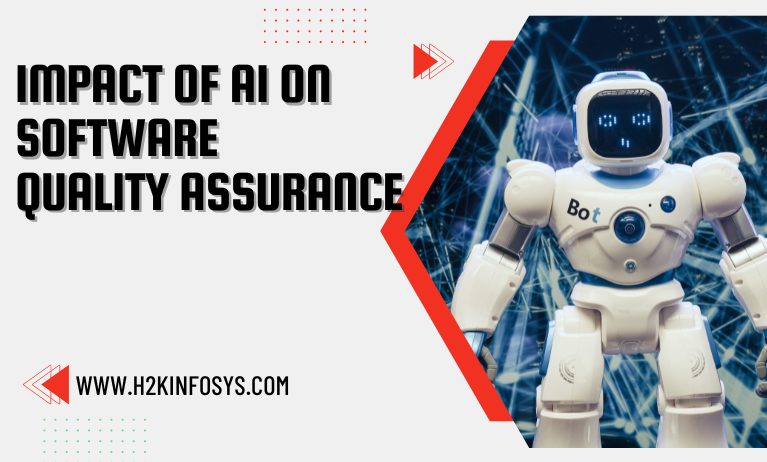
The effects of Artificial Intelligence on software quality assurance are very glaring today. Although testing software has always been done manually with human involvement, the process has become easier, faster, and more effective with the use of testing tools and artificial intelligence. This has generally led to the completion of more projects and a reduction in the running costs of this testing. Perhaps it’s a reason for the massive influx of people enrolling for Quality assurance courses online. In this short article, we’ll be reviewing some of the notable impacts of AI on Software Quality Assurance process. Let’s get started right away.
Impact of AI on Software Quality Assurance
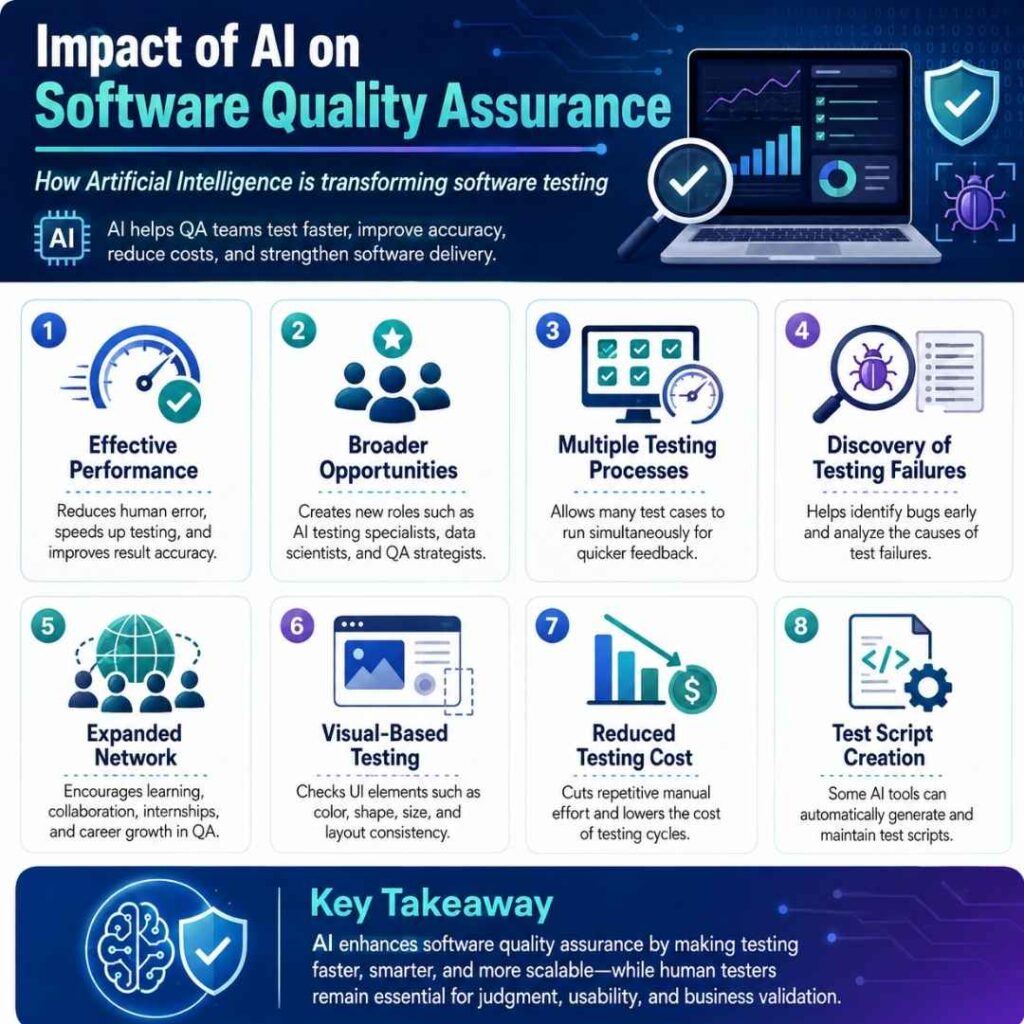
Effective Performance
The traditional method of software quality assurance most times comes with a lot of mistakes and human errors. While this isn’t deliberate, the need to arrive at an accurate result after the testing process determines the functionality and success of the software development process. This also affects the output of workers and may soil the name of the company in extreme cases. But, with the introduction of Artificial Intelligence, this isn’t an issue anymore. Software testers now have an opportunity to rely on the results from the tools used and this comes with precise results. Likewise, the involvement of artificial intelligence cancels out the issue of human fatigue and slowness of the testing process.
Broader opportunities
Unlike before, there are broader opportunities to fill up in the software testing field. Artificial Intelligence has introduced the need for more experts to handle each section of the process. Today, there are jobs like that of a data scientist who uses data to predict the outcome events, quality assurance strategists who have an understanding of how to incorporate artificial intelligence practices into the business line, and others. With this, the work is streamlined to each expert dealing with their specific tasks as against just one person handling the whole process.
Multiple testing processes
Unlike the traditional method that only allows for one or two testing processes at a time, the impact of Artificial intelligence has made it possible to conduct numerous tests simultaneously. with each testing tool, testers can now input numerous test cases and run them simultaneously for results. This helps with achieving the result quickly and reduces the costs of testing as mentioned earlier.
Discovery of Testing Failures
With artificial intelligence tools, testers can now access the causes of testing failures easily. During each process, the results are shown and bugs sighted are dealt with before continuation. This helps with proper documentation for future processes and helps beginners learn from the mistakes of others.
Expanded network
Artificial intelligence has created a channel of learning and interaction for all experts in the field. With this, there is an evaluation of the process, and increased opportunity for learners to meet and interact with the best in the field. Through this, they get hired for internships, and into other junior-level roles after completing the necessary.
Visual-based testing
Another positive impact of Artificial intelligence on quality assurance testing is the opportunity to conduct visual-based testing. This visual testing helps the experts analyze the outcome of the UI and shows the exact result in terms of color, shape, size, etc. This aids easy adjustments before launching out to the public.
Reduced Testing cost
Since numerous testing can now be done using artificial intelligence and its tools, the required cost for each test is reduced. This helps startups save for other important activities while still meeting their goals in software development.
Test Script creation
The introduction of artificial intelligence has also simplified the creation of test scripts. Some AI tools are designed with a feature to automatically create their test scripts. These written test scripts most times are semi-permanent and can be used for other testing processes. During your Quality assurance classes, you’ll get to identify the specific testing tools and their features.
Challenges and Limitations of AI in Software Quality Assurance
Despite its benefits, AI is not a perfect solution for software testing. The effectiveness of an AI-powered testing system depends heavily on the quality of the data used to train and operate it. Inaccurate or incomplete data may produce unreliable recommendations and test results.
AI tools may also require significant initial investment, technical expertise, and integration with existing development systems. Furthermore, AI on Software Quality Assurance can generate false positives, overlook unexpected user behavior, or incorrectly classify defects. For these reasons, human supervision remains essential. QA professionals must review AI-generated results, investigate complex failures, evaluate usability, and confirm that the software meets its business requirements.
The Future of AI in Software Quality Assurance
The future of AI on Software Quality Assurance will likely involve greater collaboration between human testers and intelligent testing systems. AI will increasingly handle repetitive activities such as regression testing, test-data generation, result analysis, and script maintenance. Human QA professionals will focus more on risk assessment, exploratory testing, user experience, business requirements, security, and testing strategy.
As AI becomes more widely adopted, QA professionals will need skills in test automation, data analysis, prompt design, AI governance, and continuous testing. Therefore, AI should not be viewed only as a replacement for manual work. It should be considered a tool that expands the capabilities and responsibilities of software quality professionals.
Conclusion
Artificial intelligence has come into the quality assurance process to improve a lot of things. In this article, we have discussed the impact of artificial intelligence on the quality assurance process briefly. Since you have all you need simplified now, it’s a good opportunity to enroll in AI on Software Quality Assurance to get started with the learning process.
FAQs for Impact of AI on Software Quality Assurance
1. How is AI changing software quality assurance?
AI is making software quality assurance faster and more accurate by automating repetitive testing tasks, identifying defects early, and improving test coverage.
2. What are the benefits of AI in software quality assurance?
AI helps reduce testing time, improve defect detection, optimize test cases, lower testing costs, and support continuous testing in Agile and DevOps environments.
3. Can AI replace software QA testers?
No. AI can automate many testing tasks, but human testers are still needed for exploratory testing, usability testing, critical thinking, and business requirement validation.
4. Which AI tools are used in software quality assurance?
Popular AI-powered QA tools include Testim, Tricentis Tosca, Applitools, Mabl, Functionize, and ACCELQ.
5. How does AI improve software testing accuracy?
AI analyzes historical test data, predicts high-risk areas, prioritizes test cases, and detects patterns that manual testing may overlook.