Introduction
DevSecOps Explained for Cyber Security combines development speed with continuous security enforcement. It ensures that applications, APIs, containers, and cloud infrastructure are protected without slowing down delivery.
From a cyber security perspective, this approach:
- Reduces exploitable vulnerabilities early
- Automates threat detection and remediation
- Aligns security teams with DevOps workflows
- Supports compliance in dynamic cloud environments
Understanding DevSecOps Explained for Cyber Security is now essential for professionals pursuing cyber security training roles that focus on real-world enterprise systems.
Why DevSecOps Is Critical in Today’s Threat Landscape
Modern cyber threats target:
- CI/CD pipelines
- Open-source dependencies
- Cloud misconfigurations
- Containerized workloads
Traditional perimeter security cannot keep pace. DevSecOps Explained for Cyber Security addresses this gap by shifting defenses left and extending them continuously into production.
This is why most cyber security training, cybersecurity training and placement, and Cyber security training with job placement programs now treat DevSecOps as a core competency rather than an advanced specialization.
DevSecOps vs Traditional Cyber Security Approaches
DevSecOps Explained for Cyber Security differs fundamentally from legacy models.
| Traditional Cyber Security | DevSecOps Cyber Security |
| Security after deployment | Security from code stage |
| Manual audits | Automated testing |
| Static infrastructure | Cloud-native workloads |
| Periodic assessments | Continuous monitoring |
This evolution explains why employers increasingly expect DevSecOps exposure from candidates completing cyber security analyst training online.
DevSecOps Lifecycle: From Code to Cloud
Secure Coding Phase
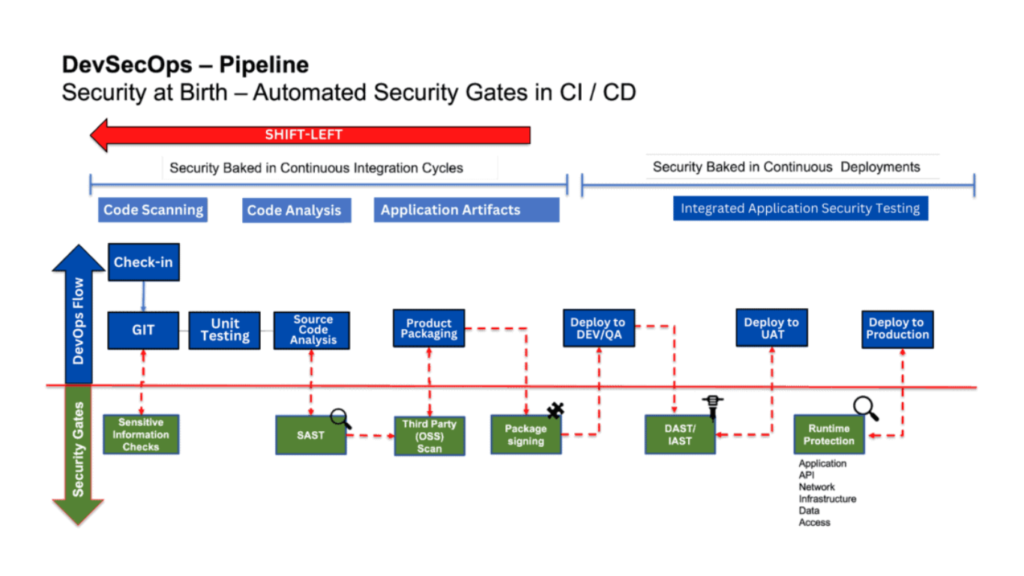
DevSecOps Explained for Cyber Security begins at the coding stage, where vulnerabilities are cheapest to fix. Secure coding practices, secrets management, and static analysis help eliminate common attack vectors before applications are deployed.
Cyber security professionals working in DevSecOps environments collaborate closely with developers rather than acting as gatekeepers.
CI/CD Pipeline Security
In CI/CD environments, DevSecOps Explained for Cyber Security focuses on automating security checks within build and deployment pipelines.
Key controls include:
- Dependency vulnerability scanning
- Infrastructure-as-Code validation
- Container image security checks
- Policy enforcement through automation
These skills are emphasized heavily in online classes cyber security and job-focused cyber security programs.
Cloud Infrastructure Protection
As workloads move to the cloud, DevSecOps Explained for Cyber Security shifts attention to identity, configuration, and access control rather than physical infrastructure.
Cyber security professionals must understand:
- Cloud IAM policies
- Network segmentation
- Kubernetes security
- Secure service-to-service communication
These topics are core to any cyber security course with placement that targets cloud-era roles.
Runtime Security and Monitoring
Security does not end at deployment. DevSecOps Explained for Cyber Security includes continuous runtime protection using logging, monitoring, and threat detection.
This phase aligns closely with the responsibilities of SOC analysts and blue-team professionals trained through cybersecurity training and job placement tracks.
Core Skills Covered Under DevSecOps for Cyber Security
DevSecOps Explained for Cyber Security equips professionals with hybrid skills that span multiple domains:
- Secure SDLC implementation
- Automated vulnerability management
- Cloud and container security
- Threat modeling and risk assessment
- Compliance automation
These competencies significantly improveemployability for candidates completing cyber security training with job placement prog rams.
Relationship Between DevSecOps and Ethical Hacking
Ethical hacking and DevSecOps are complementary. DevSecOps Explained for Cyber Security enables ethical hacking findings to be fed directly into automated pipelines so vulnerabilities are fixed permanently, not repeatedly rediscovered.
Professionals with CEH Certification benefit greatly when DevSecOps concepts are added to their skill set, as it strengthens both offensive and defensive capabilities.
Career Impact of Learning DevSecOps
Organizations value professionals who understand DevSecOps Explained for Cyber Security because they:
- Reduce breach risks early
- Improve deployment security without delays
- Protect cloud-native applications at scale
- Align security with business agility
This demand is why Cyber security training and placement initiatives increasingly emphasize DevSecOps labs and projects.
How Cyber Security Professionals Can Transition to DevSecOps
A structured transition path includes:
- Mastering cyber security fundamentals
- Learning cloud security concepts
- Understanding CI/CD workflows
- Practicing security automation
- Applying controls in real projects
Following this path ensures that DevSecOps Explained for Cyber Security is not just theoretical knowledge but a practical career skill.
The Future of Cyber Security with DevSecOps
Looking ahead, DevSecOps Explained for Cyber Security will evolve with:
- AI-driven threat detection
- Autonomous security automation
- Advanced cloud posture management
- Policy-as-code becoming standard
Cyber security professionals who adapt early will remain relevant as infrastructure and threats continue to evolve.
Conclusion
DevSecOps Explained for Cyber Security is no longer optional for modern defenders. It transforms cyber security from a reactive function into a continuous, automated, and integrated discipline spanning code, pipelines, cloud infrastructure, and runtime environments.
For learners pursuing cyber security training, cyber security course and job placement, or cyber security analyst training online, mastering DevSecOps significantly improves long-term career prospects and technical credibility.
By fully understanding DevSecOps Explained for Cyber Security, professionals position themselves as future-ready security engineers capable of protecting digital systems from code to cloud.