Hiring managers evaluate AI and BI skills in data analytics roles by assessing a candidate’s ability to work with real-world data, apply analytical reasoning, and use business intelligence tools such as Power BI, Tableau, SQL, and enterprise BI platforms to generate actionable insights. Evaluation focuses on practical tool usage, data modeling proficiency, SQL competency, understanding of AI-assisted analytics features, and the ability to translate business questions into measurable outcomes. Employers prioritize demonstrable skills through projects, technical interviews, and scenario-based assessments rather than tool familiarity alone.
What Are AI and BI Skills in Data Analytics?
AI and BI skills refer to the combined ability to analyze data using traditional business intelligence tools while leveraging artificial intelligence features to enhance data preparation, insight discovery, and decision support.
In practical terms, AI and BI skills include:
- Querying and transforming data using SQL
- Building dashboards and reports using Power BI or Tableau
- Applying AI-assisted analytics such as forecasting, anomaly detection, and natural language queries
- Understanding data models, metrics, and business KPIs
- Communicating insights clearly to technical and non-technical stakeholders
These skills are evaluated together because modern analytics environments increasingly integrate AI-driven capabilities into BI platforms.
How Do Power BI, Tableau, SQL, and BI Tools Work in Real-World Analytics Projects?
In enterprise analytics projects, tools are rarely used in isolation. Hiring managers assess whether candidates understand how these tools fit into end-to-end workflows, and whether this understanding is reinforced through structured learning such as a Data Analytics certification that emphasizes real-world application rather than isolated tool usage.
Typical Enterprise Analytics Workflow
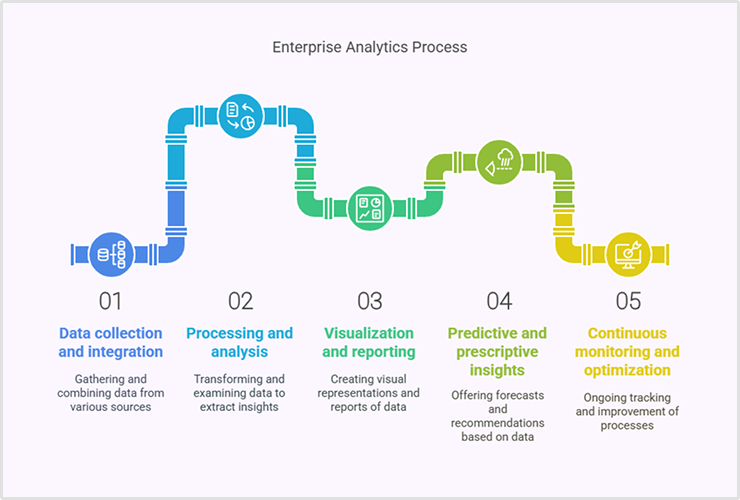
- Data Ingestion
- Data sourced from databases, APIs, cloud storage, or SaaS platforms
- SQL used for extraction and validation
- Data Preparation
- Cleaning, joining, and transforming datasets
- Power Query (Power BI) or Tableau Prep commonly used
- Data Modeling
- Defining relationships, measures, and calculated fields
- Ensuring performance and accuracy
- Analysis and Visualization
- Dashboards built in Power BI or Tableau
- Metrics aligned with business objectives
- AI-Enhanced Insights
- Automated trend detection
- Forecasting and predictive indicators
- Natural language queries for ad-hoc analysis
- Delivery and Governance
- Secure sharing
- Role-based access
- Refresh scheduling and monitoring
Hiring managers look for candidates who understand this lifecycle and their role within it.
Why Are AI and BI Skills Important for Working Professionals?
Organizations rely on analytics not only for reporting but also for decision support and operational efficiency. AI and BI skills enable professionals to:
- Reduce manual data analysis effort
- Identify trends earlier
- Support data-driven decision-making
- Improve reporting accuracy and consistency
- Collaborate effectively with business and engineering teams
For working professionals, these skills increase adaptability as analytics platforms evolve and AI features become standard rather than optional.
What AI and BI Skills Do Hiring Managers Look for First?
Hiring managers typically prioritize foundational competencies before advanced specialization.
Core Skills Commonly Evaluated
| Skill Area | What Hiring Managers Expect |
|---|---|
| SQL | Ability to write joins, subqueries, aggregations, and window functions |
| Data Modeling | Understanding of star schema, relationships, and measures |
| BI Tools | Dashboard creation, filters, parameters, and visual best practices |
| AI Features | Familiarity with forecasting, AI visuals, and automated insights |
| Business Context | Ability to align analysis with KPIs and business goals |
| Data Quality | Awareness of validation, edge cases, and limitations |
AI and BI skills are assessed as applied capabilities, not theoretical knowledge.
How Do Hiring Managers Assess AI and BI Skills During Interviews?
1. Resume and Project Review
Hiring managers look for:
- Clear descriptions of analytics projects
- Tools used and specific contributions
- Business problems addressed
- Measurable outcomes where applicable
Generic tool listings without context are less effective.
2. Technical Screening
Common screening methods include:
- SQL exercises (live or take-home)
- Dashboard interpretation questions
- Data modeling scenarios
- Logic-based analytics problems
These assessments test reasoning, not memorization.
3. Practical or Case-Based Assignments
Candidates may be asked to:
- Analyze a dataset and present findings
- Build a small dashboard
- Explain design choices
- Identify data limitations
AI and BI skills are evaluated through decision-making and clarity.
4. Behavioral and Cross-Functional Questions
Hiring managers assess:
- Communication of insights
- Stakeholder interaction experience
- Ability to explain technical results to non-technical users
- Handling ambiguous or incomplete data
How Are AI Capabilities Evaluated in BI Tools?
AI features are increasingly embedded within BI platforms. Hiring managers do not expect deep machine learning expertise for most analytics roles but do expect awareness and applied usage.
Commonly Evaluated AI Features
- Automated forecasting
- Trend and anomaly detection
- Natural language Q&A
- Smart narratives and summaries
- AI-assisted data preparation
Candidates should understand when to use AI-generated insights and when manual validation is required.
How Is SQL Used Daily in Data Analytics Roles?

SQL remains a foundational skill across analytics roles.
Daily SQL Use Cases
- Extracting data from relational databases
- Validating BI reports
- Creating reusable views
- Supporting ad-hoc analysis
- Troubleshooting data discrepancies
Hiring managers often consider SQL proficiency a non-negotiable requirement when evaluating AI and BI skills.
What Challenges Do Hiring Managers See in Candidates?
Common gaps identified during evaluation include:
- Over-reliance on tools without understanding data logic
- Weak SQL fundamentals
- Poor dashboard design choices
- Lack of business context
- Inability to explain analytical decisions
Strong candidates demonstrate balanced technical and analytical reasoning.
What Job Roles Use AI and BI Skills Daily?
AI and BI skills are used across multiple roles:
| Role | Primary Use of AI and BI Skills |
|---|---|
| Data Analyst | Reporting, dashboards, trend analysis |
| BI Analyst | Enterprise reporting, governance, optimization |
| Business Analyst | KPI tracking, stakeholder reporting |
| Analytics Consultant | Client reporting, insights, recommendations |
| Operations Analyst | Process monitoring and optimization |
The depth of AI usage varies, but BI proficiency is consistent.
What Careers Are Possible After Learning Data Analytics Tools?
With strong AI and BI skills, professionals commonly move into:
- Data Analyst roles
- BI Developer positions
- Analytics specialist roles
- Business intelligence consultant paths
- Advanced analytics or data science tracks (with additional training)
Career progression often depends on business understanding and communication skills in addition to technical ability.
How Do Data Analytics Certification Programs Influence Hiring Decisions?
Certifications alone do not guarantee hiring outcomes. However, hiring managers view structured programs positively when they demonstrate:
- Hands-on project experience
- Exposure to enterprise tools
- Clear skill progression
- Practical assessments
A Data Analytics certification combined with real-world projects often supports credibility during screening.
What Skills Are Taught in Data Analyst Online Classes?
Well-structured data analyst online classes typically cover:
- SQL for analytics
- Data visualization principles
- Power BI and Tableau workflows
- Data modeling fundamentals
- Introductory AI-assisted analytics
- Realistic datasets and scenarios
Hiring managers value candidates who can explain how they applied these skills practically.
Best Practices Candidates Should Follow to Demonstrate AI and BI Skills
- Focus on problem-solving, not just tool usage
- Document analytical assumptions
- Validate AI-generated insights
- Design dashboards with end users in mind
- Practice explaining insights clearly
These behaviors align closely with hiring manager expectations.
Frequently Asked Questions (FAQ)
Do hiring managers expect machine learning knowledge for data analytics roles?
No. Most data analytics roles focus on applied BI and AI-assisted features rather than custom model development.
Is Power BI or Tableau more important to learn?
Both are widely used. Hiring managers prioritize transferable visualization and modeling skills over tool exclusivity.
How important is SQL compared to BI tools?
SQL is foundational. Weak SQL skills often limit effectiveness in BI roles.
Are AI features mandatory to use in analytics jobs?
Not mandatory, but familiarity with AI-enhanced analytics is increasingly expected.
Can beginners demonstrate AI and BI skills effectively?
Yes, through structured projects, clear explanations, and strong fundamentals.
Key Takeaways
- Hiring managers evaluate AI and BI skills through practical application, not tool familiarity alone
- SQL, data modeling, and BI visualization remain core competencies
- AI features are assessed as supportive tools, not replacements for analytical reasoning
- Projects, case studies, and clear communication strongly influence hiring decisions
- Structured learning paths help candidates demonstrate job-ready analytics skills
Explore structured, Data analytics training hands-on learning paths with H2K Infosys to build practical AI and BI skills aligned with real-world data analytics roles.
Learn through guided projects, industry tools, and expert-led instruction designed for working professionals.