AI-ready data analysts are professionals who combine core data analytics skills with applied artificial intelligence, automation, and decision-support capabilities to work effectively in modern, data-driven enterprises. Unlike traditional analysts who focus primarily on reporting and descriptive insights, AI-ready data analysts build, interpret, and operationalize analytics that support predictive, prescriptive, and real-time business decisions using tools such as SQL, Power BI, Tableau, and modern BI platforms enhanced with AI features.
Why this distinction matters now
Organizations are no longer struggling to collect data they are struggling to act on it fast enough. Hiring managers increasingly report that dashboards alone do not influence decisions unless they are paired with forecasting, anomaly detection, and automated insights. As a result, many professionals with traditional reporting-focused analytics backgrounds find themselves filtered out during interviews, while AI-ready data analysts are prioritized for roles tied to growth, optimization, and strategic planning.
This shift is not driven by hype. It reflects changes in enterprise tooling, stakeholder expectations, and how analytics teams are embedded into business operations, where professionals with a Data Analytics certification are increasingly expected to apply AI-ready skills in real business contexts. Understanding what separates AI-ready analysts from traditional analysts is now directly tied to employability, career growth, and long-term relevance in data analytics roles.
What are AI-Ready Data Analysts?
AI-ready data analysts are data professionals who can work confidently at the intersection of analytics, automation, and intelligent decision-making. Their role extends beyond answering “what happened” to explaining “why it happened,” “what is likely to happen next,” and “what action should be taken.”
They typically:
- Use SQL and BI tools as foundations, not endpoints
- Leverage AI-assisted features in Power BI, Tableau, and modern BI platforms
- Understand how machine learning outputs integrate into dashboards and workflows
- Communicate insights in a way that supports business actions, not just reporting
In contrast, traditional analysts often focus on static reports, manual data preparation, and retrospective analysis.
How does AI readiness change the role of a data analyst in real-world projects?
In enterprise environments, analytics projects rarely exist in isolation. They are part of broader systems such as CRM platforms, ERP tools, marketing automation systems, and financial planning software.
Traditional analyst workflow (common limitations)
- Extract data manually using SQL queries
- Clean data using spreadsheets or basic scripts
- Build static dashboards in Power BI or Tableau
- Update reports on a fixed schedule (weekly or monthly)
- Provide insights after outcomes have already occurred
AI-ready analyst workflow (modern enterprise approach)
- Design SQL queries optimized for large, evolving datasets
- Automate data preparation using built-in BI transformations
- Apply AI-driven features such as forecasting, key influencer analysis, and anomaly detection
- Enable near-real-time dashboards with alerting mechanisms
- Collaborate with stakeholders to embed insights into business processes
This difference in workflow explains why AI-ready data analysts are increasingly embedded into product, operations, and strategy teams rather than functioning as separate reporting units.
Why is AI readiness important for working professionals today?
From a hiring and career perspective, AI readiness directly affects how analysts are evaluated.
Key reasons this skill gap matters
- Interview expectations have changed: Candidates are asked how they handle incomplete data, automate insights, or explain model-driven outputs.
- BI tools are evolving: Power BI and Tableau now include AI-assisted analytics that employers expect analysts to use effectively.
- Decision timelines are shorter: Businesses expect faster insights with fewer manual steps.
- Cross-functional collaboration is critical: Analysts must translate complex outputs into clear business recommendations.
Professionals relying solely on traditional reporting skills often struggle to demonstrate impact beyond dashboard creation.
What skills separate AI-Ready Data Analysts from traditional analysts?
1. Advanced SQL for analytical and AI-driven workloads
Traditional analysts often know basic SQL for filtering and aggregation. AI-ready data analysts use SQL as an analytical engine.
They are comfortable with:
- Window functions for trend and cohort analysis
- Query optimization for large datasets
- Data modeling concepts (fact tables, dimensions)
- Preparing datasets suitable for AI-assisted BI features
In enterprise environments, this skill ensures dashboards remain performant and scalable as data volumes grow.
2. AI-assisted analytics in Power BI and Tableau
Modern BI platforms are no longer passive visualization tools. AI-ready data analysts understand when and how to use built-in intelligence features.
Examples include:
- Forecasting and trend projection
- Key influencer analysis to explain drivers behind metrics
- Automated anomaly detection for operational monitoring
- Natural language query features for stakeholder self-service
Rather than treating these as “add-ons,” AI-ready analysts evaluate their reliability, limitations, and appropriate use cases.
3. Analytical thinking beyond descriptive reporting
Traditional analysts focus on descriptive analytics. AI-ready data analysts operate across multiple analytical layers.
| Analytics Type | Traditional Analyst | AI-Ready Data Analyst |
|---|---|---|
| Descriptive | Reports historical data | Baseline validation |
| Diagnostic | Limited root cause analysis | Systematic driver analysis |
| Predictive | Rarely applied | Commonly used |
| Prescriptive | Not addressed | Decision-oriented insights |
This shift allows analysts to support planning, optimisation, and risk management functions.
4. Data preparation and automation skills
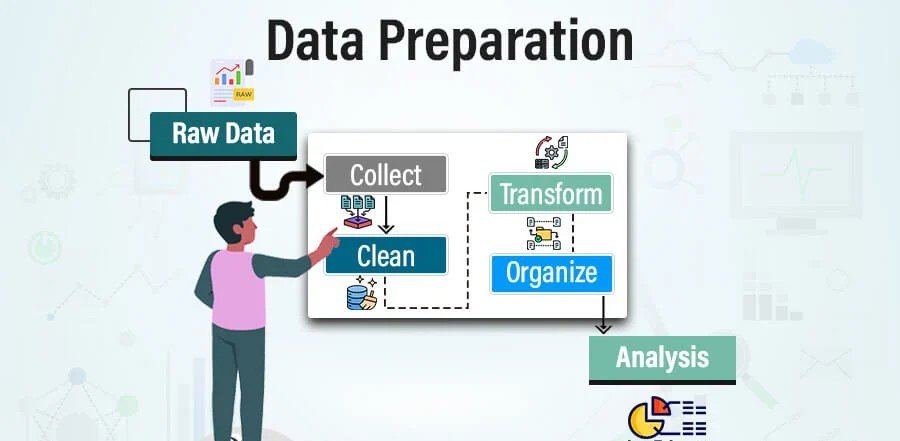
In real-world projects, data preparation consumes a significant portion of analytics effort. AI-ready data analysts focus on reducing manual intervention.
They typically:
- Use Power Query and similar tools for repeatable transformations
- Design automated refresh pipelines
- Validate data quality using rule-based checks
- Prepare structured inputs for AI-enhanced analysis
This skill directly affects productivity and reliability in enterprise reporting systems.
5. Understanding AI outputs without being a data scientist
AI-ready data analysts are not expected to build complex machine learning models from scratch. However, they must understand how AI-generated insights are produced and how to interpret them responsibly.
This includes:
- Understanding confidence intervals and prediction uncertainty
- Recognizing bias or data limitations
- Explaining AI-driven results to non-technical stakeholders
- Knowing when human judgment should override automated insights
This capability is increasingly tested in interviews and performance reviews.
How are Power BI, Tableau, SQL, and BI used in enterprise AI-driven analytics?
SQL as the foundation layer
SQL remains the primary interface between raw data and analytics tools. AI-ready data analysts design queries that support both reporting and advanced analysis.
BI tools as decision-support systems
Power BI and Tableau dashboards are often embedded into operational workflows, not just viewed during review meetings.
Common enterprise use cases:
- Sales forecasting dashboards for revenue planning
- Supply chain monitoring with anomaly alerts
- Marketing performance analysis with automated segmentation
- Financial variance analysis with predictive indicators
In these environments, AI readiness ensures insights remain timely, actionable, and trusted.
What job roles use AI-ready data analytics skills daily?
AI-ready data analysts are not limited to a single job title.
Common roles include:
- Data Analyst
- Business Intelligence Analyst
- Product Analyst
- Operations Analyst
- Reporting and Insights Analyst
Across these roles, employers increasingly expect familiarity with AI-enhanced analytics rather than manual reporting alone.
What careers are possible after developing AI-ready data analytics skills?
From a career progression perspective, AI readiness expands long-term opportunities.
Typical career paths
- Senior Data Analyst with strategic ownership
- Analytics Consultant supporting decision frameworks
- BI Lead overseeing analytics platforms
- Analytics Manager bridging business and technical teams
Professionals with AI-ready skills are more likely to transition into leadership roles because they influence decisions rather than simply producing reports.
How do Data Analytics certification programs support AI readiness?

Structured learning plays a key role in bridging the skills gap. A well-designed Data Analytics certification focuses not only on tools, but on how those tools are used in enterprise contexts.
Effective programs typically emphasize:
- Realistic datasets and workflows
- SQL-driven analytics pipelines
- Power BI and Tableau with AI-assisted features
- Business-oriented problem-solving
For working professionals, data analyst online classes offer the flexibility to build these capabilities alongside existing roles.
Common challenges professionals face when transitioning to AI-ready analytics
Even experienced analysts encounter obstacles during this transition.
Typical challenges
- Over-reliance on static dashboards
- Limited exposure to AI features in BI tools
- Difficulty explaining predictive insights clearly
- Gaps in SQL performance optimization
Addressing these challenges requires deliberate practice and exposure to real-world scenarios rather than isolated tool tutorials.
Frequently Asked Questions (FAQ)
Is AI-ready data analytics only for advanced professionals?
No. Many AI-ready skills build directly on existing SQL and BI knowledge. The key difference is how those skills are applied.
Do AI-ready data analysts need coding-heavy machine learning skills?
Not typically. Understanding AI-assisted analytics and interpreting outputs is more important than model development.
Are Power BI and Tableau enough to become AI-ready?
They are essential tools, but AI readiness also depends on analytical thinking, data preparation, and business context.
How does AI readiness affect salary and job stability?
Employers increasingly prioritize analysts who can support forecasting and decision-making, which often aligns with higher responsibility roles.
Best practices for becoming an AI-ready data analyst
- Strengthen SQL beyond basic querying
- Learn AI-assisted features in BI tools intentionally
- Focus on explaining “why” and “what next,” not just “what happened”
- Practice with enterprise-style datasets
- Seek feedback on clarity and business relevance of insights
Key takeaways
- AI-ready data analysts focus on decision support, not just reporting
- SQL, Power BI, Tableau, and BI platforms form the core technical stack
- AI readiness is about application, interpretation, and context
- Employers increasingly expect predictive and automated insights
- Structured learning accelerates the transition from traditional analytics
Explore H2K Infosys Data Analytics certification and Data analyst online classes to develop practical, AI-ready analytics skills aligned with real enterprise workflows and career growth.