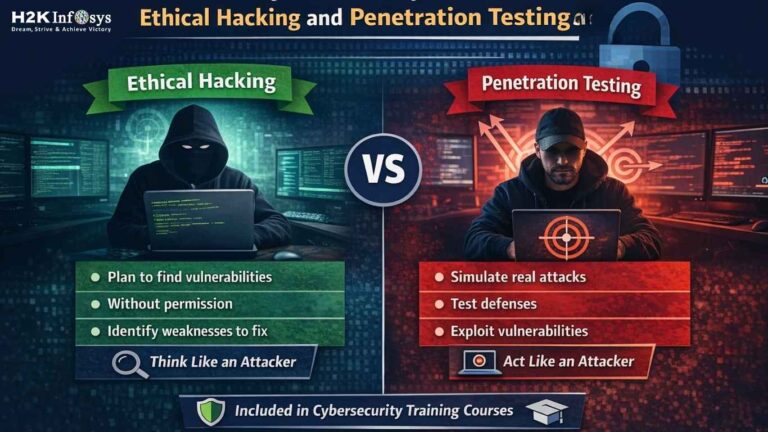
Cybersecurity programs generally lay the groundwork with some fundamental knowledge of ethical hacking and penetration testing. H2K Infosys cybersecurity courses usually offer this as part of a broader approach to cyber security training that actually prepares people for a job. You typically get taught these topics in a lab setting, through hands-on exercises that involve checking for vulnerabilities and simulating what goes on in real-world enterprise security departments. The goal is to get learners into the mind of an attacker, while still showing them how security teams spot, stop, and respond to threats in a real-world setting.
Most modern online cyber security training programs cover the basics of penetration testing, different ways to do a security assessment, and techniques for monitoring and defending against threats. The reason is that organizations expect new security pros to have a good handle on both the ‘bad guy’ approach to security and how to stop them, so to speak.
What is Ethical Hacking and Penetration Testing ?
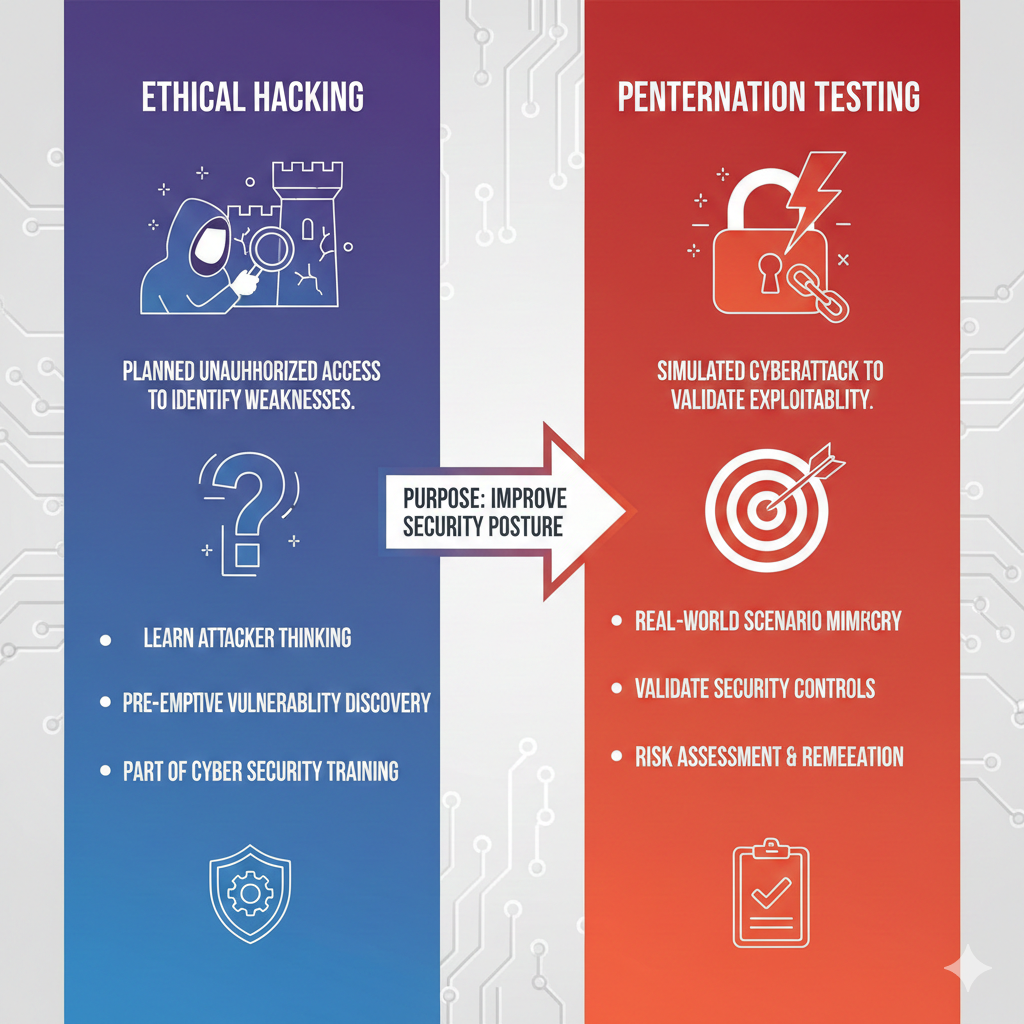
Ethical Hacking is basically planning to get into someone’s system without permission but only so you can find out where the weaknesses are before a bad actor finds them. In many professional learning paths, including cyber security training with placement, this concept is taught to help learners understand attacker thinking so security teams can fix vulnerabilities before they become serious risks. Penetration testing, on the other hand, is the actual simulation of a real cyberattack against a system, network, or application to validate whether those weaknesses can truly be exploited.
Key Differences
| Area | Ethical Hacking | Penetration Testing |
| Scope | Broad security testing mindset | Structured attack simulation |
| Objective | Identify weaknesses | Prove exploitability |
| Approach | Continuous security evaluation | Time-bound assessment |
| Use Case | Security audits, red team operations | Compliance testing, risk validation |
Common Enterprise Tools
- Kali Linux
- Metasploit Framework
- Nmap
- Wireshark
- Burp Suite
- Nessus Vulnerability Scanner
These are tools that a lot of security teams rely on when they’re on the job
How Does Cyber Security Training Online Work in Real-World IT Projects ?
In an ideal business setup, security is seen as an everyday part of its IT operation not some separate task.
Typical Security Workflow in Production Environments
- Asset Discovery
- Vulnerability Scanning
- Risk Prioritization
- Penetration Testing Simulation
- Patch Management
- Continuous Monitoring
- Incident Response
Real Project Example Scenario
Say a financial firm did:
- Run weekly vulnerability scans
- Perform quarterly penetration testing
- Monitor logs using SIEM platforms
- Test cloud security configurations
- Validate firewall and identity controls
Learners getting into cyber security jobs usually try to run through these types of workflows in an online lab to get the feel for it.
Why is it important for professionals to know about ethical hacking?
Modern security teams require analysts who understand attacker behavior.
Enterprise Drivers
- Rising ransomware threats
- Cloud infrastructure expansion
- Regulatory compliance requirements
- Zero Trust architecture adoption
- API and application security risks
Professionals with security testing knowledge can:
- Detect attack patterns earlier
- Validate security tool effectiveness
- Support compliance audits
- Reduce incident response time
What Skills Are Required to Learn Cyber Security Training Online?
Technical Foundation Skills
- Networking fundamentals (TCP/IP, DNS, routing)
- Operating systems (Linux, Windows security)
- Basic scripting (Python, Bash)
- Database security concepts
- Cloud fundamentals (AWS, Azure security basics)
Security-Specific Skills
- Vulnerability scanning
- Log analysis
- Threat intelligence basics
- Risk assessment methodologies
- Security documentation and reporting
These skills are commonly covered in programs aligned with cyber security sales training support.
Enterprise Security Tools Comparison
| Tool Type | Examples | Enterprise Use |
| Vulnerability Scanners | Nessus, Qualys | Identify security gaps |
| SIEM Platforms | Splunk, QRadar | Log monitoring |
| Pen Testing Tools | Metasploit, Burp Suite | Exploit validation |
| Network Tools | Nmap, Wireshark | Traffic analysis |
How Hands-On Labs Usually Teach Penetration Testing
Step-by-Step Example Learning Flow
Step 1: Network Scanning
nmap -sV target_ip
Step 2: Vulnerability Identification
- Review open ports
- Map services to vulnerabilities
Step 3: Exploit Testing (Controlled Environment Only)
- Test known vulnerabilities
- Validate security patches
Step 4: Documentation
- Risk severity scoring
- Remediation recommendations
Common Challenges Security Teams Face
Technical Challenges
- False positive alerts
- Tool integration complexity
- Cloud misconfiguration risks
- Identity management complexity
Operational Challenges
- Skill shortages
- Incident overload
- Compliance pressure
- Limited security budgets
Understanding attacker techniques helps teams prioritize real risks.
FAQ Section
Do beginners learn penetration testing directly?
Usually after learning networking, OS security, and vulnerability scanning basics.
Is ethical hacking legal?
Yes, when performed with written authorization and defined scope.
Is coding required?
Basic scripting is helpful but not mandatory for entry-level roles.
Do companies actually run penetration tests?
Yes. Many run them quarterly or annually for compliance and risk assessment.
Is penetration testing part of SOC jobs?
Indirectly. SOC analysts detect attacks while penetration testers simulate them.
Are these skills used outside security teams?
Yes. DevOps, cloud engineers, and IT auditors also use security testing knowledge.
Learning Path Overview
| Stage | Focus Area |
| Foundation | Networking + OS Security |
| Core Security | Threat detection + Monitoring |
| Advanced | Ethical hacking + Pen testing |
| Specialization | Cloud security or Red team |
Key Takeaways
- Ethical hacking and penetration testing are commonly included in modern cybersecurity training.
- Security testing knowledge helps professionals understand real attacker behavior.
- Enterprise security relies on both defensive monitoring and proactive testing.
- Entry-level security roles benefit from foundational penetration testing exposure.
- Hands-on lab environments help simulate real-world attack scenarios safely.