


Most modern cybersecurity course are updated every 3 to 6 months, and many programs like those designed around real industry needs at H2K Infosys focus on keeping content aligned with current enterprise security demands, with minor updates happening even faster when new threats or tools emerge. In fast-moving areas like ransomware defense or cloud security, some training providers refresh modules almost in real time.
If I’m being honest, cybersecurity course is one of those fields where “set it and forget it” simply doesn’t work. I’ve seen course outlines change halfway through a year because a new attack trend suddenly became the main thing companies were worried about. That’s just how fast the threat landscape moves now.
Why Cybersecurity Curriculums Need Frequent Updates
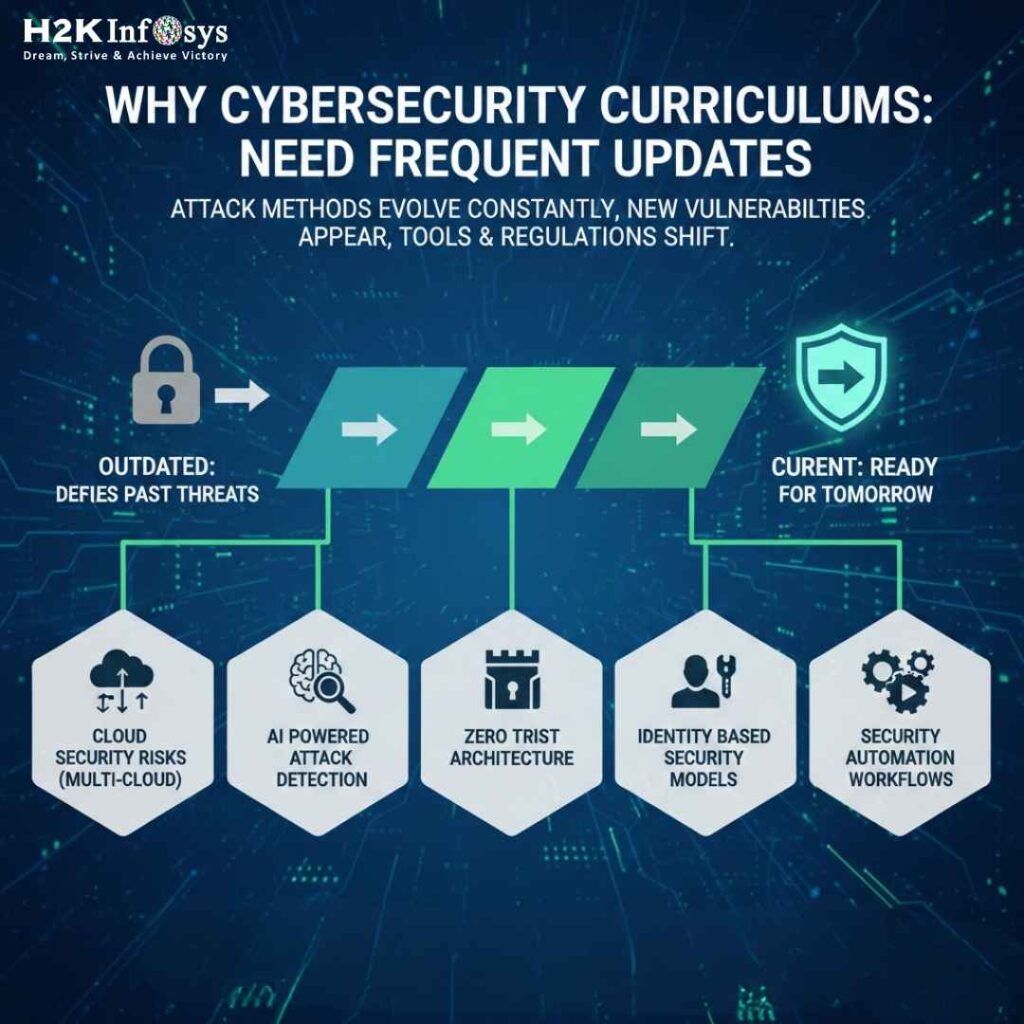
Cybersecurity course isn’t like learning a static programming language. Attack methods evolve constantly. New vulnerabilities appear. Tools change. Regulations shift. If a cybersecurity course isn’t updated regularly, students end up learning defenses for threats companies stopped worrying about years ago.
Today, organizations hiring for cyber security jobs with training expect candidates to understand:
- Cloud security risks (especially multi cloud environments)
- AI powered attack detection
- Zero Trust architecture
- Identity based security models
- Security automation workflows
A cybersecurity course that was strong in 2023 but never refreshed would already feel outdated in 2026.
What Triggers a Curriculum Update?
From what I’ve seen across industry training programs, updates usually happen when one of these occurs:
1️ Major New Attack Patterns
For example, AI generated phishing attacks are now far more convincing. Training now includes detection using behavioral analysis, not just email filtering.
2️ New Enterprise Tools
Security teams are adopting:
- XDR platforms
- SOAR automation tools
- AI driven threat hunting dashboards
Courses teaching cyber security training with job placement usually add labs based on these tools quickly, because employers demand hands-on familiarity.
3️ Compliance and Regulation Changes
New privacy laws or industry frameworks can force cybersecurity course redesigns. Students preparing for real enterprise roles must understand compliance mapping and audit readiness.
How Good Training Providers Structure Updates
Good programs don’t wait a year to refresh everything. They usually follow a layered update model:
Quarterly Updates
- Tool version changes
- New lab exercises
- Updated threat examples
Bi Annual Updates
- New modules (AI security, API security, cloud identity protection)
- Certification alignment
Emergency Updates
Sometimes, when a major vulnerability hits global news, providers push quick learning modules. I remember when major supply chain attacks hit headlines, cybersecurity course added software supply chain security topics almost immediately.
Real World Example (2025–2026 Trend)
In the last year, many companies shifted hiring requirements toward:
- AI assisted threat detection skills
- Cloud workload protection
- Security automation scripting basics
Because of this, many cybersecurity course programs that once focused mainly on network security expanded into hybrid cloud security labs. That shift directly affected people pursuing cyber security sales training, too, since sales engineers now need technical understanding of modern threats to explain solutions to clients.
How Often Should Students Expect New Learning Material?
If you’re joining a serious program today, you should see:
- Updated tools within months
- New case studies every quarter
- Threat landscape discussions in live sessions
- New certification mapping yearly
If nothing changes for 12 months, that’s usually a red flag.
What Students Should Personally Watch For
Honestly, I always tell people to ask these questions before enrolling:
- Are labs based on current enterprise tools?
- Do instructors discuss recent attack news?
- Are cloud and AI security included?
- Is content aligned to current job postings?
Because employers hiring for cybersecurity course jobs with training want people who can work on today’s problems, not yesterday’s.
The 2026 Reality: Cybersecurity Learning Is Continuous
Here’s the truth most people don’t say out loud:
Even if a cybersecurity course updates every 3 months, professionals still need self learning habits.
Cybersecurity course careers reward people who:
- Follow breach reports
- Track vulnerability disclosures
- Learn new tools regularly
- Training gives the foundation. Staying curious keeps you employable.
Final Thought
Cybersecurity course curriculum updates typically happen every 3 to 6 months, but the best programs evolve even faster when new threats appear. If a course connects training with real hiring needs through cyber security training with job placement, regular updates are not optional. They’re surviving.
























One Response
It’s reassuring to know that cybersecurity courses are updated so frequently. In this field, being proactive rather than reactive seems to be key. Are there any particular trends you’ve noticed that seem to be emerging in the curriculum updates?