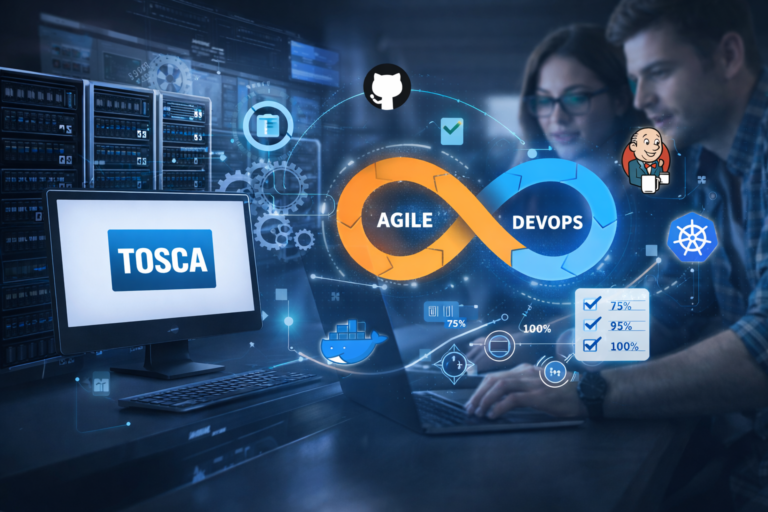
TOSCA in Agile and DevOps refers to using model-based test automation to support continuous testing, faster release cycles, and high-quality software delivery across modern CI/CD pipelines. Tools like Tricentis TOSCA help teams automate functional, regression, and API testing while aligning with sprint-based development and automated deployment workflows. Many professionals begin learning through TOSCA Training Online to understand real enterprise testing ecosystems.
What is Using TOSCA in Agile and DevOps Testing Environments?
Modern software teams deliver updates frequently. Traditional manual testing cannot keep up with sprint releases and continuous deployment pipelines. This is where TOSCA in Agile and DevOps becomes operationally valuable.
TOSCA is a model-based automation testing tool designed to support:
- Continuous Integration testing
- Continuous Testing frameworks
- Risk-based testing strategies
- End-to-end enterprise workflow validation
In Agile teams, automation must be reusable, fast to update, and easy to maintain. In DevOps environments, automation must integrate with CI/CD tools like Jenkins, Azure DevOps, or GitHub Actions. TOSCA in Agile and DevOps enables these requirements through model-driven automation and reusable test components.
How Does Tricentis TOSCA Work in Real-World IT Projects?
In enterprise environments, testing is not isolated. It interacts with:
- Development pipelines
- Business workflows
- Security checks
- Performance validation
- Release management processes
TOSCA in Agile and DevOps environments is commonly implemented using a layered automation strategy:
Typical Enterprise Workflow
| Stage | TOSCA Role |
| Requirement Analysis | Test case generation from requirements |
| Sprint Development | Automated test creation alongside coding |
| CI Pipeline | Automated regression testing |
| UAT | Business workflow validation |
| Production Monitoring | Risk-based regression testing |
In real projects, TOSCA in Agile and DevOps supports continuous feedback loops where defects are identified early, reducing cost and rework.
Why is TOSCA in Agile and DevOps Important for Working Professionals?
Modern organizations expect testing teams to operate at development speed. Testers are no longer only executing scripts they design automation strategies.
TOSCA in Agile and DevOps is important because it helps professionals:
- Support faster release cycles
- Improve software quality consistency
- Reduce manual testing effort
- Align testing with business risk priorities
In large enterprises such as banking, healthcare, and SaaS platforms, TOSCA in Agile and DevOps is often part of digital transformation testing strategies.
How Does TOSCA Training Work for Beginners and Intermediate Professionals?
Learning typically follows a structured path combining theory and project simulation.
Core Learning Areas
- Model-based test automation
- Test case design
- Risk-based testing
- API testing automation
- SAP and enterprise app testing
- CI/CD integration basics
Professionals often pursue Tricentis TOSCA Certification to validate enterprise-level automation knowledge.
What Skills Are Required to Learn TOSCA Training?
Technical Skills
- Basic software testing concepts
- SDLC and STLC understanding
- Agile methodology fundamentals
- API testing basics
- Database query basics (SQL)
Professional Skills
- Logical thinking
- Process workflow understanding
- Defect analysis
- Test strategy planning
In real teams implementing TOSCA in Agile and DevOps, communication between QA, DevOps, and business teams is critical.
How is TOSCA Used in Enterprise Environments?
Enterprise usage is typically more complex than standalone automation.
Common Enterprise Use Cases
- End-to-End Business Process Testing
- SAP Automation Testing
- API + UI Combined Automation
- Regression Testing at Scale
- Risk-Based Release Validation
In large-scale deployments, TOSCA in Agile and DevOps ensures automation is reusable across multiple applications and environments.
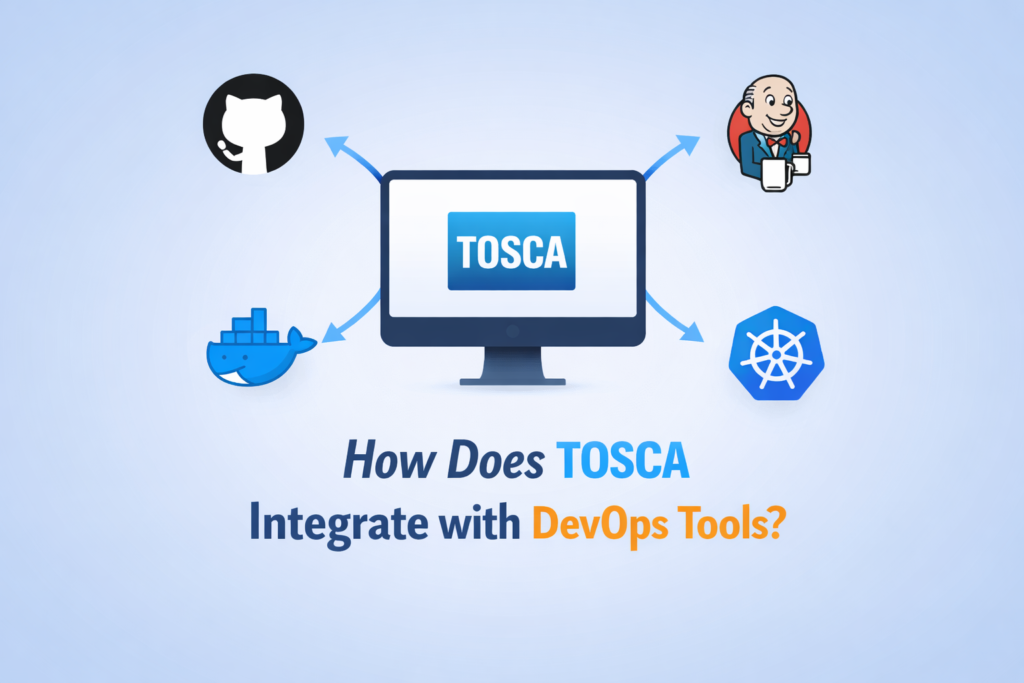
How Does TOSCA Integrate with DevOps Tools?
CI/CD Integration Example
Code Commit → Build → Deploy Test Environment → TOSCA Test Execution → Results → Release Decision
Common integrations include:
| DevOps Tool | Purpose |
| Jenkins | CI pipeline automation |
| Azure DevOps | Test orchestration |
| Git | Version control |
| ServiceNow | Defect workflow tracking |
When integrated correctly, TOSCA in Agile and DevOps helps create a continuous testing culture.
Mid Content Keyword Placement (Natural Context)
Organizations implementing Tricentis TOSCA in large-scale digital transformation programs often rely on structured automation frameworks. At this stage, TOSCA in Agile and DevOps becomes a central part of release governance and automated quality assurance strategies.
What Job Roles Use TOSCA Daily?
Common Roles
| Role | Usage |
| Automation Test Engineer | Test script creation and maintenance |
| QA Analyst | Test design and validation |
| DevOps QA Engineer | CI automation integration |
| Test Architect | Automation framework design |
Professionals working with TOSCA in Agile and DevOps often transition into advanced roles like automation architect or release quality strategist.
What Careers Are Possible After Learning TOSCA Training?
Career pathways include:
- Automation Test Engineer
- QA Automation Specialist
- DevOps Test Engineer
- Test Architect
- Enterprise QA Consultant
Real enterprise teams use TOSCA in Agile and DevOps for mission-critical systems, especially in regulated industries.
Real Project Scenario Example
Banking Application Release Cycle
Sprint Duration: 2 Weeks
Automation Steps:
- Requirement mapping to test cases
- Test module creation
- CI pipeline integration
- Regression automation execution
- Risk-based test selection
Here, TOSCA in Agile and DevOps reduces manual regression testing time dramatically while improving coverage.
Common Challenges Teams Face
1. Test Data Management
Requires environment synchronization.
2. Automation Maintenance
Requires modular test design.
3. CI Pipeline Stability
Requires version control discipline.
Mature teams using TOSCA in Agile and DevOps build reusable automation libraries to reduce maintenance.
Best Practices Followed in Enterprise Testing
- Modular automation design
- Risk-based test prioritization
- CI pipeline triggered automation
- Test data versioning
- Cross-environment test validation
These practices help teams scale TOSCA in Agile and DevOps implementations across global delivery teams.
Learning Path Table
| Stage | Focus |
| Beginner | Testing fundamentals + TOSCA basics |
| Intermediate | Automation design + API testing |
| Advanced | DevOps integration + enterprise workflows |
Role vs Skill Mapping
| Role | Key Skills |
| QA Tester | Test case design |
| Automation Engineer | Script development |
| DevOps QA | Pipeline automation |
| Architect | Framework design |
FAQ Section
Is TOSCA suitable for beginners?
Yes. Model-based automation reduces coding complexity.
Does TOSCA require programming knowledge?
Basic scripting understanding helps but is not mandatory initially.
Is TOSCA used only for UI testing?
No. It supports API, database, and end-to-end workflow automation.
Is TOSCA relevant in cloud environments?
Yes. Many cloud enterprise apps use automated regression testing via TOSCA.
Does TOSCA support continuous testing?
Yes, especially when implemented as part of TOSCA in Agile and DevOps pipelines.
Future Trends
Industry trends suggest increasing demand for:
- Continuous testing
- AI-assisted test generation
- Risk-based automation
- Cross-platform enterprise automation
As release cycles accelerate, TOSCA in Agile and DevOps adoption is expected to remain strong in enterprise IT ecosystems.
Conclusion
Professionals entering enterprise automation roles benefit from structured learning paths that include hands-on labs and real workflow simulation. Understanding TOSCA in Agile and DevOps enables testers to align automation strategies with modern software delivery practices. Many learners explore this path through structured programs and validate skills through Tricentis TOSCA Certification while continuing advanced practice through TOSCA Training Online.
Key Takeaways
- TOSCA in Agile and DevOps supports continuous testing
- Model-based automation reduces maintenance effort
- Enterprise teams use TOSCA for end-to-end workflow testing
- CI/CD integration is critical for modern QA teams
- Risk-based testing improves release quality
Explore H2K Infosys TOSCA training programs to build real-world automation testing skills.
Enroll to gain hands-on project experience aligned with enterprise Agile and DevOps environments.