
No, you don’t need to know anything about computers to start cybersecurity training with H2K Infosys in the US. A lot of good cybersecurity specialists today didn’t have any IT background when they started. They learned everything step by step through structured training, hands-on labs, and practice in the real world.
Honestly, this is one of the most common worries people have when they think about cybersecurity. People think you have to be a programmer, network engineer, or have worked in IT for a long time. But things are very different in 2026. These days, there are cybersecurity training programs for people who are new to the field, want to switch careers, or are professionals who don’t know much about technology.
And I have seen this with my own eyes. Some of the fastest-growing cybersecurity specialists started out as customer service reps, finance analysts, or even fresh college graduates who had never dealt with computers before. What they had done before didn’t matter. It was the right teaching, constant practice, and help.
Why cybersecurity training no longer requires prior technical experience
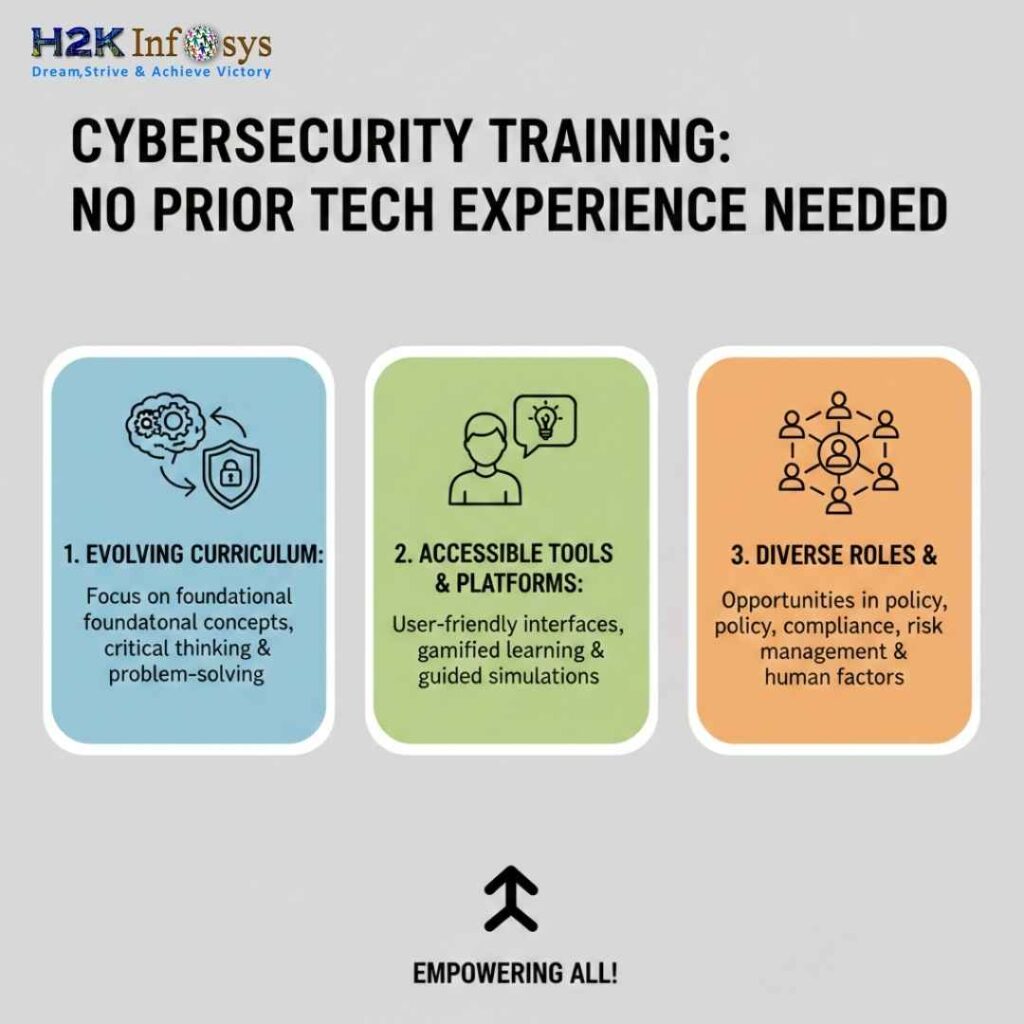
Cybersecurity used to be considered an advanced IT specialty. That was true maybe 10 or 15 years ago. Today, the industry has evolved dramatically.
Organizations are facing cyber threats daily. Ransomware attacks increased significantly in the past few years, especially targeting healthcare, banking, and e-commerce companies in the United States. Because of this surge, companies need more cybersecurity professionals than ever before.
But here’s the challenge: there simply aren’t enough experienced professionals available.
So companies and training providers adapted. Modern cybersecurity training with job placement focuses on teaching beginners from the ground up.
Instead of expecting students to already know networking or security tools, training programs now cover:
- Basic computer and networking concepts
- Security fundamentals
- Real-world threat detection scenarios
- Hands-on labs and simulations
- Industry tools used by professionals
This approach makes cybersecurity accessible to almost anyone willing to learn.
What beginners really learn initially (in a step-by-step way)
People don’t know that cybersecurity training doesn’t start with complicated hacking or security technologies on the first day. It establishes your foundation gradually.
Here’s how most novices move forward:
Step 1: Learn the basics of IT
You learn basic ideas like:
- What is an IP address?
- How the internet works
- How gadgets talk to each other
- What are networks and servers?
They are explained in simple, real-life terms, not complicated theory.
Step 2: Learning the basics of cybersecurity
This includes:
- Different kinds of cyber attacks
- How hackers take advantage of systems
- Basic ways to defend yourself
- Best security practices
You begin to learn how cyber attacks happen and how businesses protect themselves from them.
Step 3: Training on how to use security tools
This is where things start to get fun.
You learn how to use technologies that genuine cybersecurity professionals use, such as:
Tools for Security Information and Event Management (SIEM)
Tools for analyzing logs
Dashboards for keeping an eye on threats
Platforms for responding to incidents
It could seem like a lot at first, but most tools are actually easier than people think if they are presented well.
Step 4: Practice in real-life situations
This is where you get confidence.
You practice things like how to spot unusual login behavior.
Finding malware threats
Looking at security alerts
How to respond to fake cyber incidents
This hands-on experience gets you ready for genuine cybersecurity training employment by giving you training situations that are like real workplaces.
Why cybersecurity is a great job for beginners in 2026
This isn’t just talk. There is a real need.
Every business needs cybersecurity in 2026. Security experts are frequently hired by even tiny firms.
Some important reasons why cybersecurity is easy for beginners today are:
A huge lack of talent
There is still a major lack of cybersecurity experts around the world. Businesses are prepared to hire people who are new to the field but have been trained.
There are a lot of entry-level jobs out there.
Jobs like: SOC Analyst
Analyst of Security
Analyst for Threat Monitoring
are made for beginners who are learning.
Degrees don’t matter as much as skills.
Many employers care more about what you can do than what you learned in school.
The main goal of training programs is to get people ready for work.
Cybersecurity training with job placement gives students the skills they need to get a career, not just learn theory.
For example, someone changed careers to cybersecurity even if they didn’t have technological expertise.
A student who has worked in customer service for four years is a good example. No background in technology. No understanding of programming.
At first, they had trouble developing networking ideas. But things started to make sense after a lot of practice and hands-on laboratories.
In a few months, they could:
- Look into security alerts
- Learn how threats work
- Use tools for monitoring
In the end, they got a job as an entry-level SOC Analyst.
More and more, stories like these are coming out.
Mindset and consistency are more important than experience.
People don’t talk about this enough.
You don’t have to be a genius to be good at cybersecurity. It’s about being interested and sticking with it.
These are the traits that most successful beginners have:
- Being open to learning new things
- Practice makes perfect
- Paying attention to details
- Wanting to solve challenges
Anyone can achieve if they stay devoted, even if they don’t know anything about technology.
How cyber security sales training fits into the big picture
Not everyone who works in cybersecurity does technical work all the time.
Cybersecurity training gets people ready for jobs that require both security expertise and business and communication abilities.
These jobs include:
- Sales engineer for cybersecurity
- Consultant for security solutions
- Account manager for cybersecurity
These jobs don’t usually need a lot of technical knowledge, but they are very helpful if you have training in cybersecurity.
And it’s noteworthy that these jobs generally pay more because they require both technical knowledge and business sense.
How training programs prepare beginners for real cybersecurity jobs
Training programs like those offered by H2K Infosys focus heavily on real-world preparation.
This includes:
- Hands-on lab environments
- Real attack simulation exercises
- Resume preparation
- Interview guidance
- Practical project experience
This structured approach makes it possible for beginners to transition into cyber security jobs with training support.
Instead of learning random theory, students learn exactly what employers expect.
Myths about starting a career in cybersecurity without any experience
Let’s get rid of some of the false ideas that keep folks from starting.
Myth 1: You need to know how to code
Truth: You don’t need to know how to program to get a job as a novice.
Myth 2: Only IT experts need to worry about cybersecurity
Many professionals effectively transfer from fields outside of IT.
Myth 3: It takes a long time to get dressed for work
Truth: Many people can get ready for work in a few months with structured training and practice.
How the job market for cybersecurity looks right now (from the year 2026)
Cybersecurity training isn’t slowing down; it’s speeding up.
Important trends that are changing the industry:
- More firms are being hit by ransomware attacks
- Increased need for cloud security
- Cyber risks fueled by AI that need qualified defenders
- As more people work from home, security demands are growing.
For this reason, businesses are aggressively looking for certified cybersecurity experts.
This makes cybersecurity training with job placement more important than ever.
Who can begin cybersecurity training right now?
Cybersecurity training is good for: People who are new to technology and have no experience with it
People who want to change careers from non-IT sectors
New graduates
Manual testers moving into security
IT workers improving their talents
You can learn about cybersecurity step by step, even if you’ve never worked in tech before.
Last thoughts
You don’t need any technical skills to start training for cybersecurity. You need the correct training, systematic help, and a lot of hard work.
Cybersecurity is one of the only IT jobs where beginners may feasibly move up to high-demand positions in a short amount of time. It’s possible to start a career in cybersecurity even if you don’t have any experience if you get the right training that includes job placement, hands-on practice, and preparedness for the real world.
And to be honest, cybersecurity isn’t just a job option these days. It’s become one of the most secure jobs for the future.