
You can realistically start applying for cybersecurity jobs immediately after finishing your course, and many learners who train with h2kinfosys begin their job search with real confidence because they already have hands-on experience many people land their first role within 0 to 3 months, and some even secure interviews before completing their training if the program includes practical labs and job placement support.
That’s the honest answer. But the real timeline depends on a few very human factors: how practical your training was, whether you built real skills (not just watched videos), and how well your course connects you to actual employers.
Let’s break it down the way I explain it to friends who are switching careers.
The Truth Most Courses Don’t Tell You
Finishing a course doesn’t magically make recruiters call you overnight. What actually makes the difference is whether your training included:
- Real attack simulations (not just theory)
- Resume and interview prep
- Hands-on tools like SIEM, Wireshark, or vulnerability scanners
- Access to hiring partners or placement assistance
This is exactly why cyber security training and job placement programs are becoming more popular in 2025 and 2026. Companies don’t want beginners who only know definitions, they want people who can actually recognize threats.
I remember mentoring someone last year who finished a basic online course but struggled to get interviews. Once he enrolled in a structured program that included live labs and interview prep, he got his first SOC Analyst role in about six weeks.
The difference wasn’t time. It was practical exposure.
Typical Hiring Timeline After Cybersecurity job Training
Here’s what the real-world timeline usually looks like:
Week 1–2 after course completion
You update your resume, LinkedIn profile, and start applying.
Week 2–6
You begin receiving interview calls, especially for entry-level roles like:
- SOC Analyst (Level 1)
- Security Operations Associate
- Cybersecurity Analyst (Junior)
- IT Security Support
1–3 months
Most motivated learners land their first job within this window.
Some people move faster, especially if their training includes cyber security jobs with training pipelines, where employers already trust the program.
Why Employers Are Hiring Faster Than Before (2026 Trend)
This part is important. Cybersecurity hiring has accelerated dramatically.
In 2024 and 2025, major cyberattacks on healthcare systems, banks, and even airports made cybersecurity a top priority worldwide. India alone saw a massive increase in demand for SOC analysts, cloud security engineers, and incident response specialists.
Organizations simply don’t have enough skilled people.
What this means for you:
Even entry-level professionals with solid training are getting hired faster than ever before.
You don’t need 5 years of experience. You need proof you can do the work.
The Role of Cyber Security Sales Training (An Overlooked Path)
Here’s something people rarely talk about.
Not everyone has to start as a SOC analyst.
If you have good communication skills, cyber security sales training can open doors to roles like:
- Cybersecurity Sales Specialist
- Security Solutions Consultant
- Technical Sales Associate
These roles are in huge demand because cybersecurity companies need people who understand both the technology and the business side.
And honestly, these roles often pay surprisingly well even for beginners.
I’ve seen fresh trainees move into cybersecurity job sales roles within a month because companies value communication skills combined with basic security knowledge.
What Actually Gets You Hired Faster (From Real Experience)
Based on what recruiters consistently look for, these factors matter the most:
Hands-on practice
Employers ask practical questions like:
“What would you do if you saw suspicious login activity?”
Tool familiarity
Knowing tools like:
- Splunk
- Wireshark
- SIEM platforms
- Endpoint security tools
makes a huge difference.
Projects and labs
Even small personal projects help. For example:
- Setting up a home lab
- Detecting simulated attacks
- Writing simple security reports
These show initiative.
Training programs with placement support
Programs offering cybersecurity job training and job placement connections significantly speed up hiring.
Real Example: A Recent Career Switch Story
A learner I spoke with earlier this year finished a cybersecurity job training program in Hyderabad. He came from a non-IT background customer support.
He completed hands-on SOC training,practiced real incident response scenarios, and got interview coaching.
Timeline:
- Finished course: January
- First interview: Late January
- Job offer: Mid-February
About 5 weeks total.
Not instant but very achievable.
Entry-Level Roles You Can Get After Training
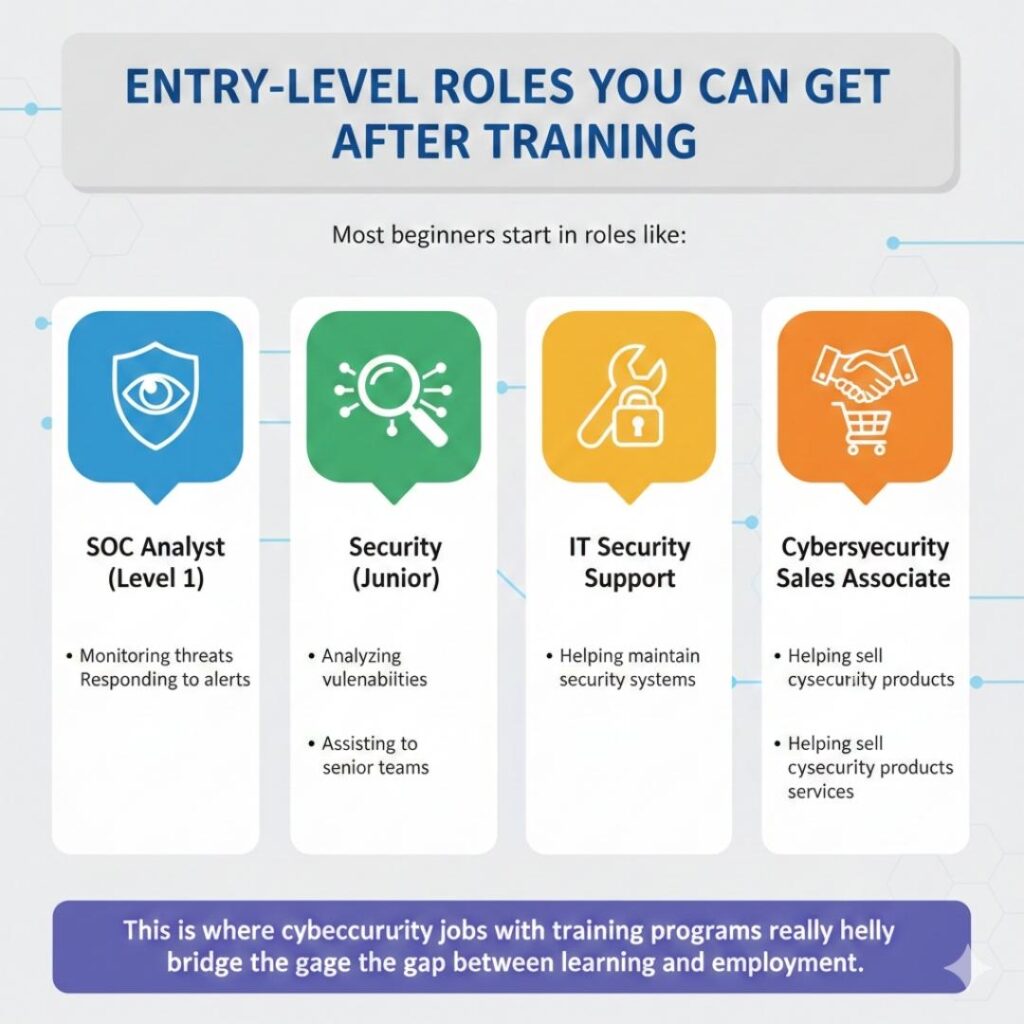
Most beginners start in roles like:
SOC Analyst (Level 1)
Monitoring threats and responding to alerts.
Security Analyst (Junior)
Analyzing vulnerabilities and assisting senior teams.
IT Security Support
Helping maintain security systems.
Cybersecurity Sales Associate
Helping sell cybersecurity job products and services.
This is where cyber security jobs with training programs really help bridge the gap between learning and employment.
What Slows People Down
These are common mistakes that delay getting hired:
- Only learning theory without practice
- Not applying consistently
- Poor resume or LinkedIn profile
- Choosing courses without placement support
- Lack of interview preparation
The course alone isn’t the finish line. It’s the starting point.
How to Start Working Faster After Your Course
Do these immediately after finishing:
- Apply to at least 10–15 jobs per week
- Practice interview questions regularly
- Build 1–2 hands-on lab projects
- Connect with recruiters on LinkedIn
- Choose training programs with hiring partnerships
These steps dramatically shorten the cybersecurity job search timeline.
Final Thoughts
You can start working in cybersecurity job surprisingly fast often within a few weeks to a few months if your training included real-world practice and job placement support.
Cybersecurity job isn’t one of those careers where you wait years for a chance. The demand is real, the shortage is real, and companies are actively hiring trained beginners.
The key isn’t just finishing a course. It’s finishing the right kind of training one that prepares you for actual work, not just exams.
Once you reach that point, your first cybersecurity job becomes less of an “if” and more of a “when.”