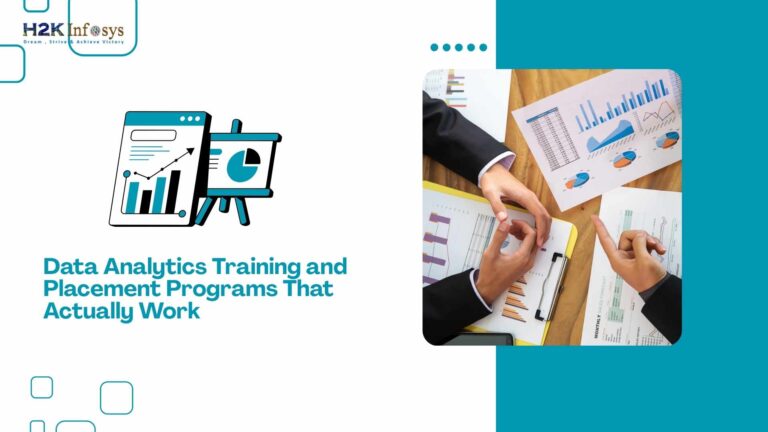
For those interested in data analytics training and placement programs that actually help people get jobs, the short answer is this: if you want your program to work, don’t chase or kill theory; instead, focus on real projects and industry tools.
Many people sign up for a data analyst course online, expecting a quick career change, only to realize later that watching videos alone isn’t enough. The programs that actually move the needle usually include hands-on datasets, portfolio projects, and some level of job support.
Let’s talk about what separates a good data analytics training and placement from one that simply hands you a certificate and sends you on your way.
Why Training With Placement Support Matters
Here’s something many beginners don’t realize at first: learning analytics tools is only part of the journey.
Companies hiring analysts typically want to see three things:
- Hands-on project experience
- Familiarity with industry tools
- Clear communication of insights
A strong data analytics program teaches all three.
For example, when analysts interview for entry-level roles, they’re often asked to explain projects like
- analyzing sales trends
- identifying customer churn patterns
- building dashboards for business reporting
Therefore, programs that simulate these real-world tasks tend to prepare students more effectively than purely theoretical courses.
What the data Analytics Training and Placement Usually Teach
Most solid programs follow a similar skill roadmap. Even if the teaching style varies, the core toolkit is usually consistent.
1. Data Cleaning and Preparation
Raw data is messy with missing values, duplicates, and formatting issues. Analysts spend a surprising amount of time cleaning datasets before any analysis begins.
Students typically learn tools like
- spreadsheets (Excel or Google Sheets)
- SQL databases
- Python libraries for data processing
It’s not the sexiest side of analytics, but it’s where the real work begins.
2. SQL for Data Queries
If you talk to working analysts, SQL almost always comes up first.
Why? Because most company data sits inside databases.
A good data analytics training and placement teaches how to:
- retrieve specific data from large databases
- join multiple datasets together
- filter and summarize information for analysis
This is often one of the first technical skills recruiters look for.
3. Data Visualization and Dashboards
Once data is analyzed, the next challenge is explaining it clearly.
Modern analysts use tools like
- Tableau
- Microsoft Power BI
These tools help transform numbers into visual dashboards that managers can understand quickly.
Sometimes a simple chart can influence a major business decision. That’s part of what makes analytics so interesting.
4. Python for Data Analysis
A solid foundation of Python is required in almost every analytics role today.
Python libraries like
- Pandas
- NumPy
- Matplotlib
- Allow analysts to work seamlessly with larger datasets.
A typical data analytics training and placement also covers the basics about using these tools so that students can automate certain repetitive tasks.
Programs That Combine Training With Career Support
One thing I’ve noticed over the past few years is that training providers are adding career support features to their programs.
These can include:
- resume reviews
- mock interviews
- portfolio guidance
- networking opportunities
Training providers such as H2K Infosys offer structured analytics training to bridge the gap between technical acumen and practical project application.
An efficient way for analysts to handle datasets.
Their programs typically walk students through tasks analysts actually perform, like cleaning datasets, writing SQL queries, and building dashboards for business reporting
Experiences like that help students create a portfolio, which often means more than a certificate alone.
A Real-Life Example of How the Training Leads to Jobs
But imagine going from marketing to analytics.
For example, during a data analytics training and placement program, participants could work on a project analyzing marketing campaign performance.
The project could involve:
- Collecting campaign data
- Cleaning and organizing it in SQL
- Using Python to analyze conversion rates
- Building a dashboard in Power BI
At the end of the program, they can show employers a complete project demonstrating how they turned raw data into actionable insights.
That’s exactly what hiring managers want to see.
Why Demand for Data Analysts Keeps Growing
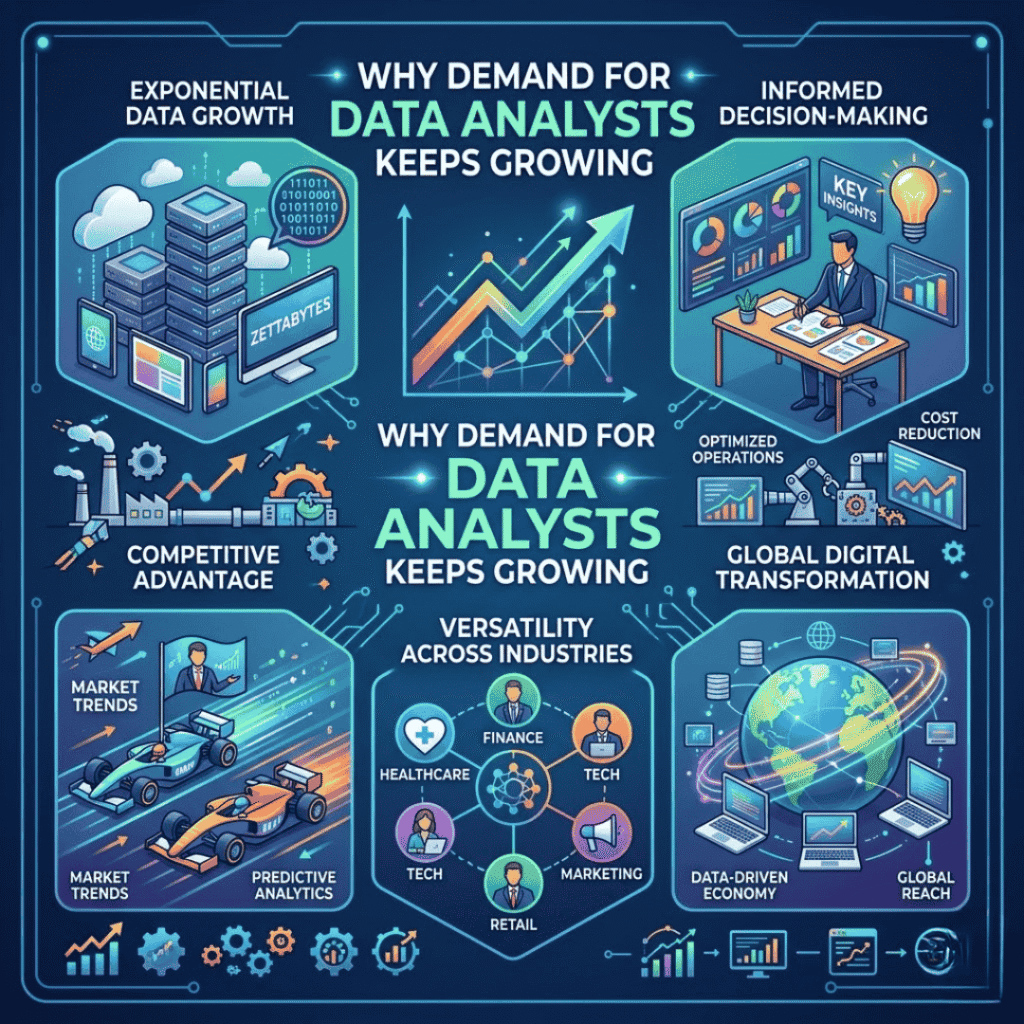
If you follow industry news, it’s clear that analytics roles are expanding across almost every sector.
Companies in areas like
- e-commerce
- healthcare
- finance
- logistics
- sports analytics
We are all investing heavily in data-driven decision-making.
Even with the rise of AI tools, businesses still need analysts to interpret results, verify data analytics training and placement quality, and communicate insights to leadership teams.
In other words, automation didn’t replace analysts; it actually increased the need for them.
How to Choose the Right Data Analytics Program
Not every course is created equal, so here are a few things worth checking before enrolling.
Look for project-based learning.
Courses that include real datasets prepare you far better than lecture-only programs.
Check which tools are taught.
Industry tools like SQL, Python, Tableau, and Power BI are widely used by employers.
Make sure portfolio projects are included.
Being able to demonstrate your work matters more than simply listing skills on a resume.
Consider programs with career guidance.
Some basic resume assistance or mock-interview practice can help when shifting to a new field.
Conclusion
A robust data analytics training and placement program can significantly enhance opportunities, provided it prioritizes practical experience.
The most effective data analytics training and placement combines technical training, real datasets, and career preparation so students graduate with more than just theoretical knowledge.
When you finish a strong data analytics course online, you should be able to take a messy dataset, analyze it, and explain what the numbers mean in a way that helps businesses make better decisions.
And honestly, once you get the hang of that process, data analytics training and placement stops feeling like rows of numbers.
It starts feeling like a story waiting to be discovered.