Introduction
Cybersecurity isn’t just something that big companies or IT professionals need to worry about anymore. It’s something that everyone needs to know about. We at H2KInfosys think that the first step to building strong cybersecurity awareness is to learn the basics. You are always at risk when you use the internet, shop online, or use social media. The first and most important thing for beginners in this field to do is learn about common cyber threats. This is the first step toward a safe digital life and a successful career.
Why People Who Are New to Cybersecurity Need to Know About Threats
Before you start using tools and technologies, you need to know what you’re trying to protect against. Cyber threats are always changing, and every day attackers get better at what they do. Beginners can:
- Find suspicious activity early on
- Keep your personal and work information safe
- Make sure you have a strong foundation in cybersecurity.
- Get ready for real-life job situations
These are the basics that most Cyber security training courses start with because they are the foundation of all cyber security knowledge.
What Are Cyber Threats?
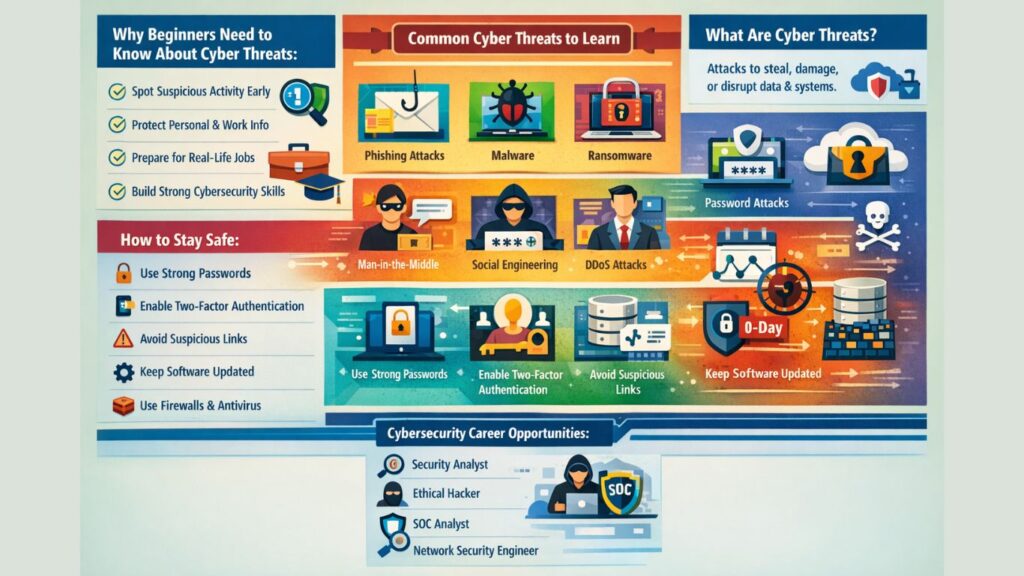
Cyber threats are bad things that people do to hurt, steal, or mess up data, systems, or networks. Hackers, cybercriminals, or even people who work for the company and want to harm can make these threats. Beginners can find weaknesses and take steps to protect themselves better if they know about common cyber threats for beginners.
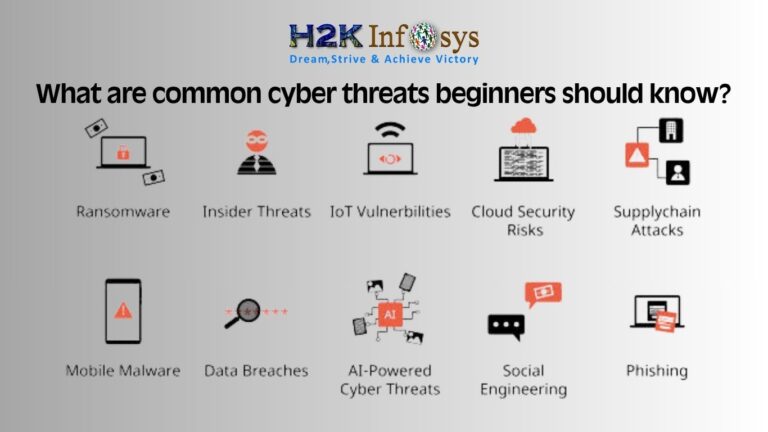
The Most Common Cyber Threats That Newbies Should Know
Let’s look at the most important common cyber threats for beginners that all beginners need to know.
1. Phishing Attacks
Phishing is one of the most common cyber threats for beginners. It means getting people to give you private information like passwords, credit card numbers, or login information.
How it works:
- Fake emails or messages look like they come from people you trust.
- People are asked to click on links that are bad for them.
- Attackers get their hands on sensitive data.
For example:
- A fake email from your bank asking you to “verify your account.”
- A big part of cyber security training and placement programs is learning how to spot phishing.
2. Malicious software
Malware is short for “malicious software,” which is software that is meant to hurt or take advantage of systems. It is one of the most common types of cyber threats.
There are many kinds of malware, such as:
- Viruses
- Worms
- Trojan horses
- Spyware
You can get malware on your computer by downloading it, opening email attachments, or visiting unsafe websites. A lot of cyber security training courses teach you how to look for and stop malware attacks.
3. Ransomware
Ransomware is a type of malware that is very dangerous and one of the most common cyber threats that is growing the fastest.
How it works:
- It locks up your system or files.
- Asks for money (ransom) to give back access
This threat is bad for people, businesses, and even governments. Beginners in cyber security training and placement programs often study real-life examples of ransomware attacks.
4. Attacks on passwords
Hackers can easily get into accounts with weak passwords. Password attacks are one of the most common cyber threats that can be easily stopped.
There are many different types, including:
- Attacks with brute force
- Attacks on dictionaries
- Credential stuffing
Using strong, unique passwords is a simple but effective way to protect yourself. This is a basic lesson that all cyber security training courses teach.
5. Attacks by a Man in the Middle (MITM)
In an MITM attack, the attacker secretly listens in on a conversation between two people. This makes it one of the more advanced cyber threats that happen all the time.
For example:
- Using public Wi-Fi that isn’t secure
- Hackers steal things like login information.
Cybersecurity training and placement programs teach beginners about secure communication protocols to stop these kinds of attacks.
6. Social Engineering
Social engineering is a way to trick people into doing things by messing with their minds, and it’s a big part of many cyber threats.
Some examples are:
- Acting like a trustworthy person
- Getting employees to share private information without their knowledge
This kind of attack doesn’t use technology; it uses mistakes made by people. This is a big part of many cyber security training courses.
7. Attacks that Deny Service (DoS)
DoS attacks try to make websites or systems unavailable by sending them too much traffic. These are serious cyber threats that businesses should be aware of.
Kinds:
- DoS (one source)
- DDoS (many sources)
Cybersecurity training and placement programs need to teach people how these attacks work.
8. Threats from within
Not all threats come from the outside. Insider threats are also a big problem in the world of cyber threats.
For example:
- Workers letting out information
- People getting into the organization without permission
A lot of cyber security training courses cover this, but beginners often forget about it.
9. SQL Injection
SQL injection is a type of cyber threat that happens on the web.
How it works:
- Attackers put harmful SQL queries into the system
- Get into databases
Anyone who wants to work in web security or get cyber security training needs to know this.
10. Exploits on the first day
Zero-day attacks happen when hackers take advantage of security holes before developers can patch them. These are very dangerous cyber threats that happen a lot.
It’s hard to protect against them because they are unknown. This idea is often taught in advanced cyber security training courses.
How to Keep Beginners Safe
Knowing about common cyber threats is only half the battle. Doing something is just as important.
1. Make sure your passwords are strong
Make passwords that are hard to guess by using a mix of letters, numbers, and symbols.
2. Turn on two-factor authentication.
Adds an extra level of security on top of passwords.
3. Stay away from links that look fishy
Do not click on links that you don’t know or that haven’t been verified.
4. Update Your Software
Updates fix holes that hackers can use to get in.
5. Use firewalls and antivirus software
Basic tools that keep you safe from a lot of common online threats.
Cyber security training and placement programs put a lot of stress on these useful skills.
How Cybersecurity Training Helps Us Understand Threats
Taking cyber security training courses is the best way to move forward if you want to build a career. These programs offer:
- Labs where you do things
- Simulations in the real world
- Help from experts
- Learning paths that are organized
Beginners learn not only about cyber security but also how to do the job through training and placement.
Why It’s Important to Learn About Cyber Threats in the Real World
Companies are actively looking for professionals who know about common cyber threats. Cybersecurity skills are in high demand at all levels of business, from small businesses to large corporations.
Knowing about common cyber threats can help you:
- Keep business information safe
- Stop losing money
- Keep your customers’ trust
- Make sure you follow the rules.
This is why more and more students and professionals are taking cyber security training courses.
Jobs You Can Get After Learning About Cyber Threats
You can look into different career paths once you know what common cyber threats are:
- Analyst of Security
- Hacker with morals
- SOC Analyst and Network Security Engineer
Cybersecurity training and placement can help beginners move into these jobs more easily.
Things Newbies Shouldn’t Do
When beginners learn about common cyber threats, they often make these mistakes:
- Not paying attention to basic ideas
- Not doing hands-on practice
- Using passwords that are easy to guess
- Not regularly updating systems
If you don’t make these mistakes, you’ll be able to build a strong foundation for cybersecurity.
The Future of Cybersecurity
Cybersecurity has a bright future. As technology changes, so do common cyber threats, which means there are more jobs for skilled people.
New areas include:
- Security in the cloud
- Artificial intelligence in cybersecurity
- Security for the Internet of Things
Taking cyber security training courses will help you stay up to date with what’s going on in the field.
Conclusion
The first step to being aware of cybersecurity and ready for a career is to learn about common cyber threats. This information is very important for students, people looking for work, and people thinking about changing careers. You can get real-world experience, practical skills, and job opportunities by taking cyber security training courses and choosing programs that offer both Cybersecurity training and job placement. Cybersecurity is more than just a job; it’s something we all need in today’s digital world. Learn about common cyber threats today, and take charge of your digital safety and career.