If you really want to stand out in data analytics job applications, a certificate alone isn’t going to cut it. It helps, sure but what actually makes people pause is seeing that you can take messy, real-world data and turn it into something useful.
Let me explain this in a way most people don’t.
Why Most Data Analytics Applications Get Ignored
Here’s the honest truth: recruiters see hundreds of resumes that all look the same.
- “Completed a google data analytics course”
- “Skilled in Excel, SQL, Python”
- “Passionate about data”
That’s… fine. But it’s also forgettable.
I’ve seen candidates with solid Data analytics training get passed over simply because they couldn’t show how they think. Meanwhile, someone with fewer skills but better storytelling lands the interview.
So the real question becomes:
Can you prove your value in 10–15 seconds?
1. Build Projects That Feel Real (Not Just Practice Tasks)
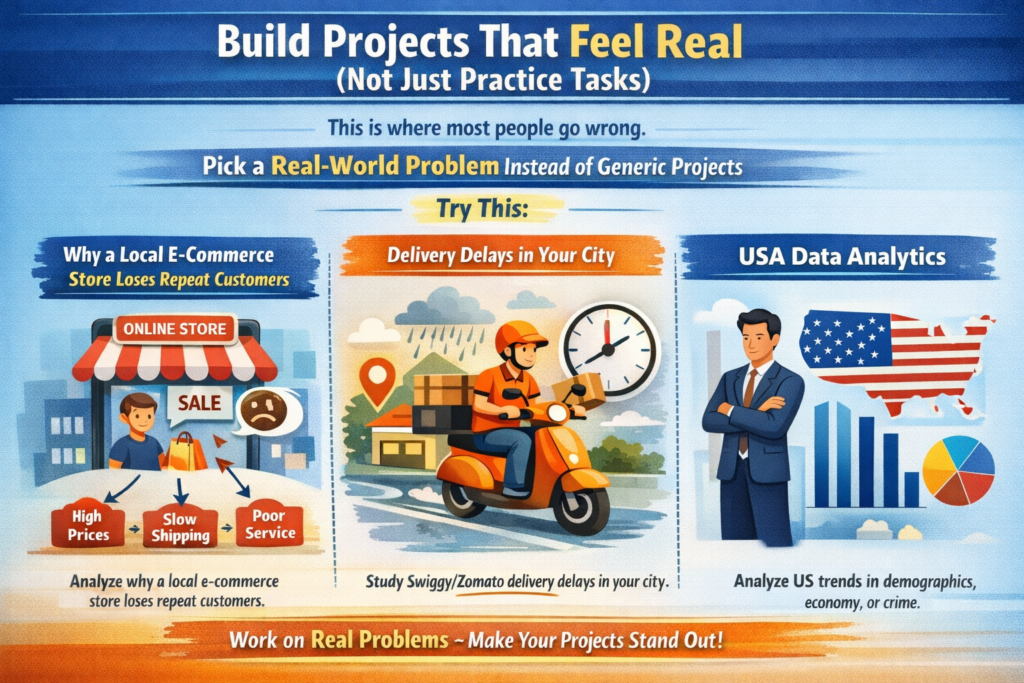
This is where most people go wrong.
Instead of doing generic projects like “sales dashboard” or “Netflix dataset analysis,” try this:
Pick a real-world problem.
For example:
- Analyze why a local e-commerce store loses repeat customers
- Study Swiggy/Zomato delivery delays in your city
- Break down IPL team performance trends for fan engagement insights
Now suddenly, your project isn’t just “data cleaning + charts” it becomes a story with business impact.
And hiring managers love that.
2. Show Your Thinking, Not Just Results
Anyone can build a dashboard. But can you explain why you built it that way?
When you apply:
- Add a short explanation under each project
- Talk about decisions you made
- Mention challenges (messy data, missing values, wrong assumptions)
Something like:
“Initially, I assumed customer churn was price-driven, but after analysis, I found delivery time had a stronger correlation.”
That one line says more than 10 bullet points.
3. Your Portfolio Is More Important Than Your Resume
Honestly, your resume just opens the door. Your portfolio gets you inside.
A strong portfolio includes:
- 3–5 solid projects
- Clean dashboards (Tableau / Power BI)
- GitHub or Google Drive links
- Short case-study style writeups
If you’ve taken a google data analytics course or any structured data analytics training, don’t just list it show what you built because of it.
That’s the difference.
4. Customize Every Application (Yes, Every Single One)
This part feels annoying, I know. But it works.
Before applying:
- Read the job description carefully
- Match your project experience to their needs
- Slightly tweak your resume
For example:
If the role mentions customer analytics, highlight your churn or segmentation project.
If it mentions SQL-heavy work, bring that to the top.
It takes 10 extra minutes but easily doubles your chances.
5. Learn to Tell a Simple Story With Data
Here’s something I wish more beginners knew:
Data analytics isn’t about tools it’s about clarity.
If your explanation sounds like this:
“I used Python, pandas, NumPy, and Matplotlib to analyze…”
You’ve already lost them.
Instead, say:
“I analyzed customer data to find why repeat purchases dropped and discovered delivery delays were the main reason.”
See the difference? Same work. Better impact.
6. Stay Updated With What’s Actually Happening in the Industry

Data analytics is changing fast especially with AI tools becoming part of daily workflows.
Companies now expect:
- Basic understanding of AI-assisted analytics
- Familiarity with tools like Power BI + AI insights
- Ability to interpret automated outputs (not just create them)
So if your data analytics training still focuses only on basics without real-world applications, you might feel stuck.
Try adding:
- A project using AI-assisted tools
- A dashboard with predictive insights
- Even a simple automation use case
It shows you’re thinking ahead.
7. Networking (Yes, This Still Matters More Than You Think)
A lot of people skip this step. Big mistake.
You don’t need to be super active just:
- Share your projects on LinkedIn
- Write short posts about what you learned
- Comment on others’ work
Sometimes, a recruiter doesn’t find you through your application they find you through your visibility.
8. Certifications Help… But Only If You Use Them Right
Let’s be real doing a google data analytics course or any certification is useful. It builds your foundation.
But it won’t magically get you hired.
What actually helps:
- Turning course assignments into portfolio projects
- Expanding them into real-world scenarios
- Explaining them clearly in interviews
Some training platforms (like H2K Infosys, for example) focus more on project-based learning and guided support, which can make a difference when you’re trying to bridge that gap between learning and working.
A Quick Reality Check (From Experience)
I’ve seen candidates:
- With certifications but no projects → struggle
- With projects but no storytelling → struggle
- With both, but no clarity → still struggle
And then someone shows up with:

- 3 solid projects
- Clear explanations
- A bit of personality
…and they get hired.
It’s not always about being the most technical person in the room.
Final Thought
Standing out in data analytics job applications isn’t about doing more it’s about showing what you’ve already done in a smarter, more human way.
If you focus on:
- Real projects
- Clear thinking
- Simple storytelling
You’ll already be ahead of most applicants, even those with the same data analytics training or a google Data analytics course on their resume.
And honestly? That’s usually enough to get noticed.