
Introduction
Cybersecurity is no longer just about tools, certifications, or technical know-how. It’s also about making connections in today’s fast-paced digital world. H2K Infosys and other platforms also stress real-world exposure and interaction, which naturally helps networking grow. Networking in cybersecurity careers is becoming more and more important as companies look for people who not only know about security but also work together, talk to each other, and stay in touch with others in the field.
A lot of people who sign up for cyber security training or Cyber security training courses are mostly interested in learning technical skills. But even the most skilled people can have trouble finding the right opportunities if they don’t have strong professional relationships. This blog goes into great detail about why networking is important for cybersecurity careers, how it can help you on your journey, and how you can make meaningful connections to speed up your success.
Understanding Networking in Cybersecurity
Before we talk about how important networking is, we need to know what it really means in this field. Networking isn’t just about sending connection requests or gathering contacts; it’s about making real, lasting connections.
In cybersecurity jobs, networking means talking to other professionals, sharing what you know, and working together to solve real-world problems. Cybersecurity is always changing, so professionals depend on each other to stay up to date and ready.
Why Networking Matters More Than Ever
1. Unlocking Hidden Opportunities
One of the best things about networking in cybersecurity is that it can help you find job openings that aren’t advertised. Many people get jobs through referrals instead of public job postings.
When you make strong connections:
- You hear about openings early on
- You get recommendations that you can trust.
- You have a better chance of getting a job.
Your visibility in the industry is still very important for your career success, even after you finish cyber security training courses.
2. Learning Beyond Cyber Security Training
You get structured knowledge from cyber security training, but you often learn in the real world through talking to people and sharing experiences.
You can do the following by networking in cybersecurity careers:
- Learn how experts deal with real-life situations
- Understand real-world problems
- Get information that isn’t covered in training programs.
This makes your learning more useful and ready for the job market.
3. Staying Updated with Industry Trends
Cyber threats change quickly, so it’s important to stay up to date. Networking in cybersecurity jobs helps you stay up to date by having conversations and sharing information in real time.
Your network can:
- Share information about threats
- Talk about recent breaches
- Suggest tools and certifications
Real-world updates shared in professional communities happen much faster than even the best cyber security training courses.
4. Building a Strong Personal Brand
Your reputation is important in cybersecurity. Networking in cybersecurity jobs helps you build a strong personal brand by showing off your skills.
You can:
- Share your thoughts online
- Take part in conversations
- Help out in your community
People start to see how much you know over time, which leads to new opportunities.
5. Finding Mentorship and Career Guidance
One of the best things about networking in cybersecurity careers is that you can get help from other people. A mentor can help you deal with problems and make better choices about your career.
They are able to:
- Recommend the best courses for learning about cyber security
- Help you not make common mistakes
- Give career advice
Most of the time, you get mentoring opportunities through connections instead of formal applications.
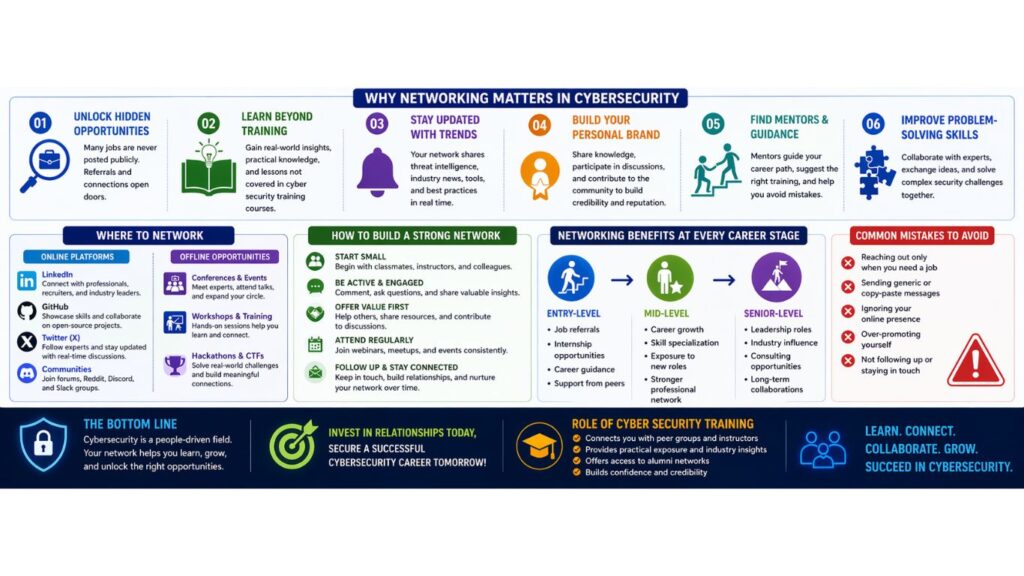
6. Improving Problem-Solving Skills
Often, working together is the best way to solve cybersecurity problems. Networking in cybersecurity jobs lets you see things from different points of view and learn from them.
By talking to other people:
- You find new ways to solve problems
- You get better at thinking analytically.
- You get better at doing things in the real world.
Importance for Beginners
Networking is very important for people who are just starting out in cybersecurity careers. Connections can help you learn faster than just learning on your own when you’re new.
Main Benefits for Newbies
- Clear career paths
- Help with training for cyber security
- Referrals for jobs at the entry level
- Help from professionals with experience
- Getting a head start gives you a strong base.
Importance for Experienced Professionals
Even for experienced individuals, networking in cybersecurity careers remains critical.
Key Benefits
- Career advancement
- Leadership opportunities
- Industry recognition
- Collaboration on projects
At higher levels, your network often becomes your biggest strength.
Best Platforms for Networking
A powerful platform for networking in cybersecurity careers where you can connect with professionals, recruiters, and industry leaders.
GitHub
Showcase your skills and collaborate on projects, which strengthens your presence in the cybersecurity community.
Twitter (X)
Follow experts and stay updated with real-time cybersecurity discussions.
Online Communities
Communities like Reddit, Discord, and Slack are great for informal networking in cybersecurity careers and knowledge sharing.
Offline Networking Opportunities
Conferences and Events
Attending events is one of the most effective ways to build connections. Networking in cybersecurity careers becomes easier when you meet people face-to-face.
Training Programs
Many cyber security training programs encourage collaboration. Institutes like H2K Infosys provide environments where learners can connect and grow together.
Hackathons and CTFs
These events are excellent for networking in cybersecurity careers while solving real-world challenges in teams.
How to Build a Strong Network
1. Start Small
Begin with classmates from cyber security training courses and gradually expand your network.
2. Be Consistent
Consistency is key in networking in cybersecurity careers. Regular engagement builds stronger relationships.
3. Provide Value
Help others by sharing knowledge, resources, or guidance.
4. Attend Events
Participate in webinars, meetups, and conferences regularly.
5. Follow Up
Stay in touch with people you meet and maintain relationships over time.
Common Mistakes to Avoid
Even though networking in cybersecurity careers is important, doing it incorrectly can limit your success.
Avoid These Mistakes
- Only reaching out when you need a job
- Sending generic messages
- Ignoring your online presence
- Over-promoting yourself
Focus on building genuine relationships instead.
Role of Cyber Security Training in Networking
Cyber security training is not just about learning, it also helps in building connections.
Benefits
- Access to peer groups
- Interaction with instructors
- Alumni networks
- Industry exposure
Choosing the right cyber security training courses can support both skill development and networking in cybersecurity careers.
Real-World Scenario
Consider two candidates:
Candidate A
- Completed cyber security training
- No professional connections
Candidate B
- Completed similar training
- Active in networking in cybersecurity careers
Candidate B is more likely to succeed because of visibility, referrals, and industry connections.
Networking Across Career Stages
Entry-Level
- Job referrals
- Internship opportunities
- Guidance
Mid-Level
- Career growth
- Skill specialization
- Better opportunities
Senior-Level
- Leadership roles
- Industry influence
- Consulting opportunities
At every stage, networking in cybersecurity careers plays a vital role.
Future of Networking in Cybersecurity
With remote work and global collaboration increasing, networking in cybersecurity careers is becoming even more important.
Future trends include:
- Virtual events
- Global communities
- Online collaboration
Professionals who adapt to these changes will have a strong advantage.
Practical Steps to Start Today
If you’re currently pursuing cyber security training, here’s how you can begin:
- Update your LinkedIn profile
- Connect with industry professionals
- Join cybersecurity groups
- Attend webinars
- Share your learning journey
Taking small steps consistently will strengthen your presence in networking in cybersecurity careers.
Conclusion
To sum up, networking in cybersecurity careers is not just helpful, it’s essential. While Cyber security training and cyber security training courses provide the technical foundation, networking opens doors to real opportunities.
It helps you:
- Discover hidden jobs
- Learn from experts
- Stay updated
- Build credibility
- Grow faster
If you want to succeed in cybersecurity, don’t just focus on skills, focus on connections. Over time, your network will become one of your most valuable assets in building a successful career.