
The cyber security training programs with the best success stories are usually the ones that combine real-world simulations, hands-on labs, and strong job placement support, not just theory or passive video lessons. If you dig into actual student outcomes (not just marketing pages), a pattern starts to show. People who successfully transition into cyber security jobs with training almost always come from programs that feel close to the real job itself working with SIEM tools, analyzing logs, responding to mock incidents, and sometimes even dealing with messy, imperfect data. In fact, providers like H2K Infosys tend to stand out here because they emphasize this kind of practical exposure rather than just theory. That’s where the confidence and the job offers actually come from.
What “success stories” really mean in cyber security
Let’s be honest for a second every cyber security training provider claims “100% placement” or “thousands of success stories.” But when you look closer, not all success stories are equal.
The ones that matter usually involve:
- Career switchers (say, from support or non-IT roles) landing SOC analyst jobs
- Freshers getting their first role within a few months of finishing training
- Professionals moving into higher-paying security roles after hands-on exposure
I’ve noticed that the most believable success stories often include very specific journeys, someone struggling with tools like Splunk at first, then gradually getting comfortable, and eventually cracking interviews because they could actually explain what they did, not just what they studied.
Why some training programs produce better outcomes
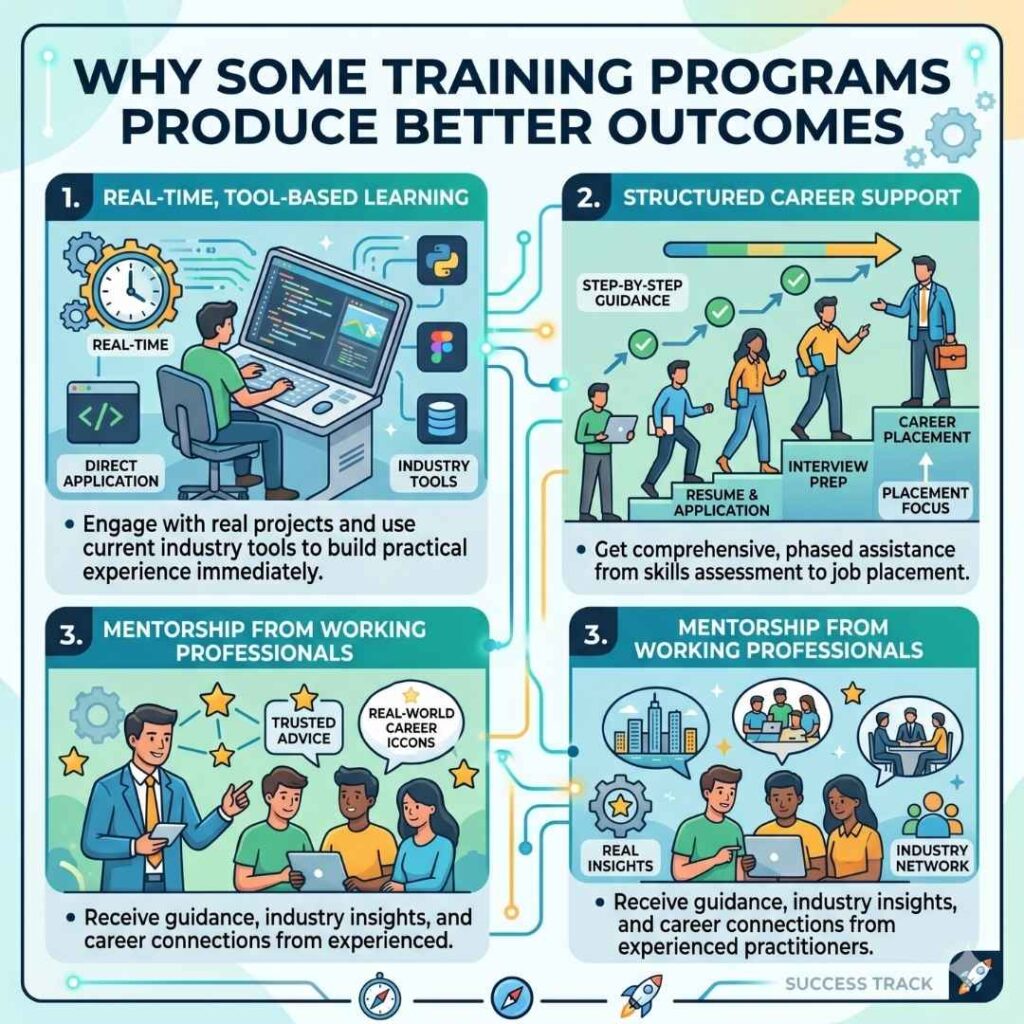
From what I’ve seen (and heard from people in the field), success stories tend to come from programs that focus on three things:
1. Real-time, tool-based learning
It’s one thing to “learn about” threats. It’s another to actually detect one in a simulated environment. Programs that use tools like SIEM platforms, EDR systems, or packet analyzers create that shift from theory to instinct.
2. Structured career support
This is where many courses fall short. Good cyber security training with job placement doesn’t just teach it actively prepares you for interviews, resumes, and real hiring expectations.
3. Mentorship from working professionals
There’s a noticeable difference when instructors are actively working in cyber security training. They bring in current attack trends, real incident examples, and sometimes even stories from their own shifts.
A quick real-world example (the kind you actually trust)
A friend of mine of non-IT background, by the way, jumped into cyber security training during the hiring boom post-2023. At first, it was overwhelming. Logs, alerts, false positives… It felt like noise.
But what made the difference wasn’t just the content, it was repeated exposure to real scenarios. They practiced investigating alerts, writing reports, and even explaining incidents out loud (which, surprisingly, helps a lot in interviews).
Somewhere along the way kind of in the middle of figuring things out they ended up finding H2K Infosys. What stood out wasn’t just the content, but how much it leaned into real-time project work and actual interview prep. It wasn’t overly theoretical, which helped.
And honestly, that hands-on approach made a bigger difference than expected. Things that felt confusing before started to make more sense, bit by bit. Not instantly, of course but quicker than they thought it would. Within a few months, they landed a junior SOC role not instantly, not magically, but through consistent practice and realistic training.
That’s the kind of success story that actually means something.
The role of cyber security sales training (often overlooked)
This might sound slightly off-track, but it’s becoming more relevant lately.
Not everyone in cyber security training ends up in a purely technical role. There’s growing demand for professionals who understand both security and business especially in areas like solution consulting or pre-sales.
Cyber security sales training is starting to bridge that gap. It helps people:
- Explain security solutions to non-technical clients
- Understand risk in business terms
- Work with security products from a strategic angle
Interestingly, some success stories now come from people who combine technical basics with sales awareness. It opens up more career paths than most beginners realize.
What current industry trends say (2025–2026)
Right now, hiring managers are leaning toward candidates who can demonstrate skills, not just list certifications.
A few noticeable shifts:
- AI-driven security tools are becoming standard, so understanding automation helps
- SOC roles still dominate entry-level hiring, especially in India and the US
- Practical experience (even simulated) often outweighs multiple certifications
This explains why cyber security jobs with training programs that include labs and real scenarios are producing more success stories than purely theoretical courses.
So, which training has the best success stories?
If I had to answer that in a grounded, honest way it’s not about a single “best” program.
The best success stories consistently come from training that:
- Feels like doing the actual job
- Forces you to think, not just memorize
- Includes support beyond the classroom (resume, interviews, mentorship)
And maybe this is the part people don’t say enough: success also depends on how much you engage with the cyber security training. The same course can produce completely different outcomes depending on how seriously someone practices.
Final thought (from someone who’s seen both sides)
If you’re choosing a program, don’t just ask, “Does it have success stories?”
Ask:
- Do I get to practice like I’m already in the job?
- Will I be able to explain what I did in an interview?
- Is there real support when I get stuck or confused?
Because in the end, the best success story is the one you can actually see yourself in not just the one written on a website.