Introduction
cYes, a data analyst certification online can genuinely help your career, especially if you’re trying to move into a higher-paying field, switch industries, or finally get into tech without going back to college for another long degree.
But here’s the thing people usually figure out a little later: the certificate itself isn’t the magic part.
What actually changes your career is learning how to work with data in a practical way. Companies want people who can solve problems, explain trends, and make sense of messy information. The certification just helps prove you took the process seriously.
And honestly, that’s why online analytics training has become so popular lately.
Why Data Analytics Careers Keep Growing
A few years back, people mostly associated analytics jobs with big tech companies.
Now? Almost every industry is hiring analysts.
Retail businesses constantly track customer behavior. Hospitals analyze patient data. Banks monitor fraud patterns. Logistics companies optimize delivery routes using analytics dashboards. Even sports teams are investing heavily in data departments now.
There’s also another shift happening in 2026 that’s changing hiring trends.
AI tools are handling repetitive reporting tasks faster than before, but companies still need real people who can interpret results and make business decisions. A dashboard can show numbers. It can’t fully explain why customer retention suddenly dropped or why sales changed in one region but not another.
That’s where analysts come in.
A solid Data Analyst Certification Online helps people build those practical skills without leaving their current jobs or putting life on pause for years.
Better Job Opportunities
This is usually the biggest reason people enroll in a Data Analytics Program in the first place.
The number of analytics-related roles has expanded a lot over the past few years.
Some common job titles include:
- Data Analyst
- Business Intelligence Analyst
- Reporting Analyst
- Product Analyst
- Operations Analyst
- Junior Data Engineer
And these jobs are appearing in industries that weren’t heavily data-focused before.
One person I spoke with recently moved from customer service into an analyst role after building dashboard projects during online training. Another came from healthcare administration and started working with reporting systems for hospital operations.
That kind of transition is becoming more common now.
Higher Salary Potential
Analytics roles tend to pay better than many traditional office positions, especially once technical skills improve.
Entry-level analysts in the U.S. are still seeing competitive salaries in 2026, particularly candidates who understand SQL, Power BI, Excel, and reporting tools.
What’s interesting is that employers increasingly care more about practical ability than academic background.
A candidate with strong projects and hands-on experience often stands out more than someone with only theoretical knowledge.
That’s changed hiring quite a bit.
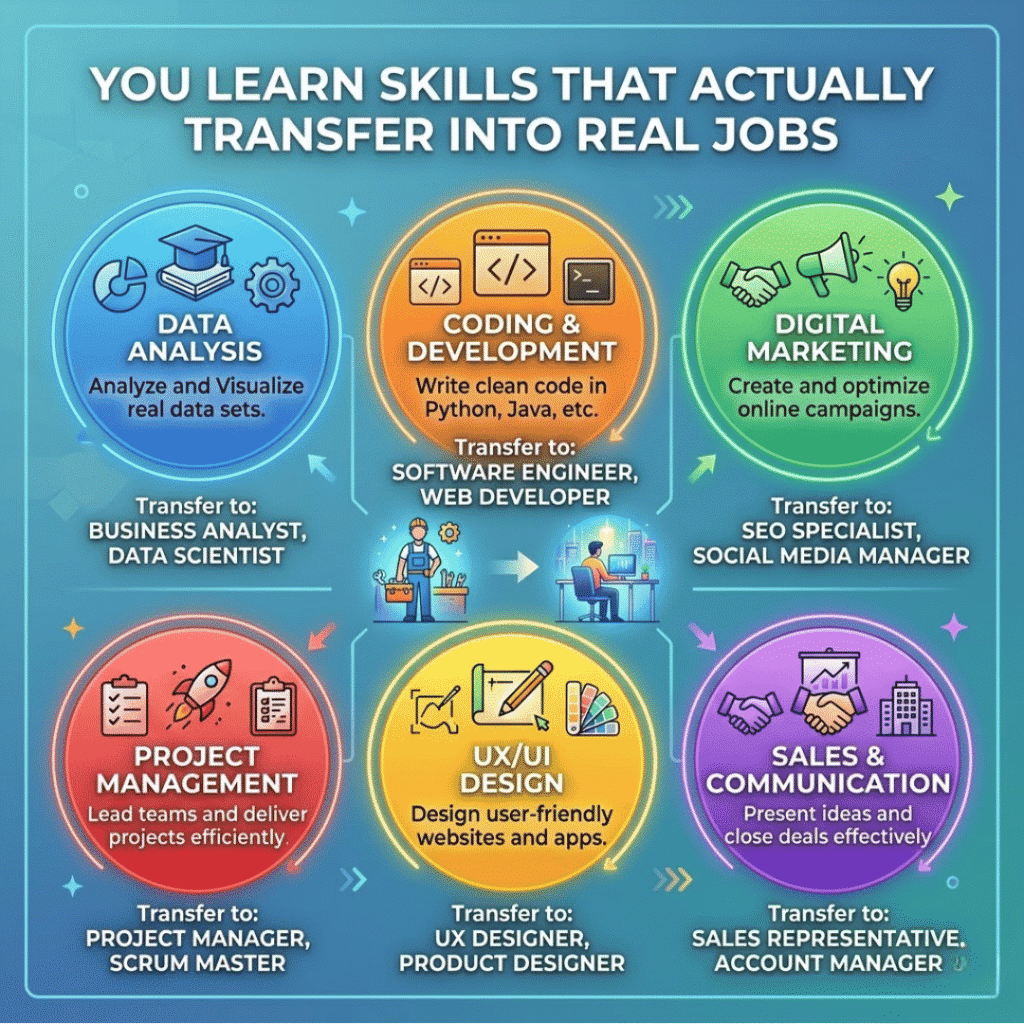
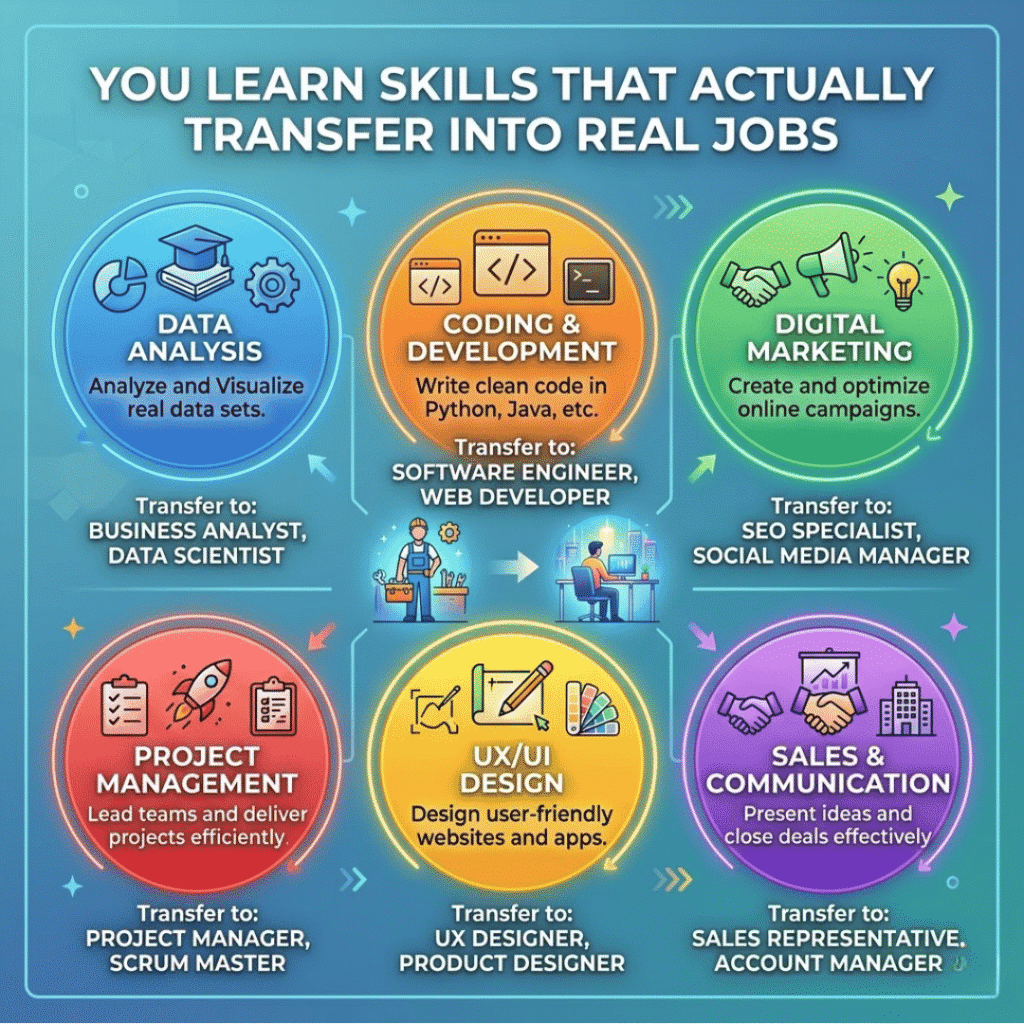
You Learn Skills That Actually Transfer Into Real Jobs
Some courses teach concepts that never really show up in day-to-day work.
Good analytics training is different.
A practical Data Analyst Certification Online usually teaches skills like:
- SQL querying
- Excel reporting
- Dashboard creation
- Data cleaning
- Power BI or Tableau
- Basic Python for analytics
- KPI tracking
- Business reporting
- Data visualization
These are tools companies actively use.
And honestly, when students work on real projects during training, interviews become easier because there’s something concrete to discuss.
That matters more than many people expect.
Career Switching Becomes Easier
One reason data analyst certification online attracts so many people is that the field is relatively open to career changers.
A lot of analysts did not originally study computer science.
People enter analytics from:
- Finance
- Teaching
- Retail
- Customer support
- Healthcare
- Administration
- Marketing
The transition usually becomes easier when learning follows a structured roadmap instead of random tutorials scattered across the internet.
That’s why many learners prefer organized training programs like H2K Infosys. Having guided projects, mentorship, and interview preparation removes a lot of confusion from the process.
Especially for beginners.
What Employers Really Want Now
This part surprises many people.
Most employers are not looking for entry-level candidates who already know advanced machine learning or complex AI systems.
They usually want someone who can:
- Understand business problems
- Work with data logically.
- Build simple reports
- Explain findings clearly
- Learn tools quickly
- Communicate with teams
That’s why practical projects matter so much.
If a candidate can explain how they analyzed sales data or built a dashboard to track performance metrics, hiring managers pay attention.
Real examples feel more convincing during interviews than memorized textbook definitions.
A Realistic Workplace Example
Imagine a retail company notices online sales dropping over the last two months.
An analyst might:
- Pull transaction data using SQL.
- Compare customer behavior trends.
- Identify where users abandon purchases.
- Build a dashboard for leadership.
- Recommend changes based on findings.
That’s real analytics work.
Not just theory.
A strong data analyst certification online should prepare students for these kinds of situations because this is how businesses actually use data every day.
The AI Conversation Everyone Keeps Having
A lot of people worry AI will eliminate analytics jobs completely.
Realistically, the field is changing, not disappearing.
AI tools can automate reporting faster now, but businesses still need humans who understand context and decision-making.
Someone still has to:
- Validate data
- Spot unusual patterns
- Explain business impact
- Present recommendations
- Understand customer behavior
Analysts who know how to work alongside AI tools are actually becoming more valuable right now.
That trend has become pretty obvious over the last year.
Common Mistakes People Make
Watching Tutorials Without Building Projects
This happens constantly.
People spend months consuming videos but never create anything themselves.
Then interviews happen and there’s no portfolio to discuss.
Even simple projects help:
- Sales dashboards
- KPI reports
- Customer churn analysis
- Marketing performance tracking
Those projects become proof of skill.
Trying To Learn Too Many Tools at Once
Beginners sometimes jump between:
- Python one day
- AI the next
- Cloud analytics after that
- Then back to Excel
It gets overwhelming quickly.
Structured learning paths usually work better because skills build naturally step by step.
That’s another reason guided programs often help people stay consistent.
Ignoring Communication Skills
Analytics is not just technical work.
A big part of the job involves explaining findings to managers, clients, or teams who are not technical at all.
The best analysts usually know how to simplify complicated information without making people feel confused.
That skill becomes extremely valuable over time.
Why Structured Learning Helps Many Beginners
Technically, yes it’s possible to learn everything independently online.
But many people struggle because there’s
- No roadmap
- No feedback
- No mentorship
- No interview practice
- No accountability
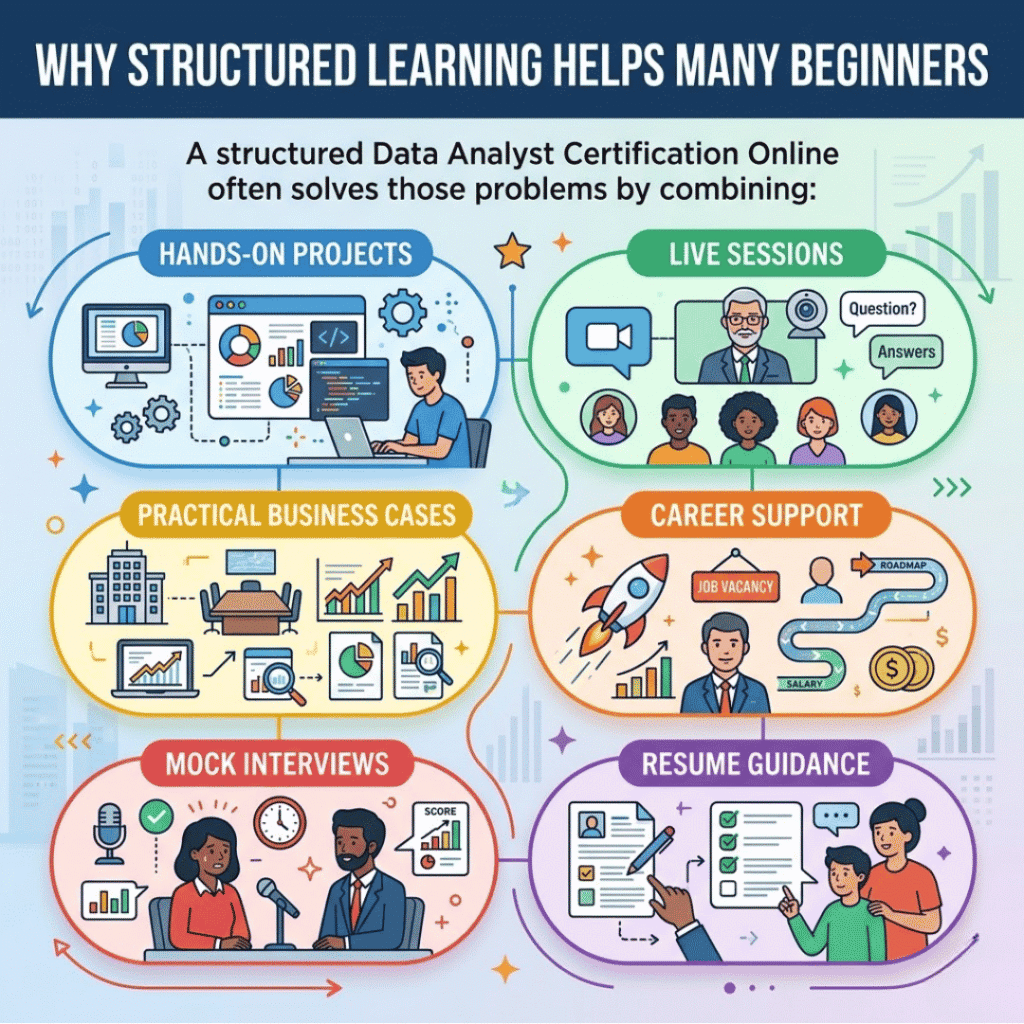
A structured Data Analyst Certification Online often solves those problems by combining:
- Hands-on projects
- Live sessions
- Career support
- Resume guidance
- Mock interviews
- Practical business cases
That kind of support can make learning feel far less overwhelming.
Especially for working professionals trying to balance jobs, family, and career changes at the same time.
FAQs
Is a data analyst certification online enough to get hired?
It can be, especially when combined with strong projects and interview preparation. Employers mainly want proof that you can apply the skills in practical situations.
Can beginners learn data analyst certification online?
Yes. Many successful data analyst certification online started with no technical background and learned through structured online training programs.
Which tools should I learn first?
Most beginners start with Excel and SQL, then move into Power BI or Tableau.
How long does it take to become job-ready?
For many learners, around 4–8 months of consistent study and project work is enough to begin applying for entry-level roles.
Do companies accept online certifications?
Yes. Most employers care more about practical skills and portfolio work than where the training happened.
Related Topics You Can Also Explore
You can also explore topics like:
- How To Build a Data Analyst Portfolio
- SQL Interview Questions for Beginners
- Power BI vs Tableau in 2026
- How AI Is Changing Data Analytics Careers
These topics connect naturally and help build stronger long-term analytics knowledge.
Final Thoughts
A Data Analyst Certification Online can absolutely create better career opportunities when the learning focuses on practical skills instead of just theory.
The people who usually succeed are not necessarily the ones with perfect resumes.
They’re the ones who:
- Practice consistently
- Build real projects
- Learn how businesses use data
- Improve communication skills
- Stay curious
That combination goes a long way in analytics.
And honestly, structured training data analyst certification online like H2K Infosys can make the learning process feel much more practical and organized, especially for people trying to transition into the field without wasting time figuring everything out alone.