Introduction
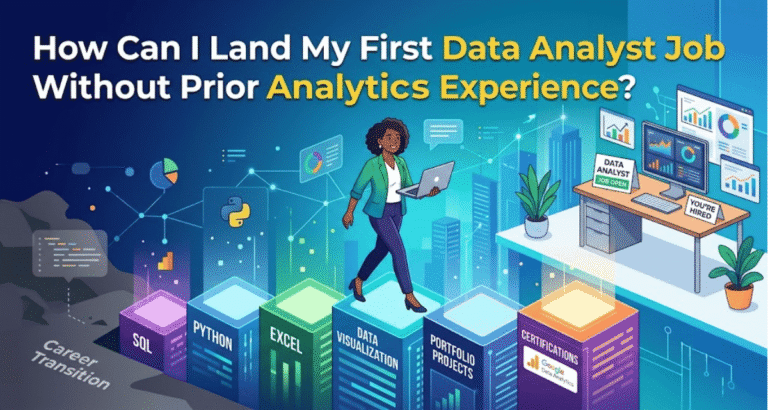
Sure, you can totally get your first Data Analyst job without having analytics experience before. The trick is to gain useful skills, build a portfolio to show what you can do, and get industry-approved qualifications from an online Data Analytics course focused on real-world projects rather than pure theory.
Many aspiring analysts assume they need years of experience before employers take them seriously. Interestingly, many of the entry-level First Data Analyst jobs in 2026 are being filled by career changers, recent grads and professionals looking to transition from fields like customer service, finance, operations, marketing, and even healthcare.
The problem isn’t always experience. More often it’s showing you can solve business problems using data.
Why Businesses Employ Data Analysts With No Direct Experience
Today’s businesses are creating more data than ever. Businesses, from e-commerce companies analysing customer behaviour to healthcare organisations evaluating patient outcomes, need people who can turn raw information into actionable insights.
The demand is still robust across industries. Organisations are putting more money into analytics, AI-powered decision-making, and business intelligence tools. This means that hiring managers are often looking for practical skills and problem-solving ability, not traditional job titles.
I’ve seen candidates from retail, teaching and customer support backgrounds successfully transition into analytics, simply by building strong project portfolios and learning the right tools.
What employers generally want:
- SQL knowledge
- Excellent Excel skills
- Understanding of Data Visualisation
- Mentalidad de empresario
- Communication skills
- Statistical literacy
- Experience with datasets
See anything? A lot of these skills can be picked up by way of formal training and hands-on practice.
Online Data Analytics Course with Live Projects to Get Started
One of the fastest ways to compensate for a lack of experience is to sign up for a good online First Data Analyst Job course that emphasises practical application.
The biggest mistake beginners make is hopping between random YouTube tutorials and free resources without a learning roadmap. You will be taken through basic and more advanced ideas step-by-step in a structured program.
Look for programs that include:
Database Management and SQL
SQL is still one of the most requested skills in First Data Analyst Job descriptions. You will learn how to:
- Query data bases
- Sort and filter information
- Making reports
- Handling large data sets
Data Visualisation Software
Platforms for visualisation like these are used in many modern organisations:
- Tableau
- Power BI
- Looker
In an interview, candidates are often set apart by their ability to clearly communicate data.
Business Analytics with Excel
Some people think little of Excel. That is an error.
Many analysts still spend much of their time working with spreadsheets. You’ve still got a lot to offer with advanced Excel functions, pivot tables, dashboards and automation techniques in your skillset.
Statistics & Business Analysis
No need for a PhD in statistics.
You must understand:
- Trends
- Correlations
- Samping
- Fundamentals Forecasting
- Performance measurement
These First Data Analyst Job concepts are introduced in a rigorous training program in the real business context.
Build a portfolio before you apply
That’s where a lot of aspiring analysts get a leg up on the competition.
Now think of two candidates:
Candidate A has no experience, no projects to show.
Candidate B has no work experience but can submit 3 full analytics projects with dashboards, SQL queries and business recommendations.
Most hiring managers are going to choose Candidate B.
Portfolio Project Suggestions
You can look at:
- Data on sales performance
- Consumer behaviour in e-commerce
- Health datasets
- Marketing campaign results
- Metrics of financial performance
For example, a beginner can use publicly available retail sales data to identify:
- High-performing products
- Seasonal fluctuations
- Revenue opportunities
- Customer buying patterns
These projects demonstrate real analytical thinking.
Data Analytics Certification Courses Recognised by Employers
Professional credentials can add to your resume and improve your chances of getting an interview.
Good data analytics certification courses serve as a proof of your skills and give the assurance of structured training to the employers.
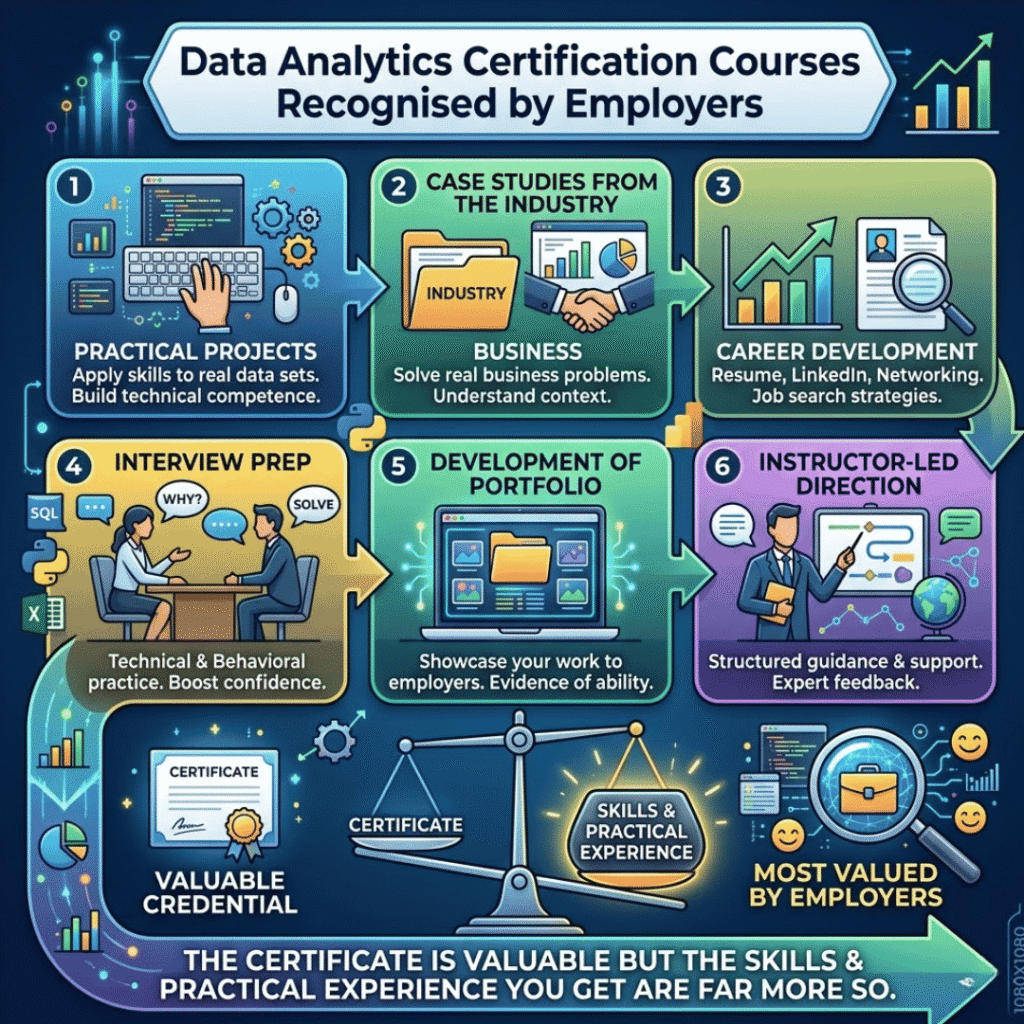
When assessing certification programs, look for those that include:
- Practical projects
- Case studies from the industry
- Career development
- Interview prep
- Development of portfolio
- Instructor-led direction
The First Data Analyst Job certificate is valuable, but the skills and practical experience you get are far more so.
Build Business Problem-Solving Skills
Most beginners only focus on tools.
Employers are focused on results.
A hiring manager usually doesn’t care if you know ten visualisation techniques. They care about whether you can answer questions like:
- Why are sales falling?
- Which customers are likely to churn?
- Which products bring the most profits?
- Where to spend marketing budgets?
Strong analysts make data findings relevant to business decisions.
One thing I have noticed when reviewing entry-level portfolios is that candidates who explain the business impact of their analysis really stand out immediately.
Get Experience Without a Job in Analytics
You don’t need to have the title of Data Analyst to get relevant experience.
Think:
Jobs in Freelance
Small businesses often find it difficult to organise their reports and dashboards.
Volunteer Work
Nonprofits often need help analysing donor, event, or operational data.
Projects Internos
If you have a job, seek out ways you can analyse reports, monitor KPIs or make improvements to the processes in your current position.
You can put these experiences on your resume and talk about them in interviews.
Online Data Analytics Classes With Career Assistance Enrol Now
But technical skills are not enough on their own.
Many successful candidates benefit from online Data analytics courses that also offer:
- Resume critiques
- Practice interviews
- Career coaching
- Guidance on portfolio
- Assistance in finding jobs
Such support can be a big boost to the transition from training to work.
Structured programs often reflect actual workplace situations and make students feel comfortable with the types of problems they will face when they are hired.
Top Mistakes Data Analyst Candidates Make for the First Time
Avoid these mistakes and save yourself months of frustration.
Learning Too Many Tools at One Time
Focus on:
- SQL
- Excel
- Tableau or Power BI
Begin with the basics.
Portfolio Development (Abandoned)
Certificates don’t usually get you interviews.
“Employers want to see real skills.”
Applying Way Too Late
Many candidates wait until they are “100% ready.”
Most successful accepted applicants actually begin applying while they are still growing those skills.
Not Focusing on Communication Skills
Analysts don’t analyse data.
They communicate their findings with stakeholders, managers and executives.
Clear communication is a major hiring factor.
Why H2K Infosys Can Help Fast Track Your Career In Data Analytics
If you are serious about making a career in analytics, structured training can be really helpful.
H2K Infosys provides end to end training for beginners to turn them into a Data Analyst with hands-on learning, live projects, industry aligned curriculum and career support services.
Students will gain experience with:
- SQL
- Excel
- Tableau
- Power BI
- Data Visualisation
- Business intelligence ideas
- Case studies from the real world
H2K Infosys focus not only on technical skills but also on interview preparation, resume building and hands on project experience which makes the difference while applying for entry level jobs.
For professionals entering analytics for the first time, a guided learning path can take out much of the guesswork and accelerate career growth.
Career Paths & Salaries 2026
Data Analytics remains one of the most accessible routes into the wider data and AI ecosystem.
Typical roles include:
- Data Analyst, Junior
- BA (business analysis)
- Analyst, Reporting
- Data Visualisation Analyst
- Analyst, Operations
- Marketing Analyst
As professionals gain experience, they often progress into:
- Senior Data Analyst
- Consultant, Analytics
- Data Scientist
- BI Developer
- Manager, Analytics
Analytics is a career path that appeals to many professionals, with strong demand, cross-industry applicability and clear advancement opportunities.
See Topics You Can Study
You might also want to pursue your expertise further by exploring topics such as:
- Create a Data Analyst Portfolio to Land Interviews
- SQL Interview Questions for Entry-Level Data Analysts
- Tableau vs Power BI: Which Tool Should a Beginner Learn First?
These are a natural extension to your analytics learning journey and will help build a good foundation for your career growth.
FAQs
Can I get into Data Analytics without a Degree?
Sure. “Most employers are looking for skills, certifications and project experience rather than formal degrees, especially for entry-level roles.
How long does it take to learn Data Analyst?
Given focused training, regular practice, and building a portfolio, learners can usually develop the skills they need to get a job in 4 to 8 months.
Are data analytics certification courses useful?
They can be incredibly valuable if they consist of hands-on projects, real-world case studies and career support, rather than theoretical instruction alone.
Which is the best Data Analytics course online for beginners?
The best programs mix SQL, Excel, visualisation, projects and career guidance. Look for courses that focus on hands-on experience and employability.
What coding skills do you need for data analysis?
You don’t need to know a lot of programming to get started as a Data Analyst, but basic SQL is required for entry-level roles. SQL, Excel and Tableau and Power BI are the basis for many entry-level positions.
Closing Words
Can you get into data analytics in 2026 without experience? Absolutely. The journey is often less about gathering credentials and more about demonstrating that you can work with data, uncover insights and communicate business value.
Learn the fundamentals, build a portfolio with real-world projects, obtain industry certifications, and apply for jobs. Those little projects and new skills start to look a lot like experience over time.
If you are looking for a guided path, then a structured program from H2K Infosys can help you build in-demand analytics skills, gain practical project experience, and prepare confidently for your first Data Analyst opportunity.
The next step is easy. Choose a learning path. Make a commitment to building real projects. Treat yourself like an analyst before you actually are one.