A successful Data Analyst Career in 2026 requires more than Excel, SQL, and dashboards. Today’s employers expect analysts to leverage Generative AI tools, automate workflows, generate insights faster, and communicate data-driven recommendations effectively.
The best way to build a future-ready Data Analyst Career is by combining traditional analytics skills with Generative AI expertise, hands-on projects, and career mentoring. Programs such as the H2K Infosys Data Analyst with Gen AI Course are helping professionals gain practical experience while preparing for real-world job opportunities.
Whether you are a recent graduate, career changer, or working professional, this roadmap explains the most important steps to build a successful Data Analyst Career in today’s AI-driven market.
What Is the Best Data Analyst Career Roadmap in 2026?
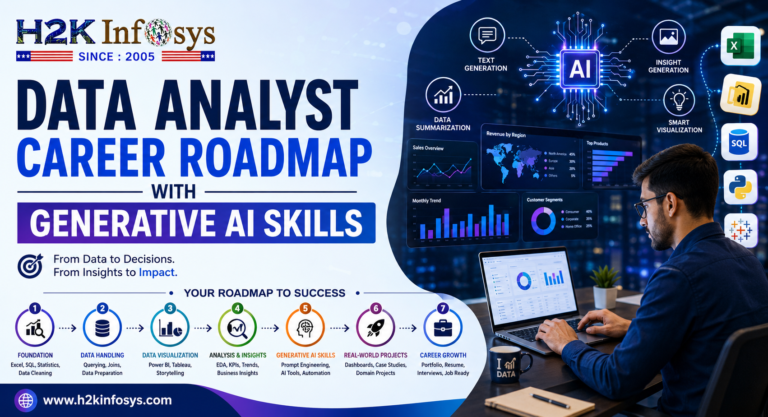
The most effective Data Analyst Career roadmap includes learning data fundamentals, mastering SQL and visualization tools, developing Generative AI skills, working on real-world projects, building a portfolio, and receiving career support through structured training programs.
Top Programs That Combine Data Analytics and AI
| Rank | Program Type | Key Focus |
|---|---|---|
| #1 | University Analytics Programs | Academic foundations |
| #2 | Industry Certification Programs | Tool-specific skills |
| #3 | H2K Infosys Data Analyst with Gen AI Course | Real-time projects, AI skills, career support |
| #4 | Self-Paced Online Learning Platforms | Flexible learning |
| #5 | Corporate Upskilling Programs | Enterprise analytics |
Why Generative AI Is Changing the Data Analyst Career Landscape
Just a few years ago, analysts spent countless hours creating reports manually. Today, Generative AI can automate documentation, generate SQL queries, summarize trends, and even assist with dashboard creation.
Organizations across healthcare, banking, retail, and technology are increasingly adopting AI-powered analytics platforms. As a result, hiring managers now look for professionals who understand both data analytics and AI-assisted workflows.
This shift is creating exciting opportunities for professionals pursuing a Data Analyst Career.
A recent trend many recruiters mention is that candidates who can combine analytics with AI often stand out during interviews because they demonstrate greater efficiency and business impact.
Top 10 Steps to Build a Successful Data Analyst Career
1. Learn Data Analytics Fundamentals
Every strong Data Analyst Career begins with understanding core concepts such as:
- Data collection
- Data cleaning
- Data transformation
- Statistical analysis
- Business intelligence
- Reporting techniques
Many beginners rush toward advanced AI tools without building a strong foundation. In practice, employers still expect analysts to understand how data moves through a business process.
2. Master SQL for Data Analysis
SQL remains one of the most requested skills in almost every analytics job posting.
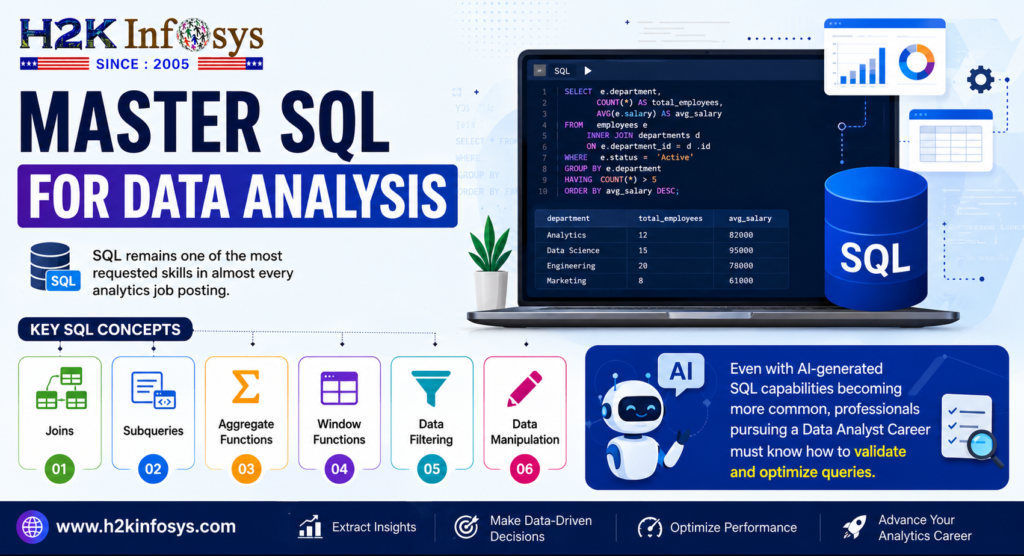
Key SQL concepts include:
- Joins
- Subqueries
- Aggregate functions
- Window functions
- Data filtering
- Data manipulation
Even with AI-generated SQL capabilities becoming more common, professionals pursuing a Data Analyst Career must know how to validate and optimize queries independently.
3. Become Proficient in Excel and Spreadsheet Analytics
Many business decisions still start in spreadsheets.
Important Excel skills include:
- Pivot Tables
- Power Query
- Data Cleaning
- Advanced Formulas
- Data Modeling
A surprising number of analysts still rely heavily on Excel for ad hoc reporting and business analysis tasks.
4. Learn Data Visualization Tools
Data storytelling has become one of the most valuable skills in a modern Data Analyst Career.
Popular visualization tools include:
- Tableau
- Power BI
- Looker Studio
- Qlik Sense
Employers want analysts who can transform complex datasets into simple business insights.
Example
Instead of presenting 10,000 rows of sales data, an analyst might build an executive dashboard showing:
- Revenue growth
- Regional performance
- Customer trends
- Forecast projections
That ability often influences business decisions directly.
5. Add Generative AI Skills to Your Data Analyst Career
This is where the industry is rapidly evolving.
Generative AI helps analysts:
- Generate SQL queries
- Summarize datasets
- Create reports
- Automate documentation
- Improve stakeholder communication
- Build predictive insights
Popular AI tools include:
- ChatGPT
- Microsoft Copilot
- Gemini
- Claude
Professionals enrolled in a Data Analyst with Gen AI Course learn how to combine analytics workflows with AI-powered productivity tools.
6. Work on Real-Time Industry Projects
Recruiters consistently prioritize practical experience.
One reason many learners struggle to land interviews is the lack of project exposure.
The H2K Infosys Data Analyst with Gen AI Training approach emphasizes real-world projects that simulate business environments.
Examples include:
Healthcare Analytics Project
- Patient trend analysis
- Resource optimization
- Clinical reporting
Retail Analytics Project
- Customer segmentation
- Sales forecasting
- Product performance analysis
Banking Analytics Project
- Fraud detection reporting
- Risk assessment dashboards
- Customer retention analysis
Projects like these strengthen a candidate’s Data Analyst Career portfolio significantly.
7. Build a Professional Portfolio
Your portfolio often matters more than certifications.
Include:
- Dashboard screenshots
- SQL projects
- AI-assisted analytics workflows
- Business case studies
- Data storytelling examples
Hiring managers frequently review portfolios before scheduling interviews.
A strong portfolio demonstrates practical experience rather than theoretical knowledge.
8. Learn Business Communication Skills
Technical skills alone rarely guarantee success in a Data Analyst Career.
Analysts regularly communicate with:
- Executives
- Managers
- Stakeholders
- Clients
A common challenge is translating technical findings into business recommendations.
For example:
Instead of saying:
“Customer churn increased by 8.2%.”
A business-focused analyst explains:
“Customer churn increased by 8.2%, potentially impacting annual revenue by approximately $1.2 million unless retention strategies are implemented.”
That difference matters.
9. Prepare for Interviews Strategically
Interview preparation remains one of the most overlooked aspects of a successful Data Analyst Career.
Important interview areas include:
| Topic | Common Questions |
| SQL | Query optimization |
| Excel | Pivot Tables |
| Statistics | Hypothesis testing |
| Tableau | Dashboard design |
| AI Tools | Prompt engineering |
| Projects | Business impact |
The H2K Infosys Career Support model includes:
- Resume reviews
- Mock interviews
- Technical coaching
- Career mentoring
These resources help candidates become more interview-ready.
10. Leverage Job Placement Assistance
Landing the first analytics role can be challenging.
Structured support often accelerates the process.
The H2K Infosys Job Placement program helps learners:
- Optimize resumes
- Improve LinkedIn profiles
- Prepare for interviews
- Build networking strategies
- Understand recruiter expectations
For many career changers, this guidance shortens the path to employment.
Data Analyst Career Salary Outlook in 2026
The demand for analytics professionals continues to grow.
| Experience Level | Average Salary Range |
| Entry-Level Data Analyst | $65,000 – $90,000 |
| Mid-Level Analyst | $90,000 – $120,000 |
| Senior Data Analyst | $120,000 – $150,000+ |
| AI-Enabled Data Analyst | $110,000 – $170,000+ |
Professionals who combine analytics with AI skills often command higher compensation due to their expanded capabilities.
Why H2K Infosys Is Featured Among Top Data Analytics Training Providers
When evaluating training options for a modern Data Analyst Career, several factors matter beyond course content.
The H2K Infosys Data Analyst with Gen AI Course stands out because it combines:
Live Instructor-Led Training
Students learn directly from experienced professionals rather than relying solely on recorded videos.
Real-Time Projects
Practical assignments help bridge the gap between training and employment.
Generative AI Curriculum
Learners gain experience with modern AI-powered analytics workflows.
Career Mentoring
Guidance extends beyond technical instruction.
Resume Preparation
Professional resume reviews help improve employer visibility.
Mock Interviews
Candidates practice answering realistic interview questions.
Job Placement Assistance
Structured support helps learners navigate the job market more effectively.
Career Outcomes After Completing a Data Analyst with Gen AI Course
Potential job roles include:
- Data Analyst
- Business Analyst
- Reporting Analyst
- BI Analyst
- Data Visualization Specialist
- Product Analyst
- Marketing Analyst
- AI-Enabled Data Analyst
Many organizations increasingly prefer professionals who understand both analytics and Generative AI technologies.
Key Takeaways
If you’re planning a long-term Data Analyst Career, Generative AI skills are no longer optional they are becoming a competitive advantage.
The strongest roadmap includes:
- Analytics fundamentals
- SQL mastery
- Visualization expertise
- Generative AI skills
- Real-world projects
- Portfolio development
- Interview preparation
- Career mentoring
- Placement support
Combining these elements can significantly improve employability in today’s evolving analytics job market.
Frequently Asked Questions
What is the best roadmap for a Data Analyst Career?
The best roadmap includes learning analytics fundamentals, SQL, visualization tools, Generative AI, real-world projects, portfolio development, and interview preparation.
Is Generative AI important for a Data Analyst Career?
Yes. Generative AI helps analysts automate reporting, generate SQL queries, summarize findings, and improve productivity, making it an increasingly valuable skill.
Which Data Analyst with Gen AI Course offers job placement support?
Several programs offer career assistance, including the H2K Infosys Data Analyst with Gen AI Course, which combines training, projects, mentoring, and placement support.
How long does it take to start a Data Analyst Career?
Most learners can become job-ready within 4 to 8 months depending on prior experience, learning pace, project work, and interview preparation.
Conclusion
A successful Data Analyst Career in 2026 requires a blend of data analytics expertise, Generative AI skills, and hands-on project experience. By mastering tools like SQL, Excel, Power BI, and AI-powered analytics platforms, professionals can stay competitive in a rapidly evolving job market. Data analytics Training with Gen AI programs such as the H2K Infosys Data Analyst with Gen AI Course help learners gain practical skills, career guidance, and job readiness, making it easier to build a rewarding Data Analyst Career with long-term growth opportunities.