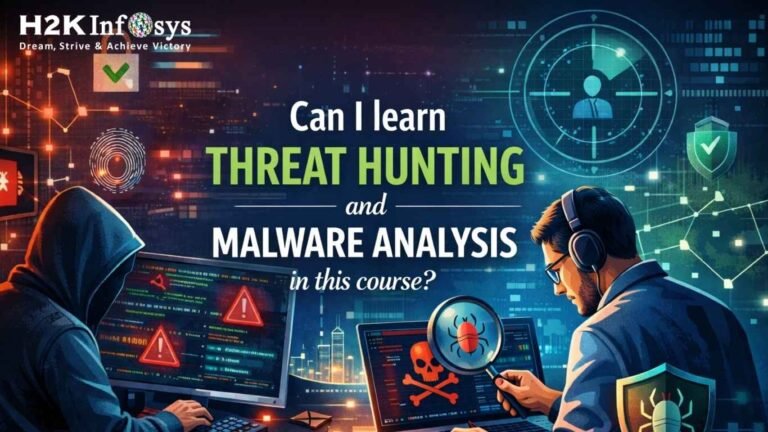
Yes, a well-structured cybersecurity program like those designed with industry-aligned frameworks at H2K Infosys can absolutely teach threat hunting and malware analysis, especially if it includes hands-on labs, real attack simulations, and SOC-style workflows. Most modern cybersecurity training and placement focused programs now integrate these skills because companies in 2026 expect security analysts to detect threats proactively, not just respond after damage is done.
If I’m being honest, this is one of the biggest shifts I’ve personally noticed in cybersecurity learning over the last few years. Earlier, courses mostly focused on theory network security, basic tools, maybe some vulnerability scanning. Now? Real-world threat hunting and malware investigation are becoming core skills because attackers are using automation, AI-generated malware variants, and fileless attacks that don’t behave like traditional threats.
And learners are asking smarter questions too, not just “Will I get a job?” but “Will I actually know how to investigate an attack?” That’s a good sign for the industry.
What Threat Hunting Actually Means in Real Life
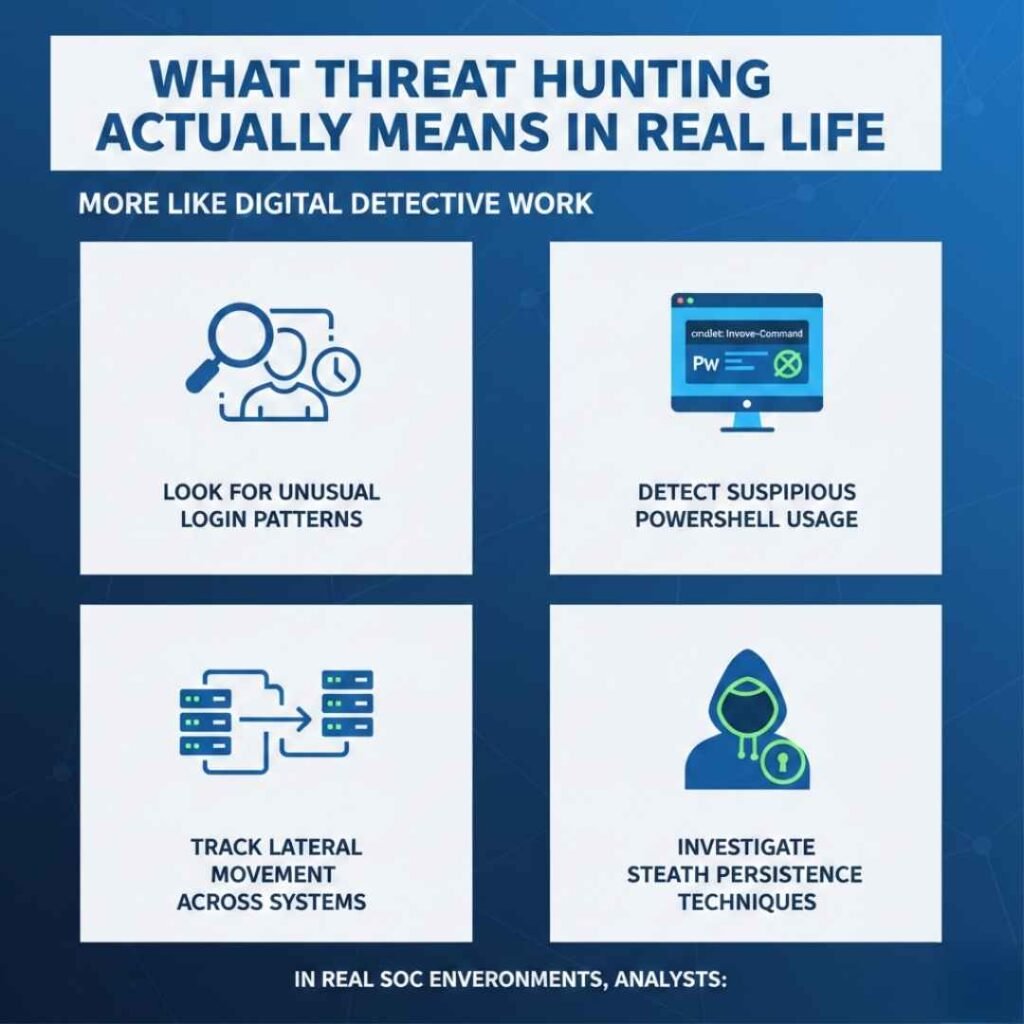
Threat hunting is not just looking at alerts all day. It’s more like digital detective work.
In real SOC environments, analysts:
- Look for unusual login patterns
- Detect suspicious PowerShell usage
- Track lateral movement across systems
- Investigate stealth persistence techniques
A good training program will simulate scenarios like:
- Insider threat detection
- Ransomware early-stage behavior hunting
- Command and control traffic identification
- Log-based anomaly detection
I’ve seen many learners get surprised when they realize threat hunting involves thinking like an attacker. It’s not just tool-based, it’s mindset-based.
This is where strong cyber security jobs with training programs stand out. They don’t just teach tools, they teach investigation logic.
How Malware Analysis Is Usually Taught Today
Modern malware analysis training usually happens in three layers.
1️⃣ Basic Malware Understanding
You learn:
- Malware types (trojans, worms, ransomware, spyware)
- Infection vectors
- Persistence mechanisms
- Payload behavior patterns
2️⃣ Static Malware Analysis
You analyze malware without executing it:
- File structure analysis
- Hash comparison
- String extraction
- Signature-based detection
3️⃣ Dynamic Malware Analysis
This is where things get interesting:
- Running malware safely in sandbox environments
- Monitoring registry changes
- Tracking network communication
- Watching process injection behavior
In 2026, sandbox and EDR telemetry analysis are becoming standard skills. Many companies expect junior analysts to at least understand behavior-based detection concepts.
Tools You’ll Likely Work With
From what I’ve seen in modern programs, learners usually get exposure to tools like:
Threat Hunting / Detection Tools
- SIEM platforms (log correlation)
- EDR dashboards
- Threat intelligence platforms
Malware Analysis Tools
- Wireshark (network behavior)
- Process Monitor
- PE analysis tools
- Sandboxing platforms
Some courses even simulate red team attack traces so students can practice blue team investigation which honestly feels very close to real job environments.
Why These Skills Matter More in 2026
Here’s the reality: companies are tired of reactive security.
According to recent industry hiring trends:
- SOC analysts are expected to perform basic threat hunting
- Incident responders must understand malware behavior
- Even cloud security teams now investigate suspicious workloads
Attackers are using:
- AI-generated phishing payloads
- Polymorphic malware
- Living-off-the-land techniques
Which means defenders need investigation skills, not just alert monitoring skills.
This is also why some programs now include modules similar to cyber security sales training environments not for selling security products, but for helping professionals understand business risk conversations and communicate threats clearly to leadership. That skill is oddly underrated but extremely valuable in real jobs.
What Real Hands-On Training Looks Like (From Learner Experience)
The strongest programs usually include:
- Simulated SOC dashboards
- Malware sample investigation labs
- Incident response playbooks
- Real log dataset analysis
- Capture-the-Flag style threat scenarios
I remember talking to one learner who said their biggest “aha moment” was tracing a fake ransomware infection from email entry point → endpoint execution → lateral movement → data exfiltration attempt. That full chain view changes how you think about security.
Who Benefits Most From Learning These Skills
You’ll get huge value if you want roles like:
- SOC Analyst
- Threat Hunter
- Incident Responder
- Malware Analyst
- Blue Team Security Analyst
- Detection Engineer
Even cloud security roles now expect some malware behavior knowledge because attackers target containers, workloads, and cloud IAM abuse patterns.
One Honest Reality Most Blogs Don’t Say
Threat hunting is not easy at first.
You will:
- Feel confused reading raw logs
- Miss attack indicators initially
- Struggle connecting attack chain dots
That’s normal. Every analyst goes through this phase. The key is repeated exposure to real attack scenarios.
How to Know If a Course Truly Teaches These Skills
Look for:
✔ Real malware sample labs
✔ SOC dashboard simulation
✔ Threat hunting use case exercises
✔ Log analysis projects
✔ Incident response case studies
✔ Hands-on SIEM query practice
If it’s only video theory, you won’t build real investigation confidence.
The Bigger Career Picture
The reason threat hunting + malware analysis together are powerful is simple:
Threat hunting = Finding hidden attacks early
Malware analysis = Understanding how the attack works
When you combine both, you become far more valuable in the job market.
That’s exactly why cybersecurity training and placement focused programs are evolving into investigation-driven training instead of theory-heavy models.
Final Thought
If your course includes real labs, attack simulation practice, and investigation workflows, yes, you can absolutely learn threat hunting and malware analysis. And honestly, these are becoming baseline expectations for modern security roles, not “advanced specialist skills” anymore.