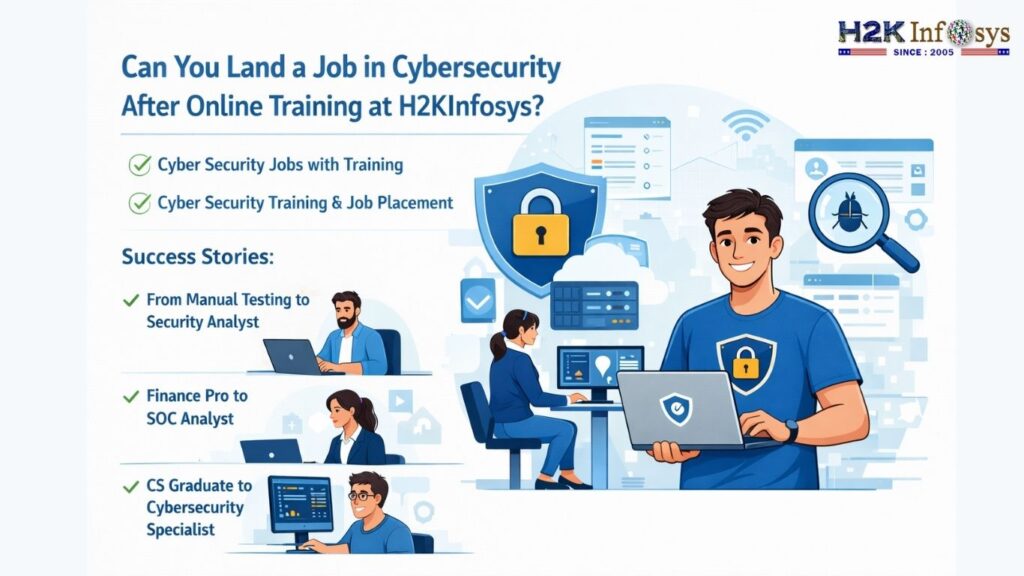
Yes, it’s absolutely possible to land a cybersecurity job after completing an online training program at H2K Infosys especially if the course includes hands-on labs, real project simulations, and career support. Many learners transition from non-IT backgrounds into cyber security jobs with training by combining practical skills, certification preparation, and job placement assistance offered through structured programs.
Let’s break down how it actually happens in the real world and what kind of success stories are emerging from programs like these.
Why Online Cybersecurity Training Is Opening Real Career Doors
Cybersecurity demand is exploding globally. In fact, organizations like ISC2 regularly report a global shortage of millions of cybersecurity professionals. Companies aren’t just hiring computer science graduates anymore they’re hiring people who can demonstrate practical security skills.
That’s where cyber security training with job placement programs comes in.
These programs typically focus on:
- Real security tools used in companies
- Simulated cyberattack scenarios
- Resume preparation and interview coaching
- Practical project work
And honestly, this hands-on experience is often what hiring managers care about most.
I’ve spoken with several hiring managers in security teams who say the same thing: “Show me what you’ve done, not just what you studied.”
What Makes H2KInfosys Cybersecurity Training Different?
Not all training programs are equal. Some just provide recorded videos and call it a day.
Programs offered through H2K Infosys tend to focus on three things that actually matter when you’re trying to get hired:
1. Real-World Security Simulations
Students practice detecting threats, analyzing logs, and responding to simulated attacks. These exercises mimic what analysts do in a Security Operations Center (SOC).
Typical tools used during training may include:
- SIEM platforms
- Threat monitoring tools
- Vulnerability scanners
- Incident response workflows
That practical exposure makes a huge difference during interviews.
2. Career-Focused Learning
Many students enroll specifically for cyber security training and job placement, not just theoretical knowledge.
Training programs often include:
- Mock technical interviews
- Resume optimization for cybersecurity roles
- LinkedIn profile building
- Guidance on entry-level roles like SOC Analyst
This support can shorten the job search dramatically.
3. Project-Based Learning
Instead of just watching tutorials, students build projects such as:
- Network threat monitoring systems
- Incident response reports
- Vulnerability assessment reports
- Security risk analysis documentation
Those projects become portfolio evidence during interviews.
Real Success Stories from Students
Let’s talk about what actually happens after the training because this is the part most people are curious about.
Story #1: Career Switch from Manual Testing to Cybersecurity
One student had been working in software testing for several years but wanted a more future-proof career.
After completing cybersecurity training and practicing SOC simulations, they landed a role as a Security Analyst at a mid-sized IT services company.
Their biggest advantage?
They could demonstrate incident analysis during the interview instead of just explaining theory.
Story #2: Non-IT Background to SOC Analyst
Another interesting example involved a professional from a finance background.
They completed a structured cyber security jobs with training program that included:
- Networking fundamentals
- Security monitoring
- Log analysis
- Threat detection
Within a few months, they secured a junior SOC analyst position. The company valued their analytical thinking and practical training experience.
Story #3: Recent Graduate Landing First Tech Role
A computer science graduate struggled to land a job initially.
After completing cyber security training with job placement, they gained hands-on exposure to:
- SIEM log analysis
- Threat intelligence research
- Security incident workflows
Those practical skills helped them land their first cybersecurity job within months.
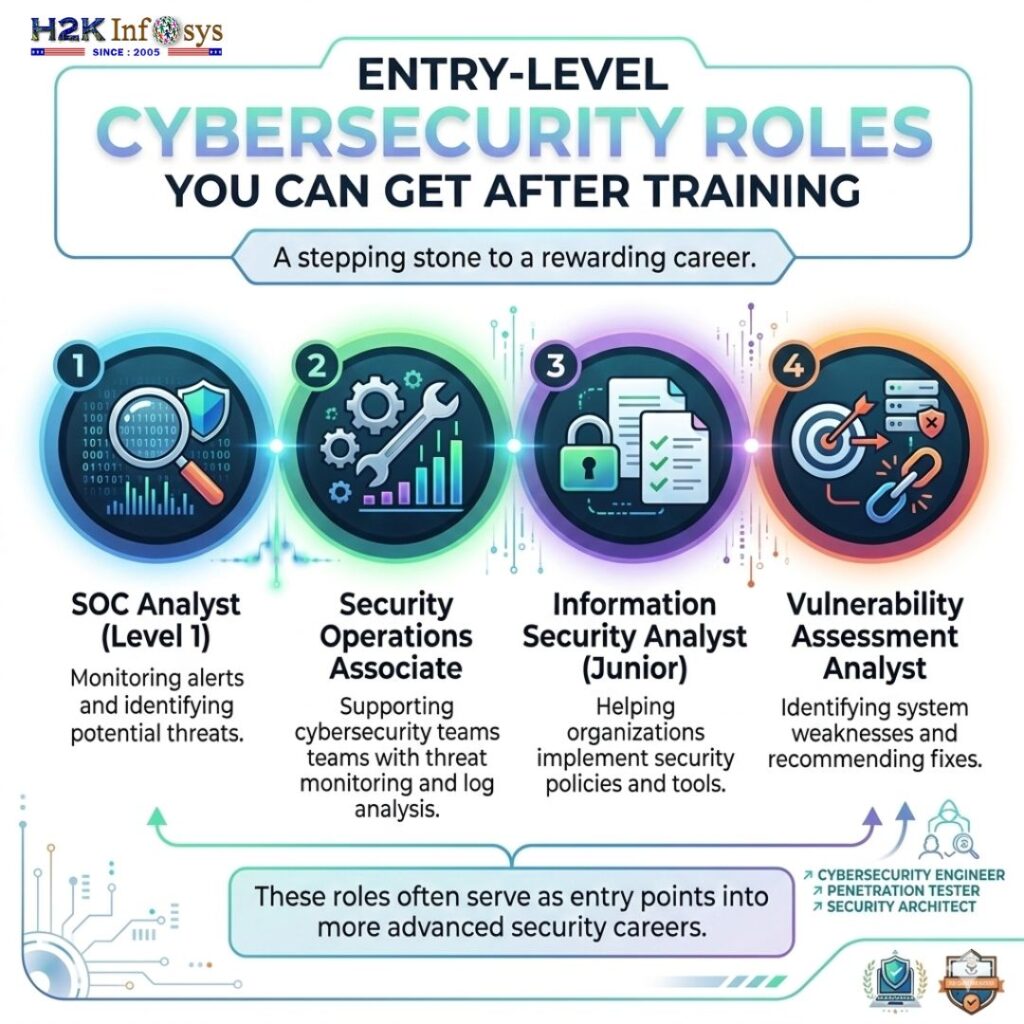
Entry-Level Cybersecurity Roles You Can Get After Training
One misconception is that cybersecurity requires years of experience. That’s not always true.
After completing structured cyber security training and job placement, many students begin with roles such as:
SOC Analyst (Level 1)
Monitoring alerts and identifying potential threats.
Security Operations Associate
Supporting cybersecurity teams with threat monitoring and log analysis.
Information Security Analyst (Junior)
Helping organizations implement security policies and tools.
Vulnerability Assessment Analyst
Identifying system weaknesses and recommending fixes.
These roles often serve as entry points into more advanced security careers.
Skills Employers Look For in Cybersecurity Candidates
Training alone isn’t enough, you also need specific technical capabilities.
Most hiring managers look for:
- Network security fundamentals
- Threat detection skills
- Log analysis experience
- Understanding of malware and phishing attacks
- Knowledge of security frameworks
Hands-on labs during cyber security jobs with training programs help students build these skills quickly.
Industry Trends Driving Cybersecurity Hiring
Cybersecurity hiring continues to grow due to several global trends.
Rising Cyberattacks
Major incidents like ransomware attacks on healthcare systems and infrastructure have pushed companies to invest heavily in security teams.
Government agencies like Cybersecurity and Infrastructure Security Agency regularly warn about increasing cyber threats.
Cloud Security Demand
With businesses moving workloads to platforms like Amazon Web Services and Microsoft Azure, cybersecurity professionals who understand cloud security are especially valuable.
Training programs now include cloud security modules to match this demand.
Security Operations Center Growth
Many companies are building dedicated SOC teams to monitor threats 24/7.
That’s why cyber security training with job placement programs often focus heavily on SOC workflows.
Tips to Increase Your Chances of Getting Hired
Based on industry hiring patterns, here are a few practical tips for students.
Build a Portfolio
Document your projects such as:
- Security analysis reports
- Threat detection case studies
- Vulnerability scans
These can be powerful proof of your abilities.
Practice Real Security Tools
Employers value candidates who already understand tools like:
- SIEM systems
- Network monitoring platforms
- Threat intelligence tools
Hands-on labs during cyber security training and job placement programs help bridge this gap.
Stay Updated on Cybersecurity News
Cybersecurity evolves quickly.
Following organizations like OWASP Foundation or security researchers on professional platforms helps you stay current with threats and technologies.
This knowledge often comes up in interviews.
Is Cybersecurity Training Worth It?
For many people, structured training is the fastest path into cybersecurity.
Self-learning is possible, of course but structured programs provide:
- Clear learning roadmap
- Hands-on labs
- Career guidance
- Peer community support
That combination often leads to faster results when pursuing cyber security jobs with training.
Final Thoughts
Yes many learners successfully land cybersecurity roles after completing online training programs at H2K Infosys. The key factors are hands-on experience, project work, and strong career support.
With cyber threats increasing worldwide and companies urgently hiring security professionals, programs offering cyber security training with job placement are becoming a realistic gateway into the industry.
If you approach the training seriously, practice real-world skills, and stay engaged with industry developments, transitioning into cybersecurity is not just possible, it’s happening every day for motivated learners.