Introduction
Sure, the data analytics training is massively important for the fresher because in 2026 companies don’t want qualifications; they want skills. But (and this matters) it works best if you treat it as a skill-building journey, not just a certificate to add on LinkedIn.
Let’s talk about this honestly because I’ve seen fresh graduates approach Data analytics training in two very different ways. One group lands interviews within months. The other finishes a course and then wonders why nothing happens.
The difference isn’t talent. It’s approach.
Why Data Analytics Is Actually Beginner-Friendly
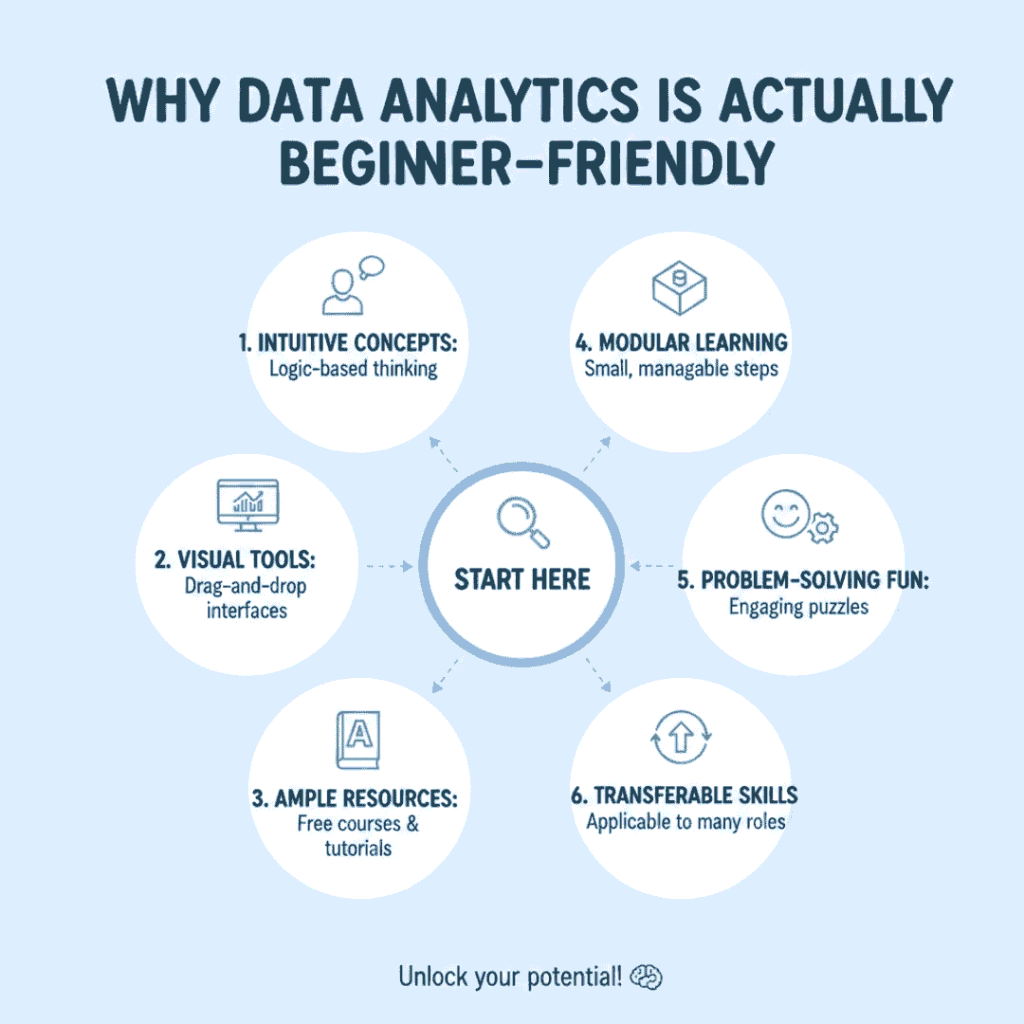
Here’s something many freshers don’t realize: entry-level data analyst roles were practically designed for beginners.
You’re not expected to build AI models from day one. You’re expected to:
- Clean data
- Create reports
- Build dashboards
- Answer business questions
And unlike those that take years of specialization, analytics rewards practical skills quickly. If you can write clean SQL queries and clearly express insights, you’re already head and shoulders above a lot of applicants.
The 2026 Job Market Reality
Let’s zoom out for a second.
Right now businesses are awash in data, especially as AI tools are spitting out more reports and automatically generated outputs than ever. But here’s the plot twist: Businesses still need people to make sense of what all that data means.
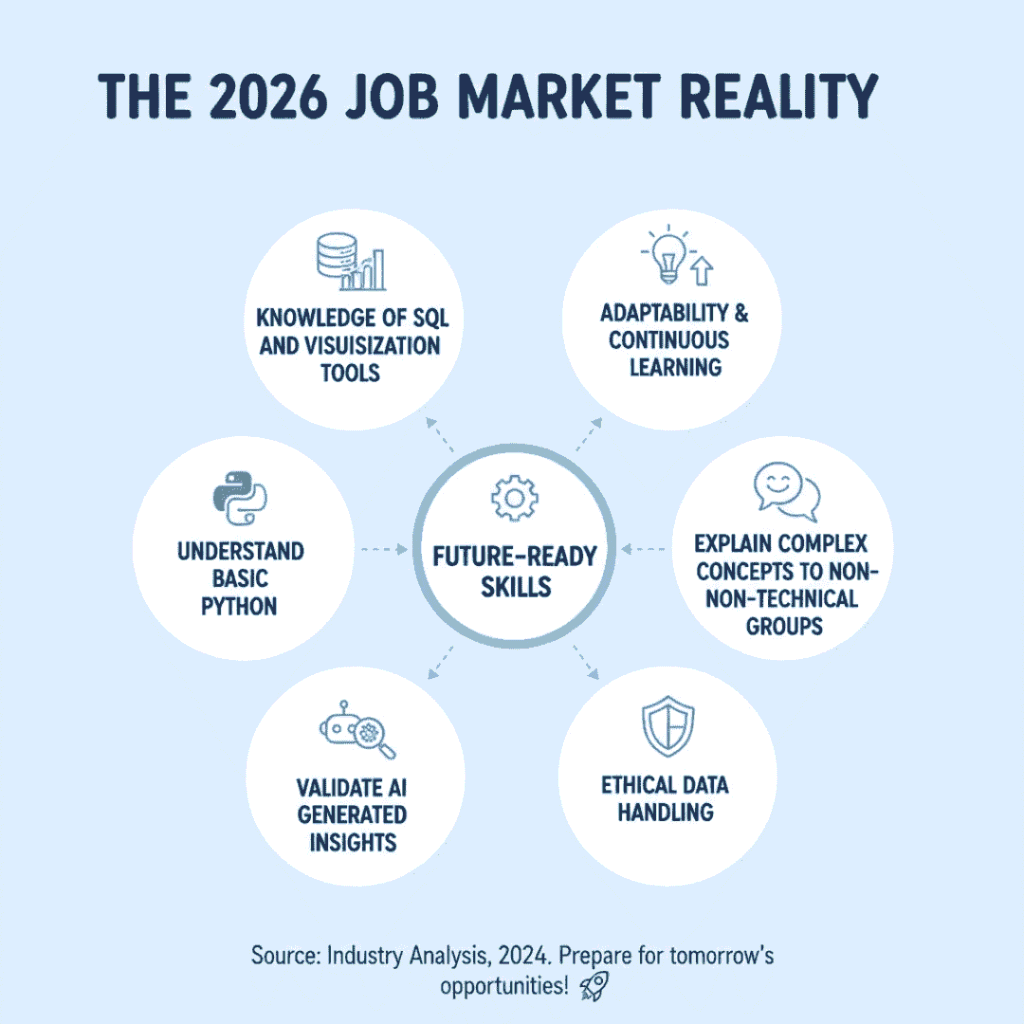
Analyst positions in 2026 should see:
- Knowledge of SQL and visualization tools.
- Understand basic Python
- Validate AI-generated insights
- Explain complex concepts to non-technical groups.
Freshers who complete proper data analytics training and build a small portfolio are getting interviews in startups, fintech, e-commerce, healthcare tech, and even government data projects. In fact, many students who enroll in a structured data analytics course in Hyderabad focus heavily on real-world projects so they can demonstrate practical problem-solving skills during interviews in Hyderabad.
I recently spoke with a hiring manager at a mid-sized SaaS company. She said something that stuck with me:
“We don’t expect experience from freshers. We expect proof of thinking.”
That’s encouraging, right?
What Makes It a Good Option for Freshers?
1. No Strict Background Required
You don’t need to be from computer science.
I’ve seen:
- B.Com graduates transition into analytics
- Psychology majors build research dashboards.
- Engineers pivot from core jobs into business analytics.
Data doesn’t discriminate by degree. It rewards problem-solving.
Structured Programs Make It Manageable
A beginner-friendly course such as the Google Data Analytics Professional Certificate (frequently referred to as the Google Data Analytics course) was made for people with little to no experience.
It walks you through:
- Spreadsheets
- SQL
- Data cleaning
- Visualization
- Capstone projects
- No prior coding is required.
And since it’s self-paced, newbies can get through in around 4–6 months while job hunting or studying for other exams.
3. Faster Entry Than Many Other Careers
Let’s be realistic.
If you want to become:
- A chartered accountant → years of exams
- A doctor → a decade of study
- A software engineer → strong coding foundations
Data analytics training can get you job-ready within months if you’re consistent.
That speed is attractive for fresh graduates who don’t want to wait years to enter the workforce.
But Is It Too Competitive?
Yes… and no.
More people are entering analytics. That’s true.
But most freshers stop at “course completed.”
Very few:
- Build 3 strong portfolio projects.
- Publish dashboards publicly
- Practice SQL daily
- Explain insights in plain English.
That’s where you stand out.
One fresher I mentored built a simple retail sales dashboard using public data. Nothing fancy. But she wrote a clean case study explaining trends and business recommendations. She got shortlisted for interviews within two months.
It wasn’t genius-level work. It was clarity.
What Freshers Often Get Wrong
Let me say this gently.
Many freshers assume finishing data analytics training equals getting hired.
It doesn’t.
Training gives you tools. Employers want evidence you can use for them.
If you:
- Finish the Google Data Analytics training course.
- Build two extra projects using real datasets.
- Practice interview questions
- Learn to talk confidently about your analysis.
- Your chances increase dramatically.
Is It Good Financially?
Salaries for entry-level data analysts in 2026 continue to be competitive, especially in tech-driven urban centers and remote-first corporations.
You’re not going to be a millionaire by tomorrow. But unlike a lot of those newer jobs, analytics frequently pays above average because it directly influences business decisions.
And after you have 1–2 years of experience? And that’s where the growth curve becomes interesting.
Who Should Avoid It?
Let’s be honest here.
Data analytics training may not be ideal if:
- You strongly dislike numbers.
- You hate sitting with spreadsheets.
- You prefer purely creative, non-analytical work.
It requires patience. Curiosity. Comfort with patterns and logic.
If you enjoy solving puzzles or asking, “Why is this happening?” ”” you’ll probably enjoy it.
A Practical Roadmap for Freshers
If you’re starting from scratch, here’s a simple path:
- Enroll in structured data analytics training.
- Complete the coursework consistently.
- Build 2–3 independent projects.
- Share them on LinkedIn or GitHub.
- Start applying while still learning.
Don’t wait to feel “fully ready.” Nobody ever does.
Conclusion
Is data analytics training good for freshers?
Yes, if you treat it as skill development, not a shortcut.
In 2026, employers value demonstrable skills. A fresher with strong SQL, clean dashboards, and thoughtful explanations often beats someone with just a degree and no proof of application. a
The opportunity is real. The demand is real.
But effort is still required.
If you’re willing to put in 4–6 focused months and build a small portfolio, data analytics training can absolutely be one of the smartest career moves you make right after graduation.