Introduction (Importance of Data Analytics Training)
“Analytics” felt like a niche skill just a few years ago. Today, it’s everywhere. Whether it’s a startup monitoring user behavior or an enterprise fine-tuning supply chains, businesses run on data.
If you’ve ever searched for a data analytics course near me, chances are you’re either:
- Looking to switch careers
- Trying to grow in your current role
- Or simply tired of feeling left out in data-driven meetings
I’ve worked with professionals who didn’t want to become data scientists; they just wanted to understand dashboards without feeling overwhelmed. That’s exactly where structured training helps. It builds confidence first, skills second.
And honestly, confidence is underrated.
The current status of data analytics training in corporations today
They’re not just hiring data analysts; in 2026, companies are training entire teams.
I’ve watched HR departments nudge employees toward internal analytic courses because now decisions have to be based on measurable units. For instance, marketing organizations make real-time assessments of the ROI of campaigns. Other finance teams rely on predictive forecasting models. Operations teams look at dashboards rather than going with gut instinct.
- Midsize companies are even investing in
- Power BI and Tableau workshops
- SQL bootcamps
A structured course to learn data analytics using Python for automation and deep insights.
Following the AI boom of 2023–25, businesses realized something: AI tools are powerful, but without data-literate employees, they’re underutilized.
Training isn’t optional anymore; it’s strategic.
Key Benefits of Investing in Data Analytics Training for Employees
Let me share something practical.
One of my clients was the revised sales organization’s reluctance to use anything but experience. After they underwent the training, they began to see patterns in customer drop-offs. In a few months, conversion rates rose not because they made new hires, but because they worked their existing data better.
- Here’s what training really does:
- Improves decision-making confidence
- Reduces dependency on external consultants
- Increases cross-team collaboration
- Opens internal promotion opportunities
For human beings, the effect is yet more pronounced. Practitioners who finish their structured analytics courses usually progress into areas like
- Business Analyst
- Data Analyst
- Reporting Specialist
- Junior Data Engineer
And, yes, salaries are an indication of that change.
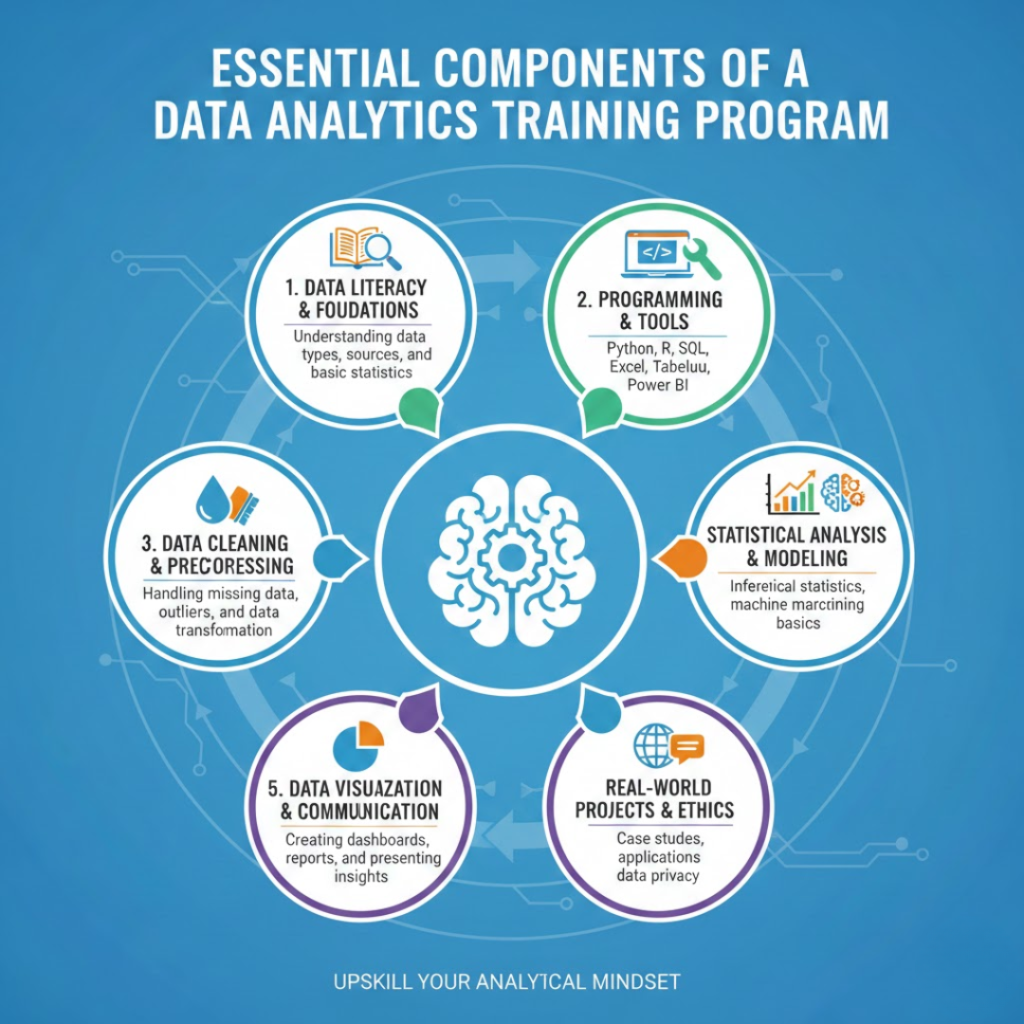
Essential Components of a Comprehensive Data Analytics Training Program
Not all programs are equal. Some are theory-heavy. Others throw tools at you without context.
A solid program should include:
1. Foundations
Data types, statistics basics, and business metrics.
2. Tools & Technology
Excel (advanced), SQL, Power BI/Tableau.
3. Programming Layer
A strong data analytics training Python course that teaches pandas, data cleaning, visualization, and automation, not just syntax.
4. Real Projects
Case studies using real datasets. Sales data. Customer churn data. Operational reports.
5. Business Context
This is where many courses fail. Knowing Python is one thing. Knowing when to use it in a business meeting? That’s different.
If you’re browsing for a data analytics training course near me, look for programs that simulate workplace scenarios. That practical exposure changes everything.
Common Challenges in Data Analytics Training and How to Address Them
Let’s be honest, learning analytics isn’t always smooth.
Some common roadblocks:
- Fear of coding
- Overwhelmed from too many tools.
- Lack of real-world clarity
- Imposter syndrome (very common, by the way)
What works?
- Breaking learning into phases
- Hands-on practice weekly
- Mentorship from industry professionals
- Working on something that resembles your current job
I have found that those professionals who view analytics as a problem-solving skill, and not a technical field of study, advance far more rapidly.
Measuring Return on Investment of Data Analytics Training Efforts
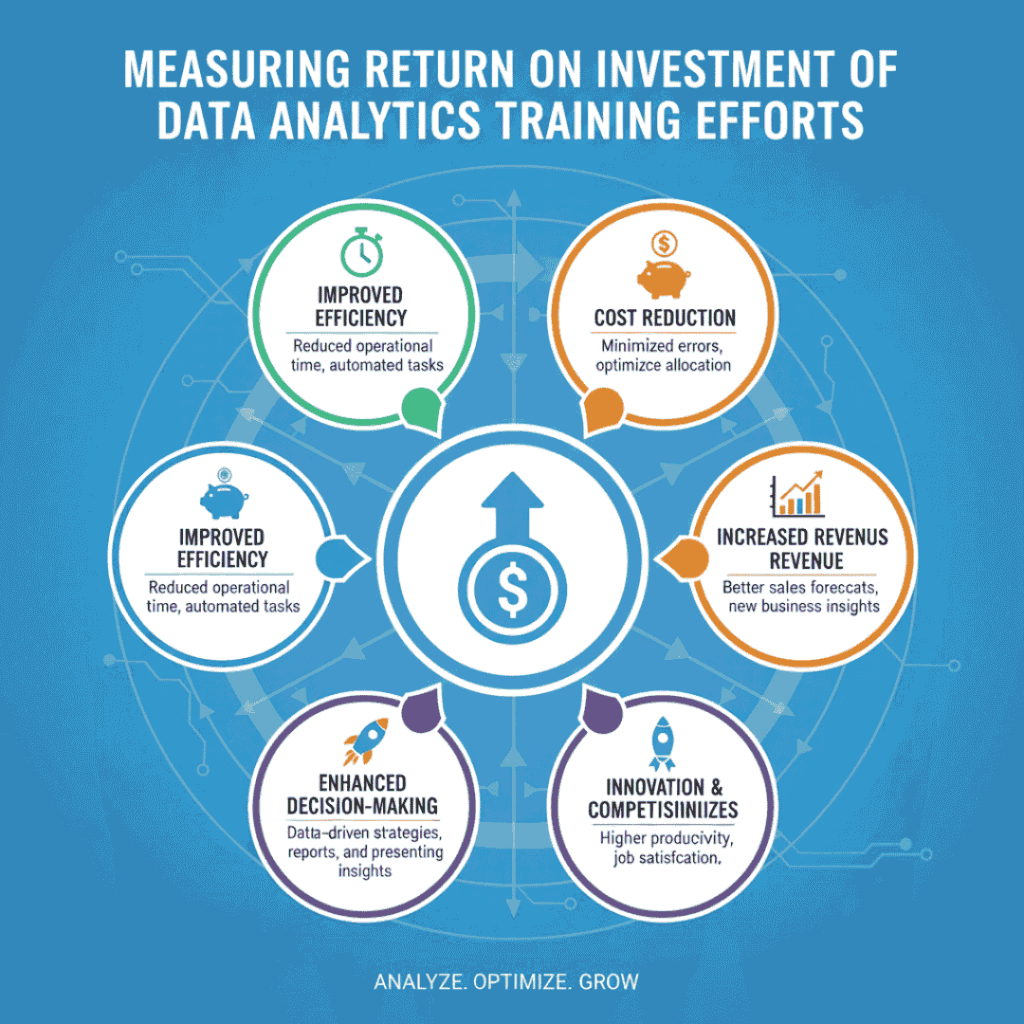
For individuals, ROI looks like:
- Salary growth
- Role transition
- Increased responsibility
- Better job security
For companies, ROI manifests in:
- Faster reporting cycles
- Reduced operational waste
- Smarter forecasting
- Data-backed strategy discussions
Some companies have gone even further by measuring training ROI based on decision accuracy pre- and post-training. How measurable success has become.
And in today’s tough job market, professionals with certifications and experience in analytics are separating themselves from the pack.
Conclusion
Data analytics training is available for more than just “tech people.” It is for decision makers, problem solvers, and practitioners who are tired of guessing.
So whether you’re perusing analytics courses for a career pivot or you’re looking up “data analytics course near me” to break into the world of digital data in your current role, the experience is real and growing.
The only question now is this: do you want to watch the data revolution occur or be a part of it?