Yes,if the course is structured around real-world labs, H2K Infosys, project simulations, and hands-on threat analysis, it absolutely helps you build a strong cybersecurity portfolio that employers actually respect in 2026 hiring markets.
Why a Cybersecurity Portfolio Matters More Than Ever in 2026
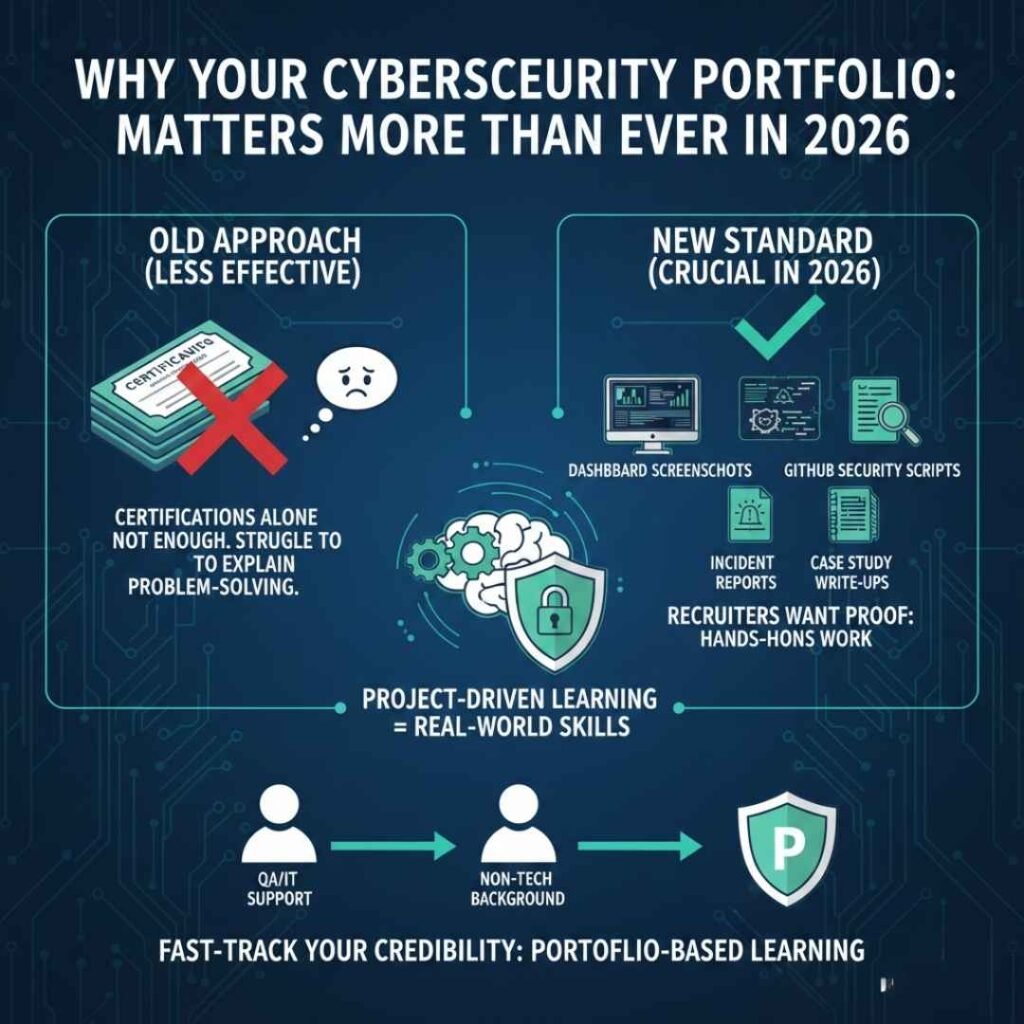
Let me be honest, certifications alone don’t impress hiring managers anymore. I’ve seen candidates with multiple certs struggle in interviews simply because they couldn’t explain how they actually solved a security problem.
Today, recruiters want proof. Screenshots of dashboards. GitHub security scripts. Incident response reports. Even short case study write-ups.
This is exactly where cyber security training with job placement programs started evolving. They’re no longer just lecture-based. The good ones are project-driven almost like mini real job environments.
And if you’re coming from QA, IT support, or even a non-tech background (which many people are right now due to layoffs and career shifts), cybersecurity portfolio-based learning is your fastest credibility booster.
What a Strong Cybersecurity Portfolio Usually Includes
From what I’ve personally seen in recent hiring panels and student projects, strong portfolios usually show evidence of doing, not just learning.
1. Threat Detection Projects
Example:
- Simulating phishing detection using email header analysis
- Writing simple SIEM alert correlation rules
- Investigating suspicious login attempts
Even basic detection walkthroughs show analytical thinking.
2. Vulnerability Assessment Reports
A solid project might include:
- Running vulnerability scans on test environments
- Documenting CVE findings
- Suggesting remediation steps
Hiring managers love documentation. It shows communication + technical skill together.
3. Security Automation Scripts
Python is becoming standard in entry cybersecurity roles.
Simple but impressive portfolio items:
- Log parsing scripts
- Brute force detection automation
- Security alert email triggers
You don’t need to build something huge. Small, working scripts are gold.
4. Cloud Security Basics
Huge trend right now especially after multiple cloud breach news stories in 2025–2026.
Portfolio examples:
- IAM misconfiguration analysis
- S3 bucket exposure simulation
- Cloud logging monitoring setup
How Training Programs Help You Build These Projects
The difference between random online learning and structured programs is guided practice.
Good cybersecurity portfolio training and placement programs usually include:
✔ Real attack simulation labs
✔ Incident response mock scenarios
✔ Resume-ready project documentation
✔ Mentor review of your work
✔ Interview explanation practice
That last one is underrated. Many students can do the work but freeze when explaining it.
A Real-World Scenario (What Employers Actually Ask)
I remember a hiring panel question from a mid-size fintech company interview review shared recently:
“Tell me about a time you detected suspicious activity. What logs did you check first?”
Candidates with only theory struggle here.
Candidates with portfolio labs say things like:
- Checked authentication logs
- Correlated IP anomalies
- Looked at failed login bursts
- Validated geolocation mismatch
That’s cybersecurity portfolio value. It shows thinking, not memorizing.
2026 Trend: Portfolio + Storytelling = Job Calls
This might sound small, but it matters a lot now.
Employers don’t just want tools knowledge.
They want incident thinking.
Example cybersecurity portfolio storytelling:
Instead of saying:
“I learned SIEM monitoring”
Better:
“I created a lab where I simulated brute-force login attempts and built alert thresholds using log frequency patterns.”
Huge difference.
Where Most Students Go Wrong
Let me say this honestly I see this mistake a lot.
❌ Collecting certificates but no projects
❌ Copy-paste GitHub projects without understanding
❌ No documentation or screenshots
❌ No explanation of why they did something
Even one strong project explained well beats five weak ones.
How Placement-Focused Training Supports Portfolio Building
Modern cyber security training and placement models are starting to mirror real job workflows.
Instead of:
Learn → Test → Finish
Now it’s:
Learn → Build → Document → Present → Mock Interview → Improve
Which honestly feels much closer to real work life.
Small Personal Observation (From Talking to Learners Recently)
Many learners worry:
“Is my project too basic?”
Truth?
If you can explain it clearly and show logs, analysis, and decision steps it’s valuable.
Security is about thinking patterns. Not flashy dashboards.
What a Beginner Portfolio Might Look Like (Totally Enough to Start)
You don’t need 10 projects.
Even 3–4 solid ones:
- Phishing email analysis lab
- Vulnerability scan + report
- Log monitoring mini project
- Basic cloud security misconfiguration check
That’s honestly enough for many entry interviews.
The Hidden Benefit: Confidence
Something people don’t talk about enough cybersecurity portfolio work changes how you speak in interviews.
You stop saying:
“I think…”
You start saying:
“In my lab, I observed…”
That subtle shift matters a lot.
Final Thought
If the course includes real labs, incident simulations, and project documentation practice yes, it can absolutely help you build a strong cybersecurity portfolio.
But here’s the real takeaway:
The course gives you tools.
Your portfolio shows you can use them.
And in 2026, that’s what gets callbacks.