Introduction
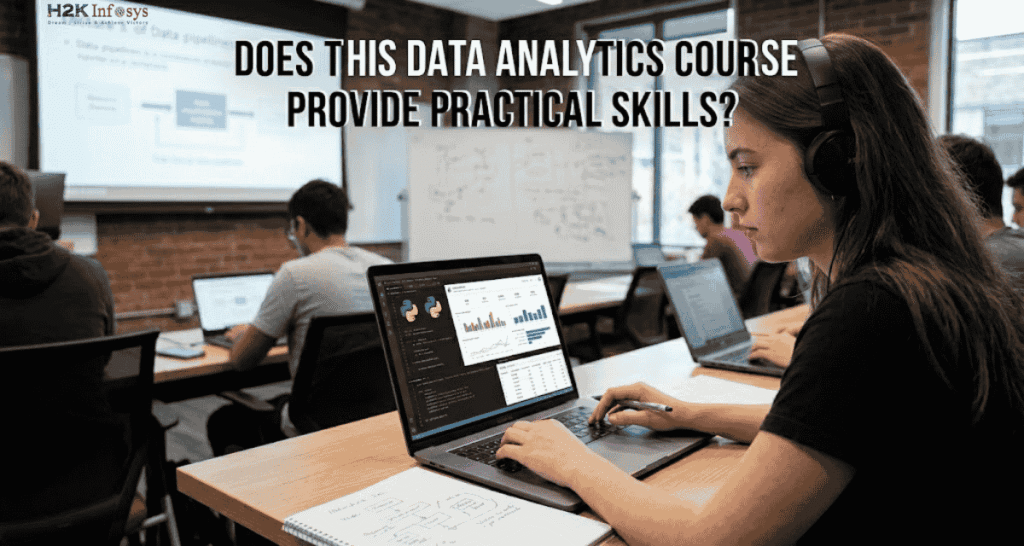
Any good data analytics course delivers practical skills, but only if it’s constructed around real-world projects and hands-on tools, including problem-solving, rather than just relying on video lectures and quizzes.
And honestly, this is where many people become disappointed with online data analyst courses. On paper, everything looks great. Clean syllabus, fancy promises, “job-ready in 3 months”… but once you’re inside, it’s mostly theory with a few multiple-choice tests.
I’ve seen that happen more times than I can count.
So instead of guessing, let’s break down how to tell whether a data analytics course will actually make you job-ready or just give you another certificate to add to your resume.
What “Practical Skills” Really Means
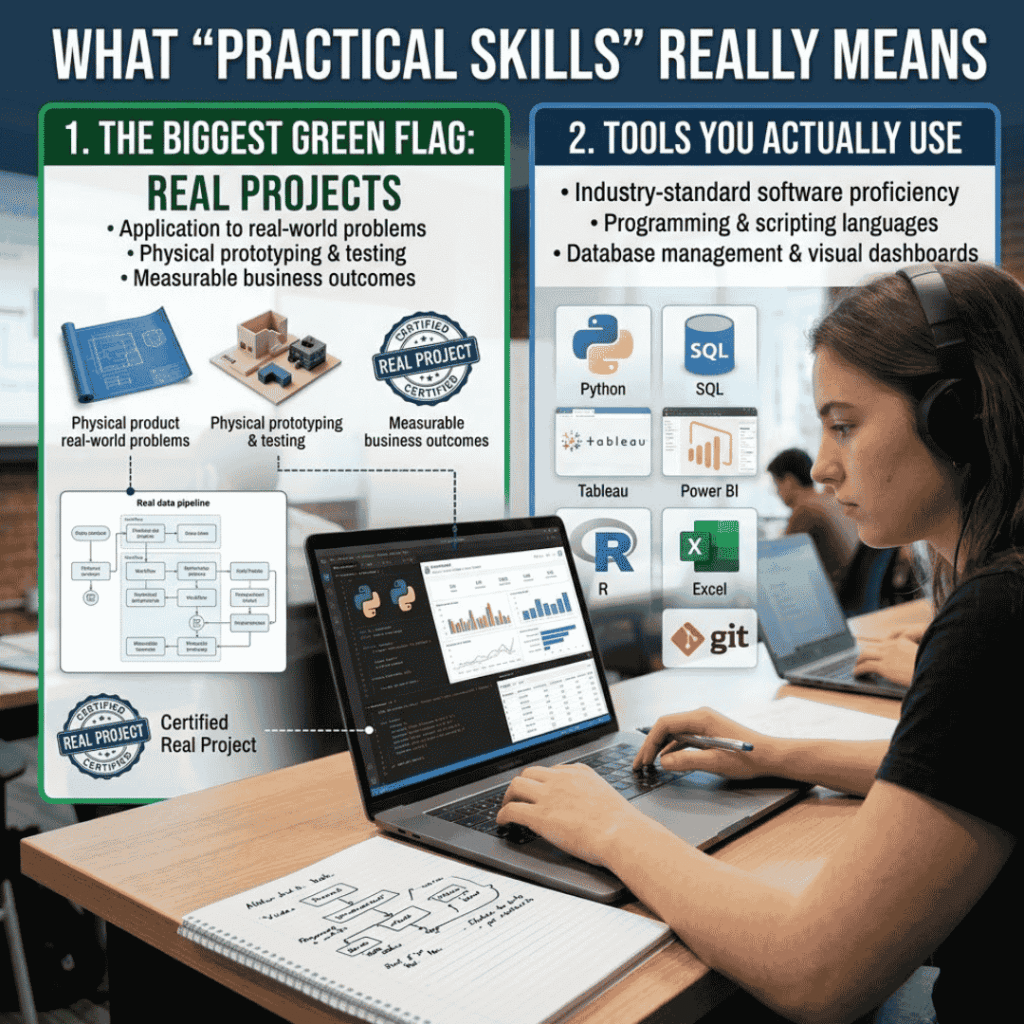
Practical skills in the data analytics course aren’t about knowing definitions. They’re about being able to sit down with messy data and figure things out.
Like:
- Cleaning a dataset that’s full of missing values
- Writing SQL queries to answer business questions
- Building a dashboard that someone non-technical can understand
If your data analytics course doesn’t train you to do these things, it’s impractical, no matter how polished it looks.
The Biggest Green Flag: Real Projects
This is the first thing I personally check.
A good course will have you doing projects like the following:
- Analyzing e-commerce sales trends
- Building a Power BI dashboard for business performance
- I am currently studying customer churn in a telecom dataset.
These aren’t just “assignments”; they’re the same kinds of problems companies deal with.
I remember reviewing a candidate’s portfolio once. They had built a simple sales dashboard, nothing fancy, but they could explain why they chose certain charts and what insights they found. That clarity mattered way more than any certificate.
Tools You Actually Use (Because That’s What Employers Care About)
A practical data analytics course should teach tools that show up in job descriptions today.
From what I’ve been seeing lately:
- SQL is still everywhere
- Excel is surprisingly still critical.
- Power BI and Tableau are in high demand.
- Python is becoming expected for better roles.
If a course barely touches these or treats them as “optional,” that’s a warning sign.
Also, quick side note, more programs in 2025–2026 are introducing AI-assisted analysis (like using AI to clean or explore datasets). It’s still early, but it’s definitely becoming part of real workflows.
How the Learning Happens Matters More Than What’s Taught
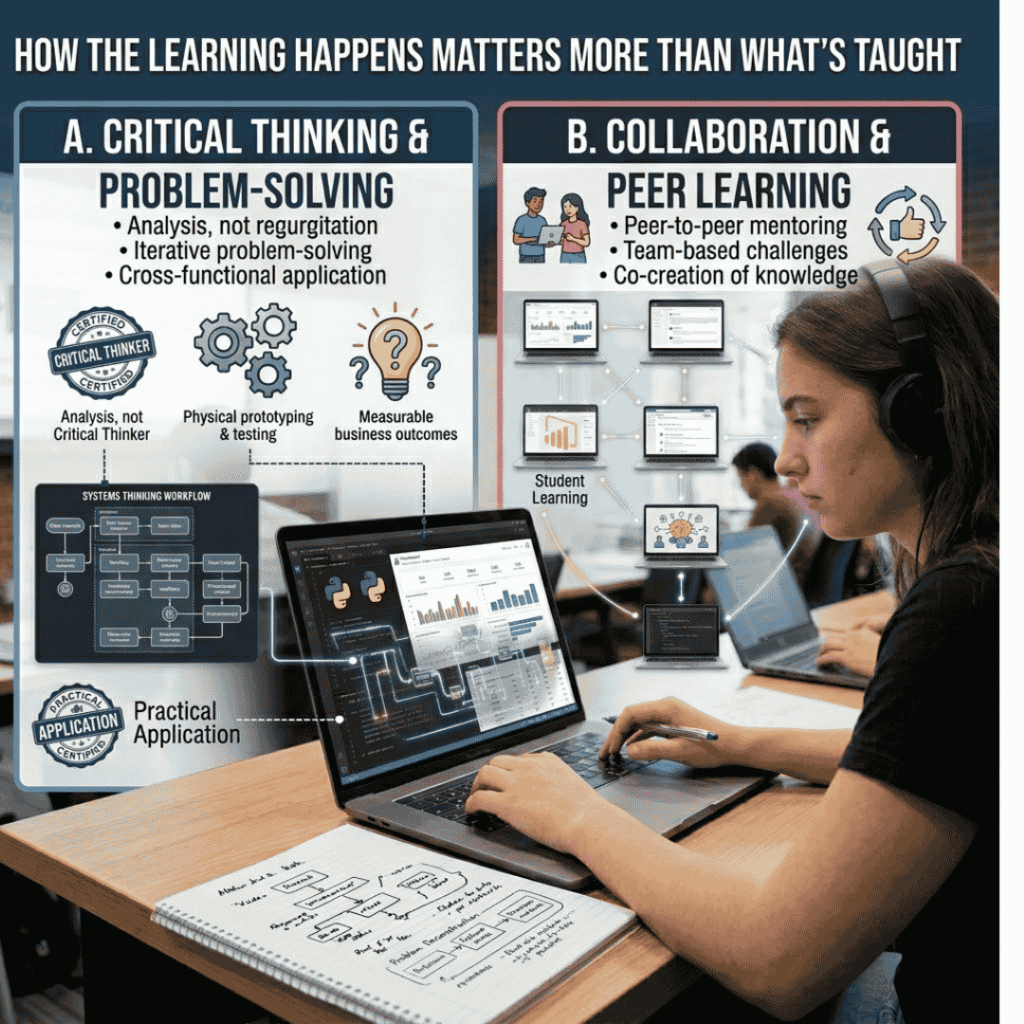
This one’s underrated.
You can have the perfect syllabus, but if the teaching style is passive, you won’t build real skills.
Some questions worth asking:
- Do you actually practice during the course?
- Are there guided exercises or just lectures?
- Is there mentor feedback on your work?
I’ve noticed that people who take interactive courses, even if they’re shorter, often come out more confident than those who finish long, theory-heavy programs.
Placement Claims vs Reality (A Quick Reality Check)
Many courses bundle themselves as online data analyst certifications with placement support.
Sounds great… But here’s the thing.
Placement support can mean the following:
- Resume templates and job alerts
- Or actual interview opportunities and referrals
Big difference.
The courses that truly help include the following:
- Mock interviews based on real scenarios
- Portfolio reviews
- Guidance on how to present your projects
Because getting hired isn’t just about skills, it’s about showing them properly.
A Real-World Scenario (Because This Happens All the Time)
Let’s say two people complete a data analytics course:
Person A:
- Watches all videos
- Completes quizzes
- Gets a certificate
Person B:
- Builds 3 solid projects
- Struggles through errors
- Asks questions
- Improves their dashboards over time
Person B is the one who gets the job.
It’s not even close.
That “messy learning” phase is where practical skills actually develop.
One Thing Most People Don’t Expect
You won’t feel “ready” even after finishing a course.
And that’s normal.
Even good data analytics course graduates often need the following:
- Extra practice
- More projects
- Some real-world exposure
Courses can give you the foundation, but confidence comes from working repeatedly.
How to Quickly Judge If a Course Is Practical
If you’re trying to decide, here’s a simple filter:
- Does it include multiple real-world projects?
- Are tools like SQL, Excel, and Power BI taught in-depth?
- Do you get feedback on your work?
- Can you build a portfolio using it?
If yes, you’re likely looking at something genuinely practical.
If not… It’s probably more theory than skill.
Final Thought
A course doesn’t magically make you a data analytics course.
If designed well, it can push you to engage in the daily work of analysts.
And that’s the difference.
So when you’re choosing a data analyst certification online, don’t ask, “Will I get a certificate?”
Ask:
“Will I be able to solve real problems after this?”
Because that’s what employers are really testing every single time.