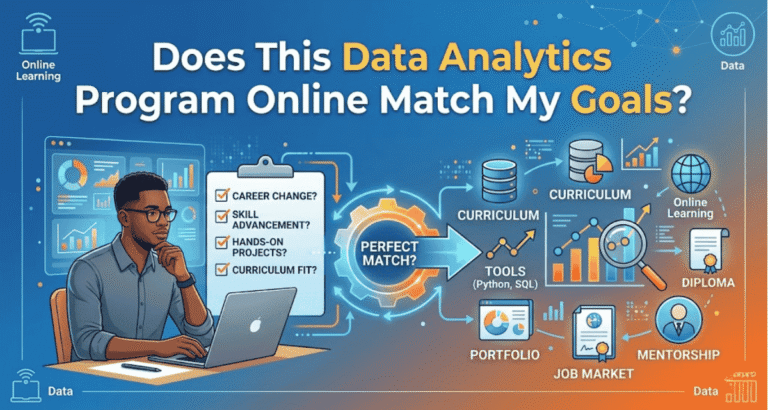
What is a Data Analytics Program?
A data analytics program is a structured course that teaches you how to collect, clean, analyze, and visualize data analytics program so you can make informed decisions.
Strong programs usually include tools like Microsoft Excel, SQL, Python, and visualization platforms such as Tableau or Power BI.
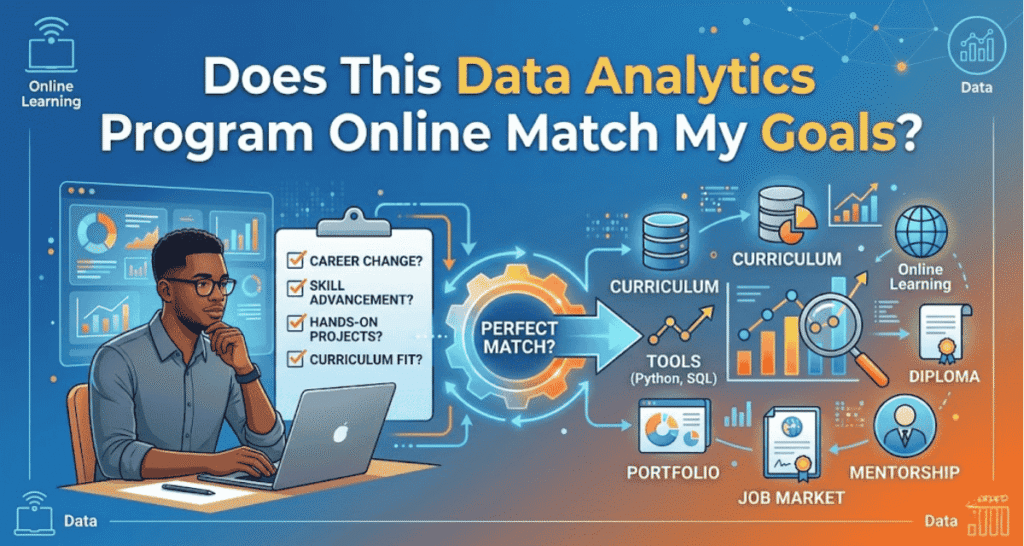
How to Tell If an Online Data Analyst Course Fits Your Goals
This is where many people struggle.
Step-by-Step Evaluation
Start by defining your goal
- Are you switching careers into analytics?
- Looking for a promotion?
- Trying to build a freelance or side income?
Check how deep the curriculum goes
Look for:
- Hands-on data cleaning (not just theory)
- Work with real datasets
- Use of SQL and Python
- Dashboard creation
Look for real-world projects
This is where things really matter…
If the course doesn’t include projects like
- Sales analysis
- Customer segmentation
- KPI dashboards
→ it’s likely too basic.
Make sure it’s up-to-date (2025–2026)
Modern programs should include the following:
- AI-assisted analytics tools
- Workflow automation
- Basic cloud concepts (optional but valuable)
Don’t ignore career support
- Resume guidance
- Interview preparation
- Help building a portfolio
Real-World Example (What Actually Happens)
In real jobs, you don’t just “analyze data.”
For example, in an e-commerce company:
- You extract data using SQL
- Clean and process it with Python
- Build dashboards in Power BI
- Present insights like the following:
- “Sales dropped 18% in Region X due to delivery delays.”
Most beginners struggle not with tools, but with connecting insights to real business decisions.
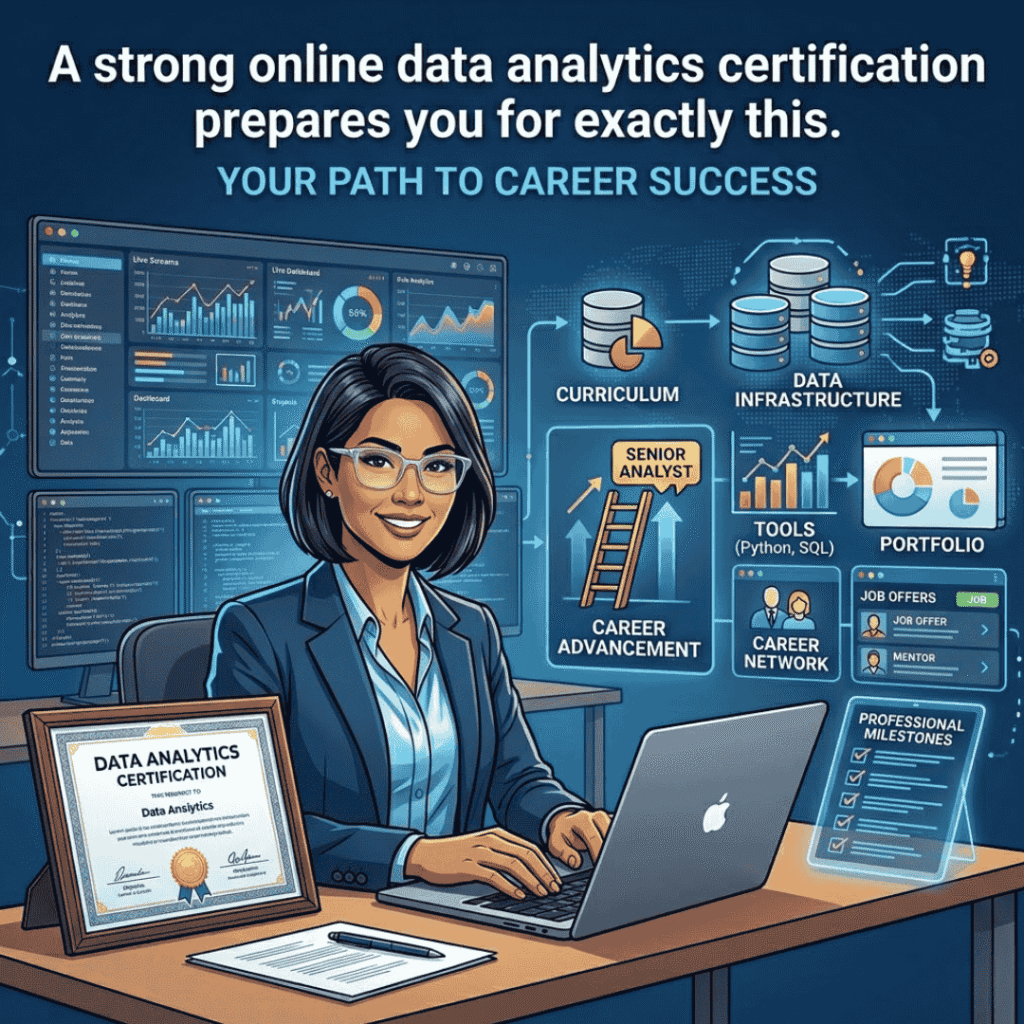
A strong online data analytics certification prepares you for exactly this.
Not All Online data analytics programs Are the Same
Basic Courses (Not Enough on Their Own)
- Only video lectures
- No projects
- No mentorship
Good for awareness but not for getting a job
Job-Focused Programs (What You Want)
- Hands-on projects
- Practical tool training
- Real case studies
- Portfolio development
These actually prepare you for interviews.
Benefits of a Data Analytics Program
Done right, it can significantly shift your career:
- High demand globally (especially in 2025–2026)
- Competitive entry-level salaries
- Remote work opportunities
- Applicable across industries (finance, healthcare, e-commerce)
Skills You’ll Build
A solid course should help you develop:
- Data cleaning and transformation
- Data visualization
- Business storytelling
- Analytical thinking
- Dashboard creation
Common Beginner Mistakes
These come up often:
- Choosing cheap courses with no projects
- Learning tools without understanding their purpose
- Skipping SQL (a major mistake)
- Not building a portfolio.
Tools are relatively easy. Thinking like an analyst is the real challenge.
Quick Summary (TL;DR)
- It pays to have a pragmatic, job-relevant program
- Search for real-world projects + tools such as SQL, Python, Tableau/Power BI
- Go for practical courses that are not old or theoretical.
- Select according to your target not for the value
Career Outcomes
After completing a strong program, you can target roles like the following:
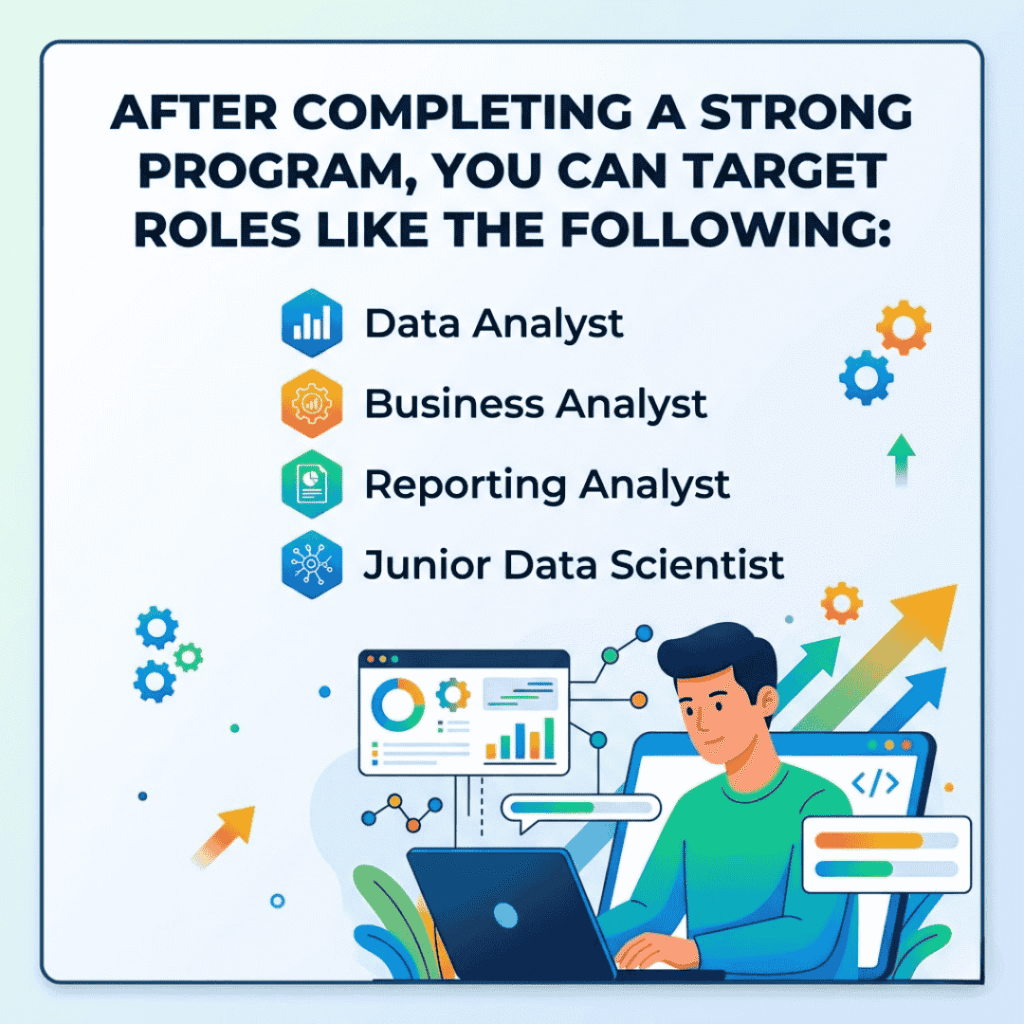
- Data Analyst
- Business Analyst
- Reporting Analyst
- Junior Data Scientist
If you’re serious about this path, structured learning can save you months of confusion and gaps.
Related Topics to Explore
To go deeper:
- SQL for data analytics program (Beginner to Advanced)
- Power BI vs Tableau
- How to Build a Data Analytics Portfolio
FAQs
Is an online course enough to get a job?
Yes, if it includes real projects and a portfolio. Employers care more about skills than certificates.
How long does it take?
Usually 3–6 months with consistent effort.
Do I need coding?
Basic Python helps, but SQL and visualization tools matter more at the start.
Certification or degree?
For faster entry, a practical certification is often more useful.
What should I verify before enrolling?
Curriculum, projects, tools, and career support are not just brand names.
Final Thoughts
Choosing the right program isn’t about finding the “best one”; it’s about choosing what works for you.
If your aim is a real outcome (job, promotion, freelance work), focus on hands-on learning and practical experience.
One simple takeaway:
Don’t just learn data analytics program; practice it like you’re already doing the job.