Introduction
In a world where data is often called the new oil, protecting it has become a major priority. Every click, transaction, and login generates valuable data that attracts cybercriminals. As security threats become more sophisticated, organizations are searching for innovative ways to defend sensitive information.
This is where Blockchain in Cyber Security plays a vital role. Known for its decentralized, transparent, and tamper-proof architecture, blockchain is revolutionizing the security of digital information. It not only prevents data manipulation but also ensures that privacy remains intact.
For learners pursuing Cybersecurity training and placement, understanding how blockchain technology integrates with modern defense systems is essential. Let’s explore how Blockchain in Cyber Security strengthens privacy, enhances transparency, and creates a safer digital world.
What Is Blockchain in Cyber Security?
Blockchain in Cyber Security refers to using blockchain’s distributed ledger principles to secure networks, transactions, and data storage. Unlike traditional systems that store information in a central server, blockchain distributes data across numerous nodes, making it resistant to tampering or unauthorized access.
Each transaction is encrypted and recorded in a block, linked chronologically to form a chain. This design prevents malicious actors from altering information without network consensus. In cybersecurity applications, blockchain serves as a trust infrastructure every action is transparent, verifiable, and permanent.
Key features include:
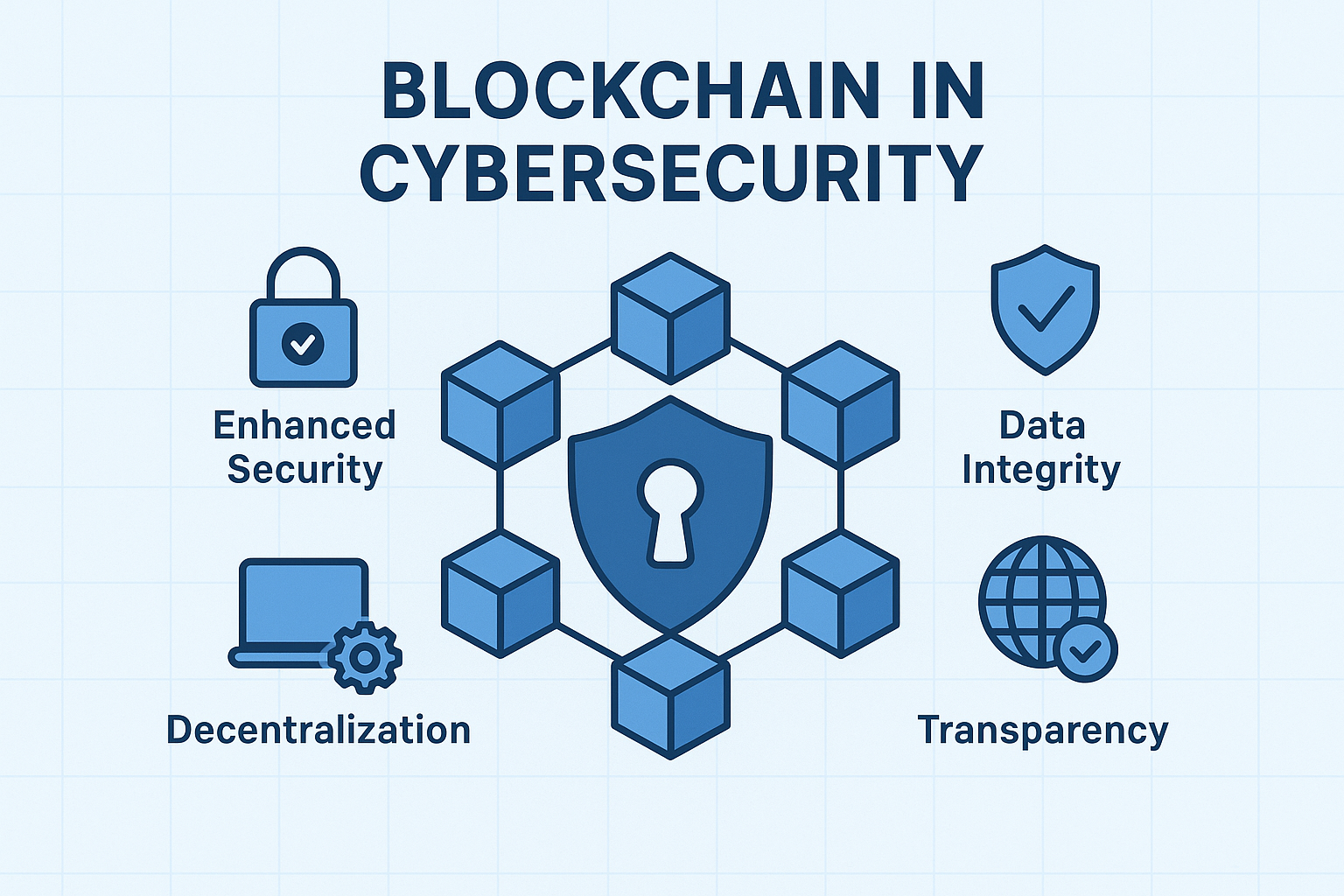
- Decentralization: Eliminates the need for a central authority, reducing single-point vulnerabilities.
- Immutability: Once data is added, it cannot be modified or deleted.
- Transparency: All participants can view transactions, ensuring accountability.
- Cryptographic Security: Advanced encryption safeguards sensitive data against unauthorized access.
The Growing Need for Blockchain in Cyber Security
The rapid digitalization of businesses has expanded the cyberattack surface. From ransomware to phishing and identity theft, organizations face threats daily. Traditional security models that rely on centralized databases are no longer sufficient.
Integrating Blockchain in Cyber Security helps address these challenges. By decentralizing storage and leveraging cryptographic validation, blockchain drastically reduces the likelihood of data breaches and insider threats.
Why Companies Are Turning Toward Blockchain Security
- Enhanced Trust: Every transaction is verified by multiple nodes before approval.
- Traceability: Data provenance helps identify when and how records are accessed.
- Tamper Resistance: Immutability ensures data integrity during audits.
- Privacy Compliance: Blockchain aligns with privacy laws like GDPR through transparent access control.
By incorporating Blockchain in Cyber Security, organizations create secure frameworks that protect everything from financial data to IoT networks.
How Blockchain in Cyber Security Enhances Data Privacy
Data privacy involves controlling who accesses data and how it’s used. Blockchain provides built-in security layers to ensure information remains confidential, accurate, and transparent.
Here’s how Blockchain in Cyber Security enhances privacy across systems:
1. Decentralized Data Control
Instead of one central database, data is spread across multiple nodes. This decentralized approach ensures that even if one node is compromised, the rest of the network remains secure.
2. Immutable Audit Trails
Blockchain’s immutable nature ensures that once a record is added, it cannot be changed. This feature creates transparent audit trails for compliance and accountability.
3. End-to-End Encryption
Every transaction on the blockchain is secured using advanced cryptographic keys. Even if intercepted, unauthorized users cannot read or modify encrypted data.
4. Smart Contracts for Access Management
Smart contracts automatically enforce rules and permissions, granting access only to verified entities. This minimizes human error and prevents internal misuse.
5. Zero-Knowledge Proofs (ZKP)
ZKP allows entities to verify data validity without revealing the actual information, providing privacy-preserving authentication, an innovation that’s transforming Blockchain in Cyber Security systems.
Real-World Applications of Blockchain in Cyber Security
The power of Blockchain in Cyber Security extends across multiple industries. Its versatility enables enterprises to protect sensitive assets and build trust within digital ecosystems.
1. Identity Protection
Blockchain helps individuals control their digital identities. Instead of relying on third-party identity providers, users can verify themselves using decentralized identifiers (DIDs) secured on blockchain networks.
2. IoT Security
With billions of devices connected to the internet, IoT security is a major concern. Blockchain validates each device and its interactions, blocking malicious entities from infiltrating the network.
3. Data Integrity Verification
Blockchain allows organizations to track changes and detect tampering instantly. Industries like healthcare use it to secure patient data from unauthorized access.
4. Supply Chain Security
Blockchain ensures product authenticity by tracking goods from origin to delivery. This application prevents counterfeiting and builds consumer trust.
5. Incident Response and Forensics
Immutable blockchain logs serve as digital evidence during forensic investigations. These unalterable records help analysts trace cyber incidents accurately.
How Blockchain in Cyber Security Works Step-by-Step
To understand its impact, let’s explore how Blockchain in Cyber Security operates:
- Transaction Initialization: A verified participant initiates a transaction (e.g., data update or identity verification).
- Hash Creation: The transaction generates a unique cryptographic hash.
- Block Assembly: Several transactions combine into a block.
- Consensus Mechanism: Nodes validate the block using Proof of Work, Proof of Stake, or other protocols.
- Ledger Addition: Once validated, the block is added to the existing blockchain.
- Immutable Record: The information becomes permanent and traceable, preventing future manipulation.
This distributed validation process ensures that no single entity can alter or delete records without consensus approval.
Blockchain in Cyber Security vs Traditional Systems
| Feature | Traditional Cyber Security | Blockchain in Cyber Security |
| Architecture | Centralized | Decentralized |
| Data Control | Controlled by single entity | Shared across nodes |
| Transparency | Limited | Complete visibility |
| Tampering | Possible through breaches | Nearly impossible |
| Authentication | Password-based | Cryptographic signatures |
| Attack Resistance | Vulnerable to DDoS | Highly resilient |
This comparison shows why many organizations are shifting from outdated systems to blockchain-based frameworks that prioritize resilience and transparency.
The Role of Blockchain in Cyber Security Careers
Cybersecurity professionals must understand blockchain concepts to remain relevant. As companies adopt blockchain-enabled systems, there’s a growing demand for experts who can secure distributed ledgers, manage smart contracts, and design cryptographic solutions.
Essential Skills for Learners
- Blockchain architecture and ledger design
- Cryptographic algorithms (SHA-256, RSA, AES)
- Smart contract security analysis
- Key management and identity verification
- Threat modeling for decentralized systems
H2K Infosys’ Cyber Security training and placement program integrates these concepts, helping learners bridge theory with real-world application.
Case Study: Blockchain in Financial Cyber Security
Financial institutions are among the earliest adopters of Blockchain in Cyber Security. Banks now rely on blockchain to secure payments, validate transactions, and prevent fraud.
For instance, permissioned blockchain systems record each transaction immutably across multiple nodes. Any attempt to alter a single transaction would require changing every connected node simultaneously an impossible task.
This has drastically reduced fraud and improved trust among financial partners, proving how Blockchain in Cyber Security provides real, measurable results.
The Future of Blockchain in Cyber Security
The future of cybersecurity will be deeply intertwined with blockchain innovation. Analysts forecast that by 2030, blockchain adoption in the cybersecurity sector will exceed $15 billion, driven by global demand for secure data management.
Emerging Trends to Watch
- AI-Driven Blockchain Security: AI algorithms will detect anomalies faster in blockchain networks.
- Post-Quantum Encryption: Preparing for quantum threats with quantum-resistant cryptography.
- Cross-Industry Integration: Merging blockchain with IoT, cloud, and edge computing for holistic security.
These advancements highlight that Blockchain in Cyber Security will not only protect current systems but also prepare organizations for next-generation cyber defense.
Learning Blockchain in Cyber Security at H2K Infosys
At H2K Infosys, the Cyber Security course with placement prepares learners to tackle modern cyber threats using advanced technologies, including blockchain.
Course Highlights:
- Comprehensive modules on blockchain architecture and encryption
- Hands-on training with real-world cybersecurity tools
- Practical exercises using smart contracts and identity systems
- Cyber security training and job placement guidance for global opportunities
- Flexible online classes for cyber security accessible from anywhere
- Dedicated cyber security analyst training online for all experience levels
Whether you are a beginner or an experienced IT professional, the online courses for cybersecurity at H2K Infosys help you master blockchain-based defenses and become job-ready.
Real-World Example: Blockchain in Healthcare Security
Healthcare data is one of the most targeted by hackers. By implementing Blockchain in Cyber Security, hospitals can secure patient records, ensure accurate diagnosis histories, and share data across departments without breaching privacy.
Each patient’s record becomes a verifiable entry in a decentralized ledger, accessible only by authorized professionals. This approach prevents data leaks, improves compliance, and enhances patient trust.
This example shows how blockchain extends beyond finance offering data protection in life-critical industries.
Benefits of Mastering Blockchain in Cyber Security
- Enhanced Career Opportunities: Skilled professionals in blockchain-based security are in high demand.
- Global Placement Support: H2K Infosys offers Cyber Security training and placement assistance for global markets.
- Hands-On Blockchain Labs: Learn to design secure ledgers and implement smart contracts.
- Compliance-Ready Expertise: Understand how blockchain aligns with modern data privacy regulations.
- Future-Proof Knowledge: Blockchain security is the foundation for next-generation data protection.
Conclusion
Blockchain in Cyber Security is more than a technological innovation it’s the future of digital defense. Its decentralized, encrypted, and transparent structure offers unmatched protection against data tampering, identity theft, and network breaches.
By mastering these skills through H2K Infosys’ Cyber Security training and placement, you’ll be equipped to secure real-world systems, design blockchain-driven defenses, and lead the next wave of cyber professionals.
Enroll today at H2K Infosys and take the next step toward becoming an industry-ready cybersecurity expert skilled in blockchain-powered privacy and protection.