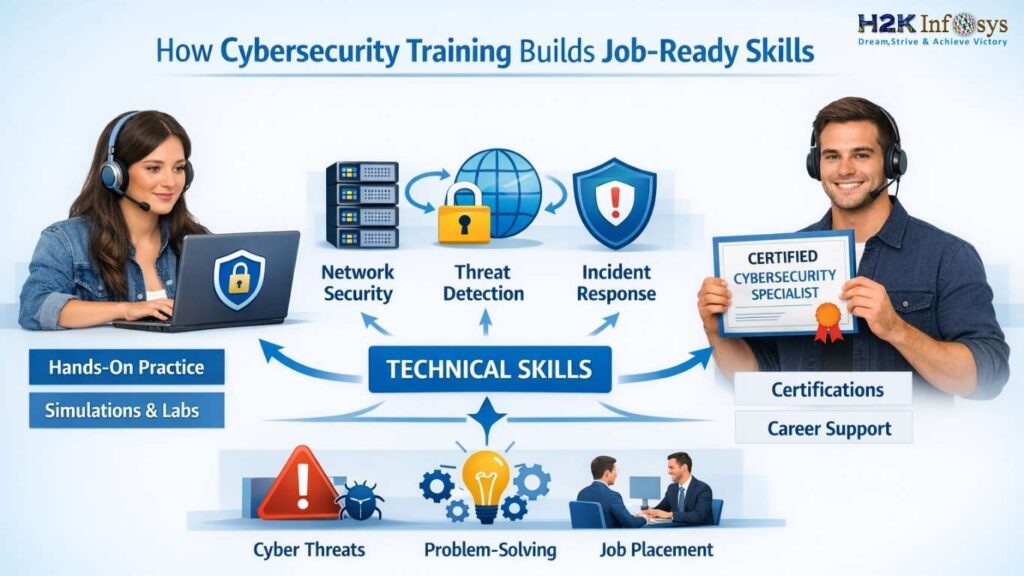
Cybersecurity training programs build job-ready skills by combining practical labs, real attack simulations, certification preparation, and career guidance, and platforms like h2kinfosys often structure their programs this way so learners can move directly into real security roles, not just understand theory. The best programs focus on the exact skills employers expect from entry-level analysts, including threat detection, incident response, and security tools used in modern security teams.
If you’ve ever looked at job postings for cyber security jobs with training, you’ll notice something interesting. Employers rarely ask only for degrees anymore. They want people who can actually do the work, investigate alerts, analyze suspicious activity, and respond to incidents. That’s where structured cybersecurity training really starts to matter.
Let’s walk through how these programs turn beginners into job-ready security professionals.
Hands-On Labs That Mirror Real Security Work
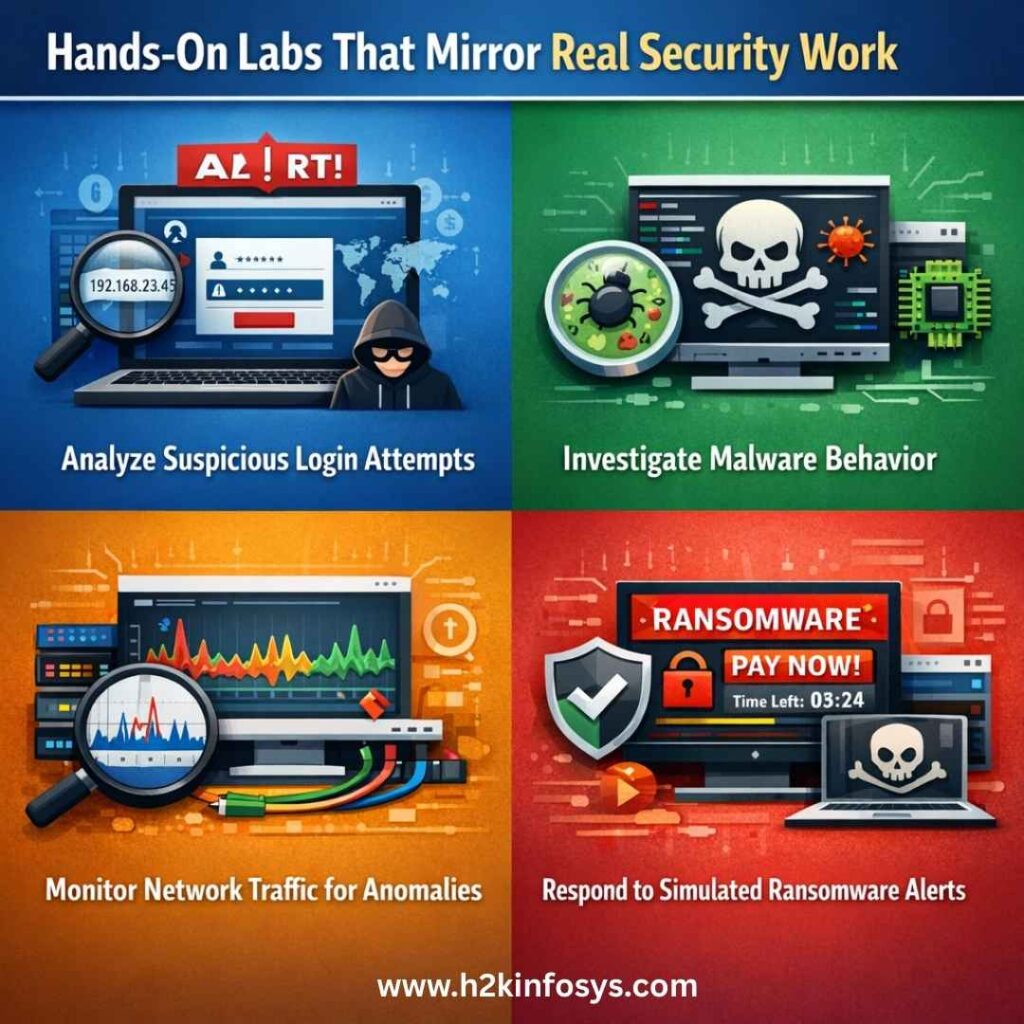
One of the biggest ways cybersecurity training builds real skills is through hands-on labs. Instead of just reading about attacks, students work inside simulated environments that behave like real corporate networks.
In a typical lab, you might:
- Analyze suspicious login attempts
- Investigate malware behavior
- Monitor network traffic for anomalies
- Respond to simulated ransomware alerts
This matters because modern security teams rely on practice, not theory. According to recent industry hiring trends reported by organizations like ISC² and CompTIA, employers increasingly prioritize candidates with lab experience over those who only studied textbooks.
I remember talking to a SOC analyst who said something that stuck with me:
“The first time you investigate a real security alert shouldn’t be during your first day at work.”
Good training programs make sure it isn’t.
Real Attack Simulations (Learning by Breaking Things)
Another powerful part of cybersecurity training is simulated attack environments.
Students often practice scenarios like:
- Phishing attacks targeting employees
- Privilege escalation inside networks
- Data exfiltration attempts
- Web application vulnerabilities
These exercises mirror techniques used in certifications like CompTIA Security+ and Certified Ethical Hacker (CEH), which many employers recognize as proof of foundational security knowledge.
But honestly, the real benefit isn’t just passing an exam. It’s learning how attackers think.
Once you see how easily a misconfigured server or weak password can be exploited, cybersecurity suddenly becomes very real.
Training on the Same Tools Used in Security Operations Centers
A lot of people imagine cybersecurity as abstract concepts like encryption, firewalls, policies.
In reality, security teams spend their day working with specific tools.
Many cybersecurity programs now include training on tools like:
- SIEM platforms for threat monitoring
- Vulnerability scanners
- Endpoint detection and response tools
- Network monitoring systems
When students practice with these tools during training, they become far more competitive for cyber security jobs with training, especially entry-level roles such as:
- SOC Analyst
- Security Operations Associate
- Vulnerability Analyst
- Security Support Specialist
And employers notice this quickly during interviews.
Someone who has already worked with a SIEM dashboard in a training lab tends to stand out compared to someone who only studied theoretical security concepts.
Certification Preparation That Aligns With Industry Demand
Most training programs align their curriculum with certifications that hiring managers recognize.
Some of the most common include:
- CompTIA Security+
- Certified Ethical Hacker (CEH)
- Certified Information Systems Security Professional (CISSP)
These certifications validate that students understand real security frameworks, risk management, and threat detection methods.
But here’s the important part: good training programs don’t just teach exam answers. They show why those concepts matter in real situations.
For example, instead of memorizing encryption algorithms, students might investigate a simulated breach where weak encryption exposed sensitive data.
That kind of context sticks with you.
Career Coaching and Interview Preparation
Technical skills alone aren’t always enough to land the first job. That’s why many programs now include career preparation as part of their training.
This often includes:
- Resume building for security roles
- Mock technical interviews
- LinkedIn profile optimization
- Guidance on applying for security analyst roles
Programs offering cybersecurity training with job placement usually go one step further by connecting students with partner companies or recruiters looking for entry-level security talent.
And in a competitive hiring market, that support can make a huge difference.
Specialized Skills Like Cyber Security Sales Training
Interestingly, cybersecurity careers aren’t limited to technical roles.
Some professionals move into areas like cyber security sales training, where the focus is helping organizations understand security solutions and risk management tools.
These roles require a mix of technical knowledge and business communication skills. Training programs sometimes introduce these career paths because companies need professionals who can explain complex security technology to non-technical decision makers.
In fact, with cybersecurity spending increasing globally, roles that bridge technology and business are growing quickly.
Exposure to Real-World Cyber Threat Trends
The cybersecurity training landscape changes constantly.
One year it’s ransomware dominating headlines. The next year it might be AI-driven phishing campaigns or cloud security breaches.
Good training programs regularly update their curriculum to reflect these changes.
Recent incidents involving large organizations including breaches affecting major technology companies have pushed training providers to emphasize areas like:
- Cloud security
- Identity and access management
- Zero trust architecture
- AI-driven threat detection
This helps students develop skills that match what security teams are dealing with right now, not five years ago.
Learning How Security Teams Actually Work
Something people often overlook about cybersecurity is that it’s rarely a solo job.
Security professionals work in teams that coordinate investigations, share intelligence, and escalate threats when necessary.
Training programs increasingly simulate this environment by assigning students to group exercises where they must:
- Investigate incidents together
- document findings
- communicate risks clearly
It sounds simple, but learning how to explain technical threats to managers or executives is a skill many beginners underestimate.
And it’s something employers value a lot.
Final Thoughts
Cybersecurity training programs help build job-ready skills by blending hands-on practice, real attack simulations, certification preparation, and career support. Instead of just learning theory, students gain the practical experience needed to handle real security incidents and pursue cyber security jobs with training confidently.
For many beginners, structured programs, especially those offering cyber security training with job placement, can dramatically shorten the path from learning cybersecurity training concepts to working inside a real security operations team.
And as organizations continue investing heavily in digital security, the demand for professionals who actually know how to detect and stop cyber threats isn’t slowing down anytime soon.
For anyone thinking about entering the field, that’s probably the most encouraging part.