Introduction
The data analytics world is growing fast, and companies want insights that help them make better decisions. Every company collects data, but only a few know how to turn that data into clear predictions, patterns, and solutions. This is where the debate of Supervised vs Unsupervised learning becomes important.
Most analytics teams use machine learning to understand customer behavior, reduce business risk, and improve products. These teams rely on two core learning approaches: supervised learning and unsupervised learning. Each approach helps analysts solve different types of business problems. Anyone who wants to build a career in analytics needs to understand how Supervised vs Unsupervised models work and how they impact real-world decision-making.
If you plan to take a Google Data Analytics Certification or join a Google Data Analytics Course, then mastering these two learning styles will upgrade your ability to analyze data with confidence. This blog explains everything you need to know about Supervised vs Unsupervised models, complete with examples, statistics, hands-on explanations, and practical steps.
What Are Supervised Learning Models?
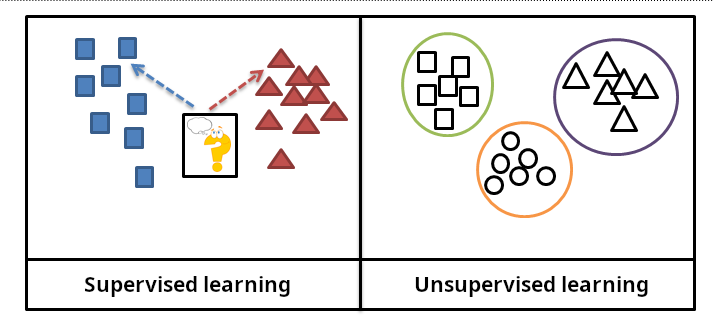
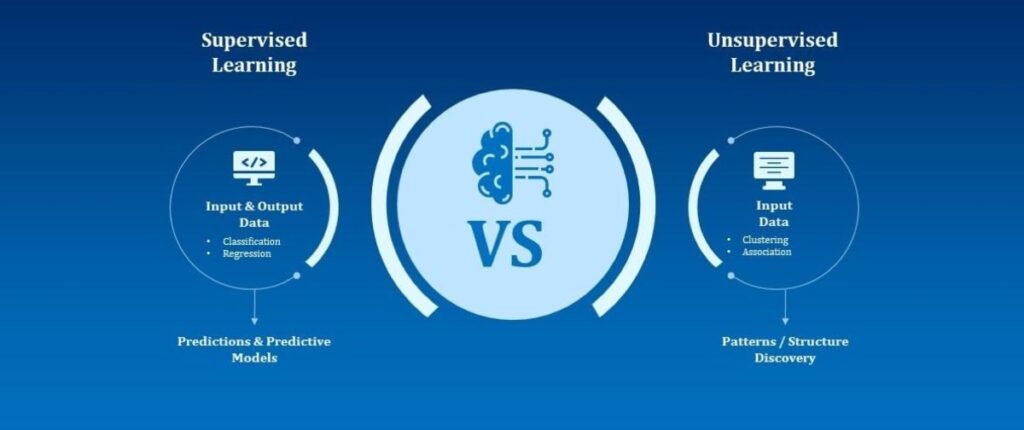
Supervised learning uses labeled data. Labeled data means the dataset has both input and output values. Analysts train the model using historical examples so the model can predict future outcomes. The model learns the relationship between input and output.

Examples of labeled data
- Emails labeled as “spam” or “not spam”
- Images labeled as “cat” or “dog”
- Bank transactions labeled as “fraud” or “not fraud”
- Students’ exam data labeled with final scores
Where Supervised Learning Helps in Analytics
Supervised models support:
- Prediction
- Classification
- Forecasting
- Risk scoring
Popular Supervised Algorithms
- Linear Regression
- Logistic Regression
- Decision Trees
- Random Forest
- Support Vector Machines
- Neural Networks
Real-World Example
A retail company wants to predict next month’s sales. Analysts add past revenue, marketing spend, holiday seasons, and promotions into a supervised model. The model learns patterns and predicts future sales with accuracy. This helps leaders make better inventory decisions.
What Are Unsupervised Learning Models?
Unsupervised learning uses unlabeled data. The dataset has no defined output. The model identifies patterns on its own. It groups similar items or discovers hidden structures in the data.
Examples of unlabeled data
- Website clickstreams
- Customer purchase behavior
- Social media comments
- Sensor data from machines
Where Unsupervised Learning Helps in Analytics
Unsupervised models support:
- Segmentation
- Pattern discovery
- Anomaly detection
- Clustering
Popular Unsupervised Algorithms
- K-means Clustering
- Hierarchical Clustering
- PCA (Principal Component Analysis)
- Association Rule Learning
- DBSCAN
Real-World Example
A bank wants to understand customer behavior. They use an unsupervised model to group customers based on income, spending habits, and loan usage. The model creates natural clusters that help the bank design targeted marketing campaigns.
Supervised vs Unsupervised: Key Differences
The comparison of Supervised vs Unsupervised learning models forms the base of all analytics projects. Analysts must know when to choose each model. Below is a simple table:
| Feature | Supervised Learning | Unsupervised Learning |
|---|---|---|
| Data Type | Labeled | Unlabeled |
| Goal | Predict outcomes | Find patterns |
| Techniques | Classification, Regression | Clustering, Association |
| Example | Predict house price | Group customer segments |
| Output | Known | Unknown |
Understanding these differences helps you handle analytics tasks faster and smarter.
Why Supervised vs Unsupervised Matters in Modern Analytics
Analytics teams choose models based on business goals. The best model depends on what the company needs. Below are reasons why this comparison matters:
Better decision-making
Supervised models give clear predictions. Unsupervised models find hidden insights. A strong knowledge of Supervised vs Unsupervised helps analysts choose the right approach.
Better accuracy
Supervised models train on known outputs. They improve forecasting accuracy. Unsupervised models support exploratory analysis.
Better resource usage
Teams reduce time and cost by using the right model for the right task.
Better business value
Companies use supervised learning for predictive insights and unsupervised learning for customer behavior mapping.
Real-World Impact: Supervised vs Unsupervised in Different Industries
E-commerce
- Supervised: Predict customer churn
- Unsupervised: Group customers for targeted ads
Healthcare
- Supervised: Predict disease risk
- Unsupervised: Find rare medical patterns
Finance
- Supervised: Detect fraud
- Unsupervised: Identify unusual activity
Manufacturing
- Supervised: Predict machine failure
- Unsupervised: Cluster defects in products
Marketing
- Supervised: Predict campaign performance
- Unsupervised: Segment users by behavior
Hands-On: Simple Python Examples
Here is a simple and clear example that helps beginners understand Supervised vs Unsupervised learning.
Supervised Learning Example (Linear Regression)
from sklearn.model_selection import train_test_split
from sklearn.linear_model import LinearRegression
from sklearn.metrics import mean_squared_error
import pandas as pd

df = pd.read_csv("sales_data.csv")

X = df[['marketing_spend']]
y = df['sales']

X_train, X_test, y_train, y_test = train_test_split(X, y, test_size=0.2)

model = LinearRegression()
model.fit(X_train, y_train)

pred = model.predict(X_test)
print(mean_squared_error(y_test, pred))
This predicts sales using marketing spend.
Unsupervised Learning Example (K-Means)
from sklearn.cluster import KMeans
import pandas as pd

df = pd.read_csv("customers.csv")

kmeans = KMeans(n_clusters=3)
df['cluster'] = kmeans.fit_predict(df[['income', 'spending']])

print(df.head())
This groups customers based on income and spending.
Impact of Supervised vs Unsupervised on Data Analysts
A good analyst knows when to use each method. The Google Data Analytics Certification focuses heavily on supervised models. The Google Data Analytics Course teaches analysts to work with classification, regression, and basic clustering. Learners gain confidence when they understand how Supervised vs Unsupervised learning impacts analytics outcomes.
Skills Analysts Need
- Data cleaning
- Model selection
- Feature engineering
- Visualization
- SQL
- Python or R
Case Study: Supervised vs Unsupervised in a Real Business
Business Problem
A telecom company wants to reduce customer churn.
Step 1: Unsupervised Learning
The analysts use clustering:
- They group customers based on usage
- They discover three customer segments:
- High spenders
- Low usage users
- Price-sensitive users
Step 2: Supervised Learning
They train a prediction model using:
- Call duration
- Internet usage
- Past complaints
- Payment delays
The model predicts who will churn next month.
Result
- 22% drop in customer churn
- 15% increase in targeted marketing accuracy
This shows the power of combining Supervised vs Unsupervised learning.
Key Takeaways
- Supervised vs Unsupervised learning is the core of every analytics workflow.
- Supervised models predict outcomes using labeled data.
- Unsupervised models find patterns using unlabeled data.
- Both models help companies make smarter decisions.
- The Google Data Analytics Certification prepares learners to use both methods in real-world projects.
- Real businesses use these models to reduce risk, increase revenue, and understand customers.
Conclusion
Learn the full power of Supervised vs Unsupervised analytics by joining H2K Infosys. Enroll today to build hands-on skills and grow your data analytics career with expert guidance.