The H2K Infosys Data Analytics Program helps learners become job-ready by systematically building foundational analytics knowledge, tool-specific skills (SQL, Power BI, Tableau, BI concepts), and practical workflow understanding aligned with real enterprise data environments. It focuses on how data analytics is applied in day-to-day IT and business operations, rather than isolated theory or tool demonstrations.
What Is the H2K Infosys Data Analytics Program?
The Data Analytics Program at H2K Infosys is a structured training pathway designed for working professionals and aspiring analysts who want to understand how data is collected, processed, analyzed, and presented in real organizational settings. The program emphasizes core analytics concepts, widely used tools, and industry-aligned practices rather than tool-only instruction.
The curriculum typically covers:
- Data querying and manipulation using SQL
- Business intelligence concepts and reporting workflows
- Data visualization using Power BI and Tableau
- Analytical thinking and data interpretation for business use cases
Unlike short tool crash courses, the Data Analytics Program is positioned as an end-to-end learning track that mirrors how analytics teams operate in production environments.
Why Is a Data Analytics Program Important for Working Professionals?
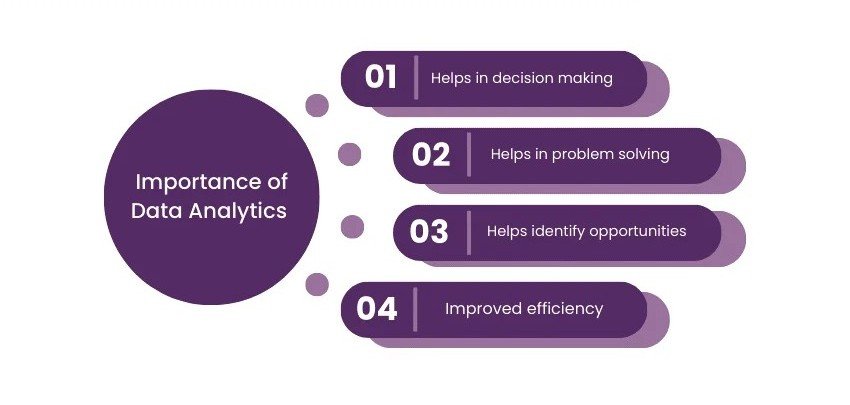
For working professionals, analytics skills are no longer limited to data-specific roles. Teams across IT, operations, finance, marketing, and product rely on data-driven insights to make decisions.
A structured Data Analytics Program helps professionals:
- Interpret dashboards and reports used in daily operations
- Communicate insights clearly to technical and non-technical stakeholders
- Understand data dependencies, quality issues, and reporting limitations
- Transition into analytics-focused roles with practical credibility
Without formal training, professionals often rely on fragmented learning, which makes it difficult to understand how tools, data, and business questions connect.
What Skills Are Required to Learn a Data Analytics Program?
A well-designed Data Analytics Program assumes limited prior analytics experience but expects basic professional readiness.
Common prerequisite skills include:
- Basic computer literacy and familiarity with spreadsheets
- Logical thinking and problem-solving ability
- Willingness to work with structured data
- Basic understanding of business processes (helpful but not mandatory)
The program gradually introduces technical complexity, ensuring learners understand why a step is performed before focusing on how it is implemented.
How Does SQL Work in Real-World Data Analytics Projects?
SQL is a core component of any practical Data Analytics Program because it is the primary interface used to access enterprise data.
In real-world projects, SQL is used to:
- Extract data from relational databases
- Filter, aggregate, and join multiple data sources
- Prepare datasets for reporting and visualization tools
- Validate data accuracy and investigate anomalies
Example enterprise workflow:
- Connect to a production or reporting database
- Write SQL queries to retrieve required metrics
- Apply transformations using
GROUP BY,JOIN, andWHEREclauses - Export or connect results to BI tools
The Data Analytics Program focuses on writing readable, efficient queries aligned with business questions rather than isolated syntax practice.
How Is Power BI Used in Enterprise Analytics Environments?
Power BI is commonly used for operational and management reporting across organizations. In a structured Data Analytics Program, learners study Power BI as part of a broader reporting lifecycle.
Enterprise use of Power BI includes:
- Connecting to SQL databases, APIs, and flat files
- Building data models with relationships and calculated measures
- Designing dashboards for different stakeholder roles
- Applying row-level security and performance optimization
Rather than focusing only on visuals, the Data Analytics Program explains how data modeling and measure logic impact report accuracy and usability.
How Does Tableau Fit into Professional Analytics Workflows?
Tableau is widely used for exploratory analysis and interactive visual storytelling. A comprehensive Data Analytics Program covers Tableau from a problem-solving perspective.
Common Tableau use cases:
- Rapid analysis of trends and outliers
- Building interactive dashboards for business users
- Supporting ad-hoc questions from leadership teams
- Visual validation of data patterns before formal reporting
Learners are guided on choosing appropriate chart types, managing filters, and structuring dashboards to support decision-making, not just presentation.
What Business Intelligence (BI) Concepts Are Covered?
Business Intelligence forms the conceptual backbone of the Data Analytics Program. Understanding BI ensures learners know how analytics fits into organizational strategy.
Key BI concepts include:
- Data warehouses and reporting layers
- ETL vs ELT workflows
- KPI definition and metric standardization
- Data governance and access controls
These topics help learners understand how raw data becomes trusted business information and why consistency matters in reporting.
How Does the Data Analytics Program Emphasize Real-World Scenarios?
A distinguishing feature of an effective Data Analytics Program is its focus on realistic scenarios rather than abstract exercises.
Typical scenarios include:
- Sales performance analysis across regions
- Customer behavior analysis using transaction data
- Operational efficiency reporting
- Financial summary dashboards for leadership
Learners practice breaking down ambiguous business questions into structured analytical steps, reflecting how analytics work is performed in professional settings.
How Is the Program Structured for Job Readiness?
The Data Analytics Program follows a progressive learning structure designed to reduce the gap between training and workplace expectations.
Typical learning path:
| Phase | Focus Area | Outcome |
|---|---|---|
| Foundation | SQL, data concepts | Ability to access and understand data |
| Core Analytics | BI tools, visualization | Build meaningful reports |
| Applied Practice | Use-case-based analysis | Translate data into insights |
| Review & Integration | End-to-end workflows | Job-aligned readiness |
This structure ensures learners understand both tools and the reasoning behind analytical decisions.
What Job Roles Use Data Analytics Skills Daily?
The skills developed through a Data Analytics Program are applied across multiple roles.
Common roles include:
- Data Analyst
- Business Analyst
- Reporting Analyst
- Operations Analyst
- Junior BI Developer
In these roles, professionals routinely work with SQL queries, dashboards, and stakeholder requirements rather than isolated datasets.
What Careers Are Possible After Completing a Data Analytics Program?

A structured Data Analytics Program supports multiple career pathways depending on experience and domain knowledge.
Potential career directions:
- Entry-level or associate data analyst roles
- Transition from operations or QA into analytics
- Reporting and BI-focused positions
- Analytics support roles within IT teams
Career progression typically depends on continued hands-on practice and domain exposure rather than certification alone.
How Does This Program Relate to Data Analyst Online Classes and Certifications?
Many professionals compare structured programs with standalone data analyst online classes or credentials like the Google data analytics certification.
A comprehensive Data Analytics Program differs by:
- Integrating multiple tools into one workflow
- Emphasizing enterprise reporting practices
- Providing context for how analytics supports business decisions
- Aligning learning with real job responsibilities
Certifications can complement learning, but structured programs help learners understand how skills are applied beyond exam scenarios.
Frequently Asked Questions (FAQ)
Is the Data Analytics Program suitable for beginners?
Yes. The program starts with foundational concepts and gradually introduces technical complexity suitable for beginners to intermediate professionals.
Do I need programming experience?
No advanced programming experience is required. SQL and basic analytical logic are taught from the ground up.
How practical is the learning approach?
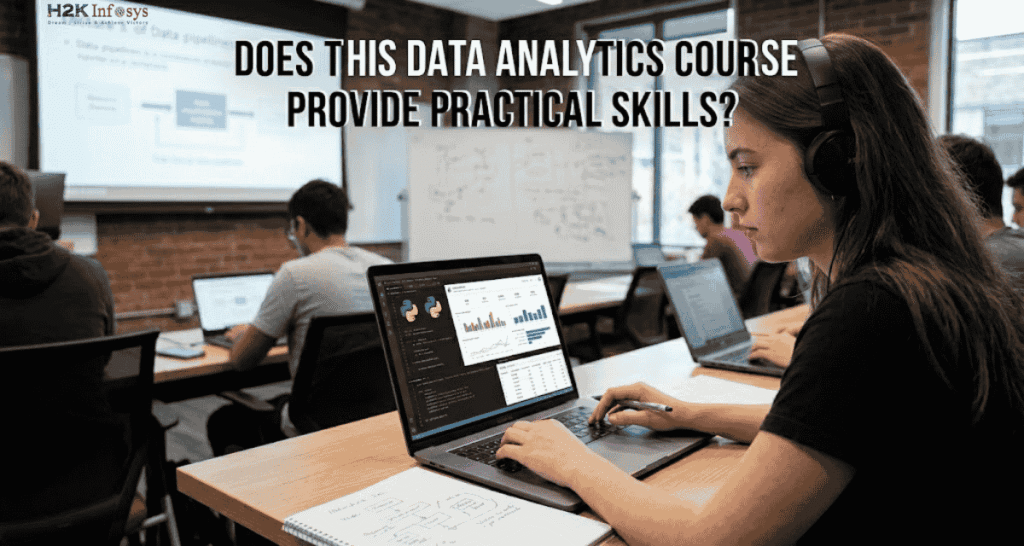
The Data Analytics Program emphasizes realistic datasets, reporting scenarios, and end-to-end workflows commonly seen in organizations.
Can working professionals manage the learning load?
The curriculum is typically structured to accommodate working schedules with progressive learning milestones.
Does the program focus only on tools?
No. Equal emphasis is placed on analytics thinking, business context, and data interpretation.
Key Takeaways
- The Data Analytics Program focuses on real-world analytics workflows, not just tools
- SQL, Power BI, Tableau, and BI concepts are taught in an integrated manner
- Learners gain practical skills aligned with enterprise data environments
- The program supports multiple analytics-related career paths
- Emphasis is placed on clarity, accuracy, and professional application
Explore H2K Infosys Data Analytics course to build practical, job-aligned analytics skills.
Learn more about structured training paths designed for working professionals.