H2K Infosys supports learners in moving from foundational knowledge to applied professional practice by combining structured cyber security training online, hands-on lab environments, guided project workflows, and job-readiness preparation aligned with enterprise security roles. The training process focuses on developing practical, role-based skills rather than isolated theoretical concepts. Students are introduced to real-world tools, security frameworks, and operational practices that reflect how cyber security jobs with training are typically structured in professional IT environments.
What Is Cyber Security Training With Job Placement?
Cyber security training with job placement refers to a structured learning approach where technical instruction is combined with career preparation activities. The goal is not only to teach security concepts, but also to ensure learners can demonstrate their skills in environments that resemble professional workplaces.
This approach typically includes:
- Technical training in security domains such as network security, endpoint protection, identity management, and cloud security
- Practical labs using industry-standard tools
- Project-based assessments aligned with job roles
- Resume and interview preparation focused on security-specific competencies
- Guidance on how to present technical experience to employers
Rather than focusing on certification alone, this model emphasizes operational readiness for cyber security jobs with training pathways that reflect real enterprise security workflows.
How Does Cyber Security Training Online Work in Real-World IT Projects?
Cyber security training online is most effective when it mirrors how security teams operate in production environments. At an enterprise level, security is integrated into IT operations, development pipelines, and compliance processes.
Typical Enterprise Security Workflow
A common real-world security workflow includes:
- Asset identification and classification
- Risk assessment and vulnerability scanning
- Security control implementation
- Continuous monitoring and logging
- Incident detection and response
- Reporting and compliance validation
In a training environment, learners work through simplified versions of these workflows using lab platforms and simulated infrastructure. This helps them understand not just individual tools, but how those tools connect within a broader security architecture.
Example Training Scenario
A typical project-based scenario may include:
- Deploying a virtual network environment
- Configuring firewall rules and access control lists
- Running vulnerability scans using tools such as OpenVAS or Nessus
- Reviewing log data in a security information and event management system
- Creating an incident response report based on simulated alerts
This type of structured practice reflects how cyber security jobs with training requirements often expect candidates to demonstrate both technical execution and documentation skills.
Why Is This Transition Important for Working Professionals?
For working professionals, moving from training to operational security roles requires more than understanding concepts such as malware, firewalls, or encryption. Employers typically look for candidates who can operate within team-based, process-driven environments.
Common Challenges Professionals Face
- Translating lab experience into resume-ready project descriptions
- Understanding how security teams interact with IT, development, and compliance departments
- Navigating enterprise change management and ticketing systems
- Working within regulatory and policy constraints
A structured cyber security training online program helps bridge these gaps by introducing learners to professional documentation standards, workflow tools, and communication practices used in enterprise security teams.
What Skills Are Required to Learn Cyber Security Training Online?
Cyber security roles draw on a combination of technical, analytical, and procedural skills. A training program typically develops these competencies in stages.
Core Technical Skills
| Skill Area | Practical Application |
| Networking fundamentals | Understanding traffic flow, routing, and segmentation |
| Operating systems | Managing Windows and Linux security settings |
| Security tools | Using scanners, firewalls, and SIEM platforms |
| Cloud platforms | Securing virtual machines and storage services |
| Scripting basics | Automating simple security tasks |
Professional Skills
- Incident documentation
- Risk communication
- Compliance reporting
- Cross-team collaboration
These skills are often emphasized because cyber security jobs with training expectations include both technical execution and professional communication.
How Is Cyber Security Used in Enterprise Environments?
Enterprise security environments are structured around layered defense models and standardized frameworks.
Common Frameworks and Standards
- NIST Cybersecurity Framework
- ISO/IEC 27001
- CIS Critical Security Controls
These frameworks guide how organizations design policies, manage risks, and evaluate their security posture. Training programs often reference these standards to help learners understand why certain technical controls exist and how they are audited.
Enterprise Tool Stack Overview
| Category | Common Tools |
| Endpoint security | Microsoft Defender, CrowdStrike |
| Network security | Palo Alto, Fortinet |
| SIEM | Splunk, IBM QRadar |
| Vulnerability management | Nessus, Qualys |
| Identity management | Azure AD, Okta |
Learners are typically introduced to these tools through guided labs that simulate configuration, monitoring, and reporting tasks.
What Job Roles Use Cyber Security Skills Daily?
Cyber security roles vary depending on organizational size and maturity.
Common Entry and Intermediate Roles
| Role | Primary Responsibilities |
| SOC Analyst | Monitoring alerts, investigating incidents |
| Security Administrator | Managing access controls and policies |
| Vulnerability Analyst | Scanning systems and reporting risks |
| Cloud Security Associate | Securing cloud workloads |
These roles reflect how cyber security jobs with training pathways often begin, with responsibilities focused on monitoring, configuration, and documentation.
What Careers Are Possible After Learning Cyber Security Training Online?
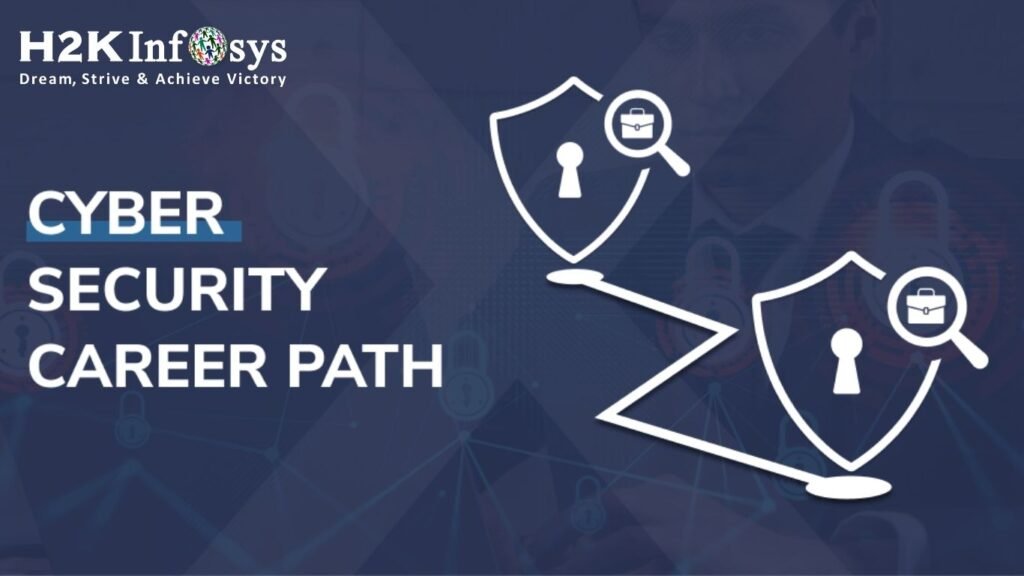
Career progression in cyber security typically follows a role-based pathway.
Sample Learning and Career Path
- Security fundamentals and lab practice
- SOC or junior security analyst role
- Specialization in cloud, network, or compliance security
- Senior analyst or security engineer role
This progression highlights the importance of foundational training combined with continuous skills development.
How Does H2K Infosys Structure Training for Professional Readiness?
H2K Infosys aligns its cyber security training online approach with enterprise workflows and job-role expectations.
Training Components
- Instructor-led technical modules
- Guided lab sessions
- Role-based projects
- Documentation and reporting exercises
- Career readiness workshops
This structure is designed to help learners understand not only how to perform security tasks, but also how to present their work in professional contexts.
How Are Realistic Projects Used to Build Job-Ready Experience?
Projects are designed to reflect common enterprise scenarios.
Example Project Workflow
- Define system scope and assets
- Perform vulnerability assessment
- Apply security controls
- Monitor system behavior
- Produce a security report
This workflow mirrors the operational responsibilities of cyber security jobs with training programs focused on practical readiness.
What Is Cyber Security Sales Training and How Does It Fit Into Technical Careers?
Cyber security sales training focuses on developing an understanding of how security solutions are positioned, evaluated, and implemented within organizations. While primarily relevant to technical sales or consulting roles, it also benefits security professionals who work with vendors and stakeholders.
Skills Developed
- Understanding security product architectures
- Communicating risk and value
- Supporting proof-of-concept deployments
This knowledge helps professionals collaborate effectively with both technical and business teams.
How Does Resume and Interview Preparation Work for Security Roles?
Career preparation emphasizes translating technical work into professional narratives.
Resume Mapping Example
| Training Activity | Resume Skill |
| Vulnerability scan project | Risk assessment and reporting |
| SIEM lab | Log analysis and incident response |
| Firewall configuration | Network security management |
This mapping helps candidates present their experience in terms employers recognize.
How Is Ongoing Skill Development Encouraged?
Security is a continuously evolving field. Learners are encouraged to:
- Follow vendor documentation
- Review public security advisories
- Practice in lab environments
- Participate in security communities
This approach supports long-term professional growth beyond initial training.
Frequently Asked Questions
What background is needed to start cyber security training online?
Basic knowledge of networking, operating systems, and general IT concepts is helpful, but many programs introduce these topics as part of the learning path.
How long does it take to become job-ready?
This depends on prior experience, learning pace, and practice time. Most learners spend several months building technical and project-based experience.
Are certifications required for cyber security jobs?
Certifications are commonly used by employers as validation tools, but practical skills and documented project experience are equally important.
Can non-technical professionals transition into cyber security?
Yes, with structured training and consistent practice, many professionals from IT support, networking, or compliance backgrounds move into security roles.
Key Takeaways
- Cyber security training with job placement focuses on operational readiness, not just theory
- Real-world tools and workflows help learners understand enterprise security environments
- Role-based projects support resume and interview preparation
- Continuous learning is essential for long-term career growth in cyber security
Explore H2K Infosys cyber security training online programs to gain hands-on experience aligned with real enterprise security roles.
Visit H2K Infosys to learn more about structured learning paths designed for professional growth in cyber security.