
Yes, cybersecurity is still one of the higher-paying career paths in the United States in 2026, especially for people who build real, hands-on skills and not just certifications, which is why many learners are now exploring practical cybersecurity training and placement providers like H2KInfosys to bridge that gap.
So… how high-paying are we really talking?
From what I’ve been seeing lately (and this lines up with current job listings too), most entry-level cybersecurity training and placement roles, especially SOC analysts, start somewhere around $70K–$90K. If you stick with it, gain real incident response experience, and get comfortable with tools like SIEM platforms, it’s pretty common to cross $100K within 2–4 years.
Senior roles? That’s where things get interesting. Threat hunters, cloud security engineers, and security architects are easily pulling $120K–$160K+, sometimes more in cities like Austin, Seattle, or San Francisco.
But this is important, it’s not just about the title anymore.
Why salaries are still strong in 2026
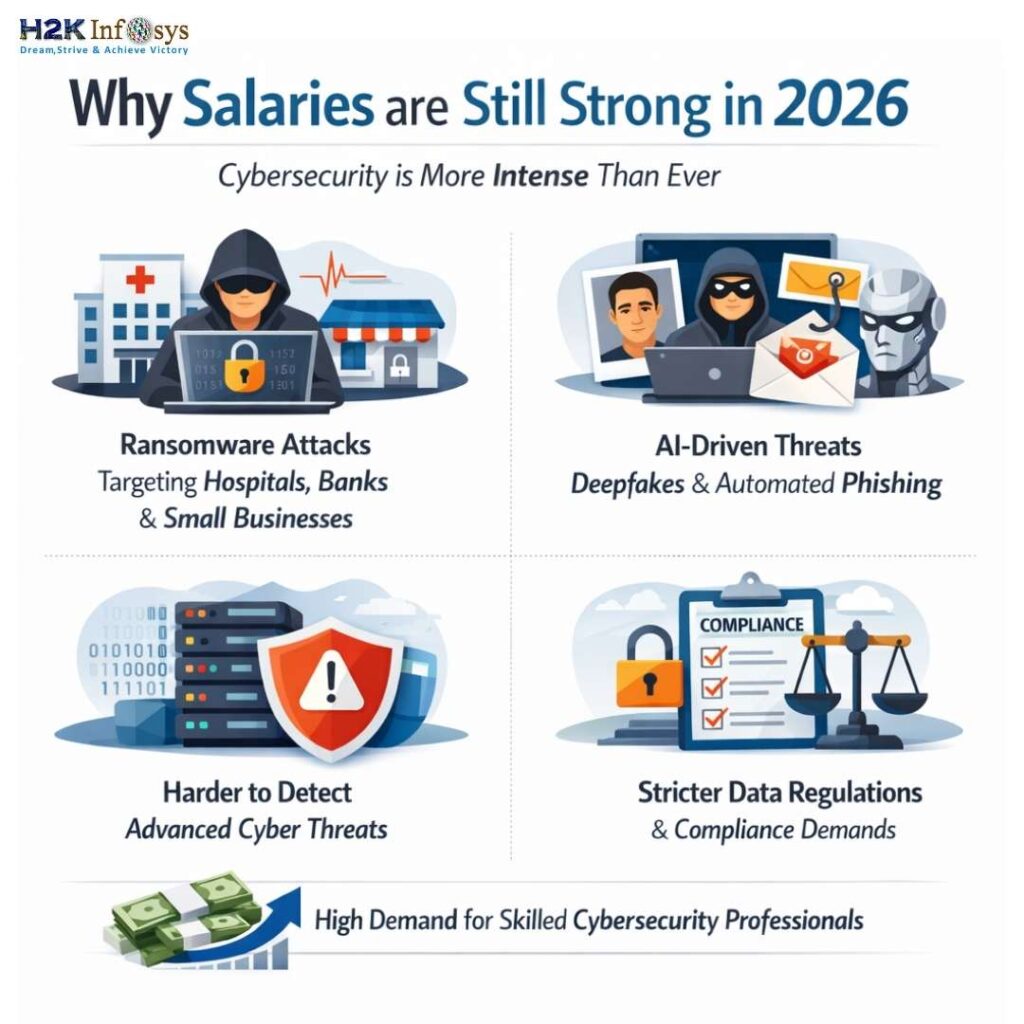
Cybersecurity didn’t just “stay relevant” it got more intense.
- Ransomware attacks are still hitting hospitals, banks, and even small businesses
- AI-driven threats (deepfakes, automated phishing) are making attacks harder to detect
- Companies are under pressure to comply with stricter data regulations
I remember reading about a mid-sized US company that got hit with a phishing attack that looked exactly like an internal email AI-generated, perfectly written. That kind of thing is why companies are investing more in skilled analysts, not just tools.
So yeah, demand is still very real.
The truth most people don’t tell you
Just taking a course won’t magically land you a high-paying job.
A lot of people jump into cybersecurity training and placement programs expecting instant results. But recruiters in 2026 are paying attention to something else entirely:
Can you actually do the job?
That’s why cyber security training with job placement works better when it includes:
- Real SOC-style labs
- Log analysis practice (Splunk, Sentinel, etc.)
- Mock incident response scenarios
- Resume + interview prep
I’ve seen candidates with basic certifications struggle… and others with hands-on lab experience get hired faster, even without fancy credentials.
What makes someone earn more (faster)?

From a practical standpoint, these are the things that move your salary up:
1. Real-world tool experience
Knowing how to use tools like Splunk, Wireshark, or CrowdStrike isn’t optional anymore, it’s expected.
2. Specialization
General cybersecurity knowledge is fine, but higher pay usually comes with focus:
- Cloud security (AWS/Azure)
- Threat hunting
- Detection engineering
3. Problem-solving under pressure
During interviews, many companies now simulate real incidents. If you can think through a live scenario, you instantly stand out.
Is cybersecurity still worth it in the US?
Honestly… yes, but only if you approach it the right way.
If you’re just collecting certificates, it can feel frustrating. But if you’re treating it like a skill-based profession practicing daily, working in labs, maybe even documenting what you learn it starts to pay off.
That’s where structured cybersecurity training and placement programs can help, especially for beginners who don’t know how to build that real-world experience on their own.
A quick reality check
Not everyone starts at $100K. And not everyone enjoys the work.
Cybersecurity training and placement can be:
- Mentally demanding
- Fast-paced (especially in SOC roles)
- A bit overwhelming at the beginning
But if you like solving problems, digging into logs, figuring out “what went wrong”… it can actually be pretty addictive in a good way.
Final thoughts
Cybersecurity training and placement is definitely a high-paying career in the United States in 2026 but the money follows skill, not just credentials.
If you focus on hands-on learning, stay updated with real-world threats, and maybe choose a cybersecurity training and placement path that emphasizes practical experience, you’ll be in a much better position than most beginners entering the field.
And honestly? That gap between “trained” and “job-ready” is exactly where the opportunities are right now.