Yes, it is still considered a strong and viable career choice in the United States in 2026. Organizations across industries rely on data-driven decision-making, which continues to create demand for professionals who can analyze, interpret, and visualize data. As businesses generate increasing volumes of digital information, skilled data analysts remain important for transforming raw data into actionable insights.
Modern data analytics roles often require knowledge of tools such as Power BI, Tableau, SQL, and business intelligence platforms. Professionals with structured Data analytics training and practical project experience are typically better positioned to work with real-world datasets and enterprise analytics systems.
What Is Data Analytics?
Data analytics refers to the process of examining raw data to identify patterns, trends, and insights that support business decision-making. The discipline combines elements of statistics, data management, and visualization to help organizations understand operational performance and customer behavior.
In a typical business environment, data analytics involves several key steps:
- Collecting data from databases, APIs, or internal systems
- Cleaning and preparing datasets for analysis
- Querying data using SQL or similar languages
- Visualizing insights using dashboards and reports
- Communicating findings to stakeholders
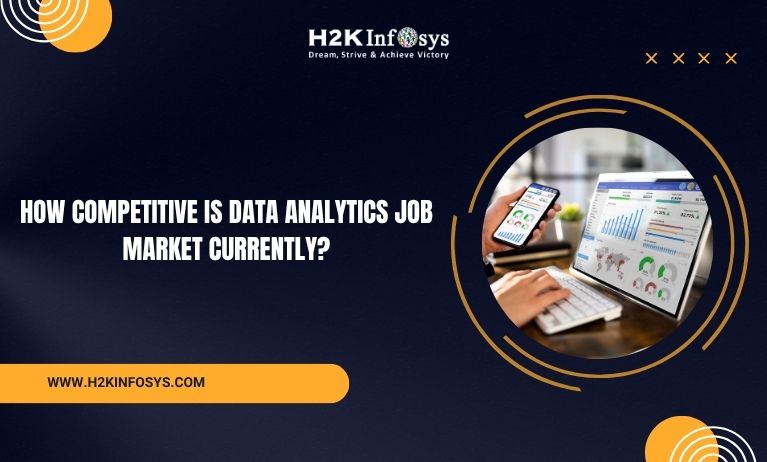
Organizations increasingly rely on business intelligence (BI) platforms to support these activities. Tools such as Power BI and Tableau allow analysts to create interactive dashboards that decision-makers can use to monitor performance and track key metrics.
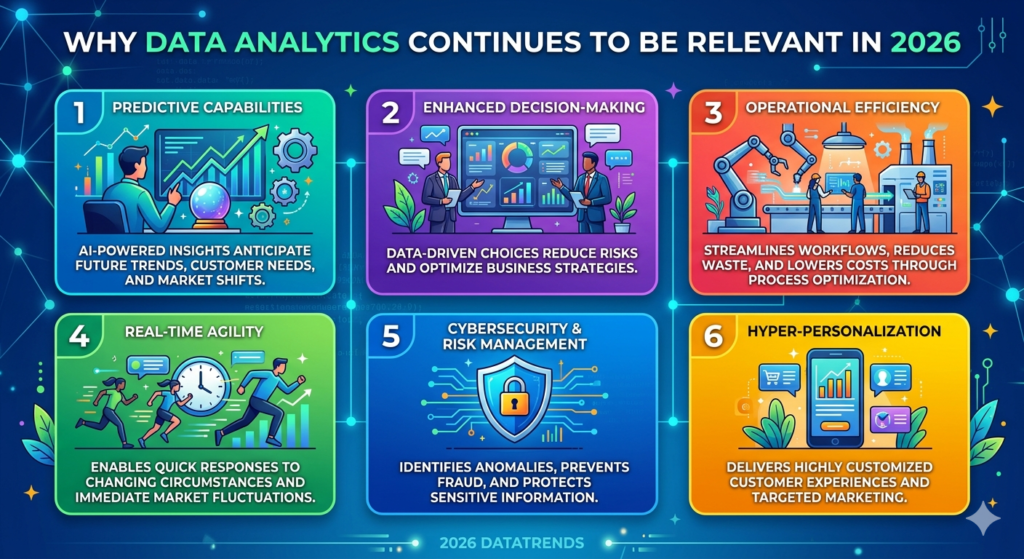
Why Data Analytics Continues to Be Relevant in 2026
The importance of data analytics continues to grow because organizations now collect more data than ever before. Digital transactions, customer interactions, supply chain systems, and online platforms all produce large volumes of information that businesses need to interpret.
Several factors contribute to the continued relevance of data analytics careers:
Expansion of Data-Driven Decision Making
Companies across sectors including finance, healthcare, retail, and technology—use analytics to support operational and strategic decisions. Data analysts help teams identify trends, evaluate performance metrics, and detect inefficiencies.
Growth of Business Intelligence Platforms
Modern BI tools have become central to enterprise reporting systems. Platforms such as Power BI and Tableau are widely used to build dashboards that provide real-time insights into sales, marketing performance, and operational data.
Integration with Cloud and Data Platforms
Organizations increasingly store data in cloud-based platforms and data warehouses. Analysts must understand how to query structured datasets using SQL and connect analytics tools to enterprise data systems.
Because of these trends, professionals who understand this workflows remain valuable contributors to many business teams.
What Skills Are Required for a Data Analytics Career?
To succeed in a data analytics role, professionals typically develop a combination of technical, analytical, and communication skills. Employers often look for candidates who can both analyze data and clearly explain insights.
Core skills include:
SQL and Data Querying
SQL is commonly used to retrieve and manipulate structured data from relational databases. Analysts frequently write queries to extract relevant datasets from enterprise systems.
Data Visualization
Visualization tools such as Power BI and Tableau allow analysts to present findings in dashboards and reports. Effective visualizations help business stakeholders quickly understand trends and performance metrics.
Data Cleaning and Preparation
Raw data often contains missing values, inconsistent formats, or duplicate entries. Analysts must clean and structure datasets before performing meaningful analysis.
Analytical Thinking
Professionals in data analytics need to interpret numbers in context. This means understanding business goals and identifying the metrics that matter most to decision-makers.
Communication Skills
Insights are valuable only when they are clearly communicated. Data analysts frequently present findings through dashboards, written reports, or stakeholder meetings.
Structured learning programs such as the data analytics training offered by H2K Infosys focus on building these practical skills through guided instruction and project-based exercises.
How Data Analytics Tools Are Used in Real-World Projects
In enterprise environments, data analytics typically follows a structured workflow that integrates multiple tools and technologies.
For example, a common project might involve:
- Extracting sales data from a relational database using SQL
- Cleaning and transforming the dataset for analysis
- Importing the data into a BI tool such as Power BI
- Building interactive dashboards that track performance metrics
- Sharing reports with business teams for strategic decisions
These workflows are often taught in professional training environments. The H2K Infosys data analytics certification program introduces learners to these processes by demonstrating how SQL queries, data preparation, and dashboard tools work together in practical scenarios.
What Job Roles Use Data Analytics Skills Daily?
Professionals with data analytics expertise work in several different roles across modern organizations.
Common positions include:
Data Analyst
Responsible for analyzing datasets and generating insights that support business decisions.
Business Intelligence Analyst
Focuses on creating dashboards, reports, and data visualizations for stakeholders.
Reporting Analyst
Maintains enterprise reporting systems and monitors operational performance metrics.
Operations Analyst
Uses data analytics techniques to improve efficiency in supply chain, logistics, or internal processes.These roles often require experience with SQL, visualization tools, and data interpretation. Training programs such as those provided by H2K Infosys typically emphasize practical exercises that mirror these workplace responsibilities.
Is Formal Training Necessary to Start a Data Analytics Career?
While some professionals learn analytics tools independently, structured training can help learners develop skills in a systematic way. Many beginners find it helpful to follow a curriculum that introduces core tools and concepts in a logical sequence.
A typical data analytics certification course may include topics such as:
- Fundamentals of data analysis
- SQL for database querying
- Dashboard development with Power BI and Tableau
- Data preparation and transformation
- Business intelligence reporting
The H2K Infosys data analytics course is designed to introduce learners to these tools while providing hands-on exercises that reflect real enterprise workflows. By practicing with datasets and reporting tools, students can gain experience similar to what analysts encounter in workplace environments.
What Careers Are Possible After Learning Data Analytics?
Learning data analytics can open pathways to several technology and business roles. While entry-level positions often focus on reporting or data analysis, professionals may later specialize in areas such as business intelligence or advanced analytics.
Potential career paths include:
- Junior Data Analyst
- Business Intelligence Developer
- Data Reporting Specialist
- Analytics Consultant
- Operations Analyst
As organizations continue to integrate analytics into their decision-making processes, professionals who can interpret and communicate data insights remain important contributors to business teams.
Frequently Asked Questions About Data Analytics Careers
Is data analytics still in demand in the USA?
Yes. Many industries continue to rely on it for reporting, forecasting, and operational decision-making.
Do I need programming skills to work in data analytics?
Programming is not always mandatory for entry-level roles. However, skills in SQL and data tools such as Power BI or Tableau are commonly required.
How long does it take to learn data analytics?
Learning timelines vary depending on prior experience. Many professionals complete structured training programs over several months while practicing with real datasets.
Can beginners transition into data analytics?
Yes. Many professionals from non-technical backgrounds enter the field by learning SQL, data visualization tools, and basic analytical techniques through training programs such as those offered by H2K Infosys.
Conclusion
Key Takeaways
- Data analytics remains a relevant career path in the United States in 2026.
- Organizations across industries rely on data-driven decision-making.
- Skills in SQL, Power BI, Tableau, and business intelligence tools are commonly required.
- Real-world analytics workflows involve data extraction, cleaning, visualization, and reporting.
- Structured training programs help beginners build practical analytics skills.
To gain hands-on experience with modern analytics tools, professionals can explore structured learning programs offered by H2K Infosys. These Google data analytics course introduce practical workflows and help learners develop skills used in real data analytics projects.