Introduction
In today’s digital-first world, cloud computing has become the backbone of innovation and business growth. However, with the rise of cloud adoption, security risks have multiplied. Cyber Security in Cloud Computing has emerged as a critical area of focus for organizations and professionals alike.
Every file stored, every transaction processed, and every virtual machine deployed in the cloud must be protected from breaches, data theft, and cyberattacks. That’s where Cyber security training and placement programs come into play. These specialized training courses help professionals gain the knowledge and hands-on experience to defend cloud infrastructure from evolving threats.
In this blog, we’ll explore the role of Cyber Security in Cloud Computing, understand why it’s essential, identify common cloud vulnerabilities, and show how the right cyber security training courses can launch your career in this high-demand field.
Understanding Cyber Security in Cloud Computing
Cyber Security in Cloud Computing focuses on protecting cloud-based systems, data, and infrastructure from unauthorized access, attacks, and data loss. Unlike traditional IT systems, cloud environments are shared, dynamic, and distributed making them more vulnerable if not secured properly.
From securing virtual machines to encrypting data in transit, cyber security professionals play a vital role in ensuring trust and reliability within cloud services. According to industry research, over 80% of companies experienced at least one cloud-related breach in the past 12 months, highlighting why professionals trained in Cyber Security in Cloud Computing are in high demand.
Why Cloud Computing Needs Robust Cyber Security
1. Rapid Cloud Adoption Across Industries
The global shift toward digital transformation means most enterprises now rely on cloud computing for storage, collaboration, and scalability. As a result, Cyber Security in Cloud Computing is no longer optional it’s a strategic necessity.
Reports show that the cloud computing market will exceed $1 trillion soon. This exponential growth has expanded the attack surface for hackers, making security expertise a top business priority. Skilled professionals who have completed cyber security training and job placement programs are now critical to safeguarding these systems.
2. Shared Responsibility Model
In cloud computing, the service provider and customer share responsibility for security. Cloud vendors handle infrastructure-level protection, but clients must secure data, access control, and configurations.
Cyber Security in Cloud Computing ensures that organizations fully understand and implement their share of this responsibility. Professionals with cyber security analyst training online learn to configure access, enforce encryption, and monitor compliance effectively.
3. Increased Cloud Threats and Misconfigurations
Misconfigurations are among the leading causes of cloud breaches. Studies show that more than 80% of cloud security failures stem from human error improper access controls, open storage buckets, or weak credentials.
Professionals trained through online courses for cybersecurity are equipped to prevent these mistakes. They learn how to identify risks early and configure systems securely, making them valuable assets in any organization focused on Cyber Security in Cloud Computing.
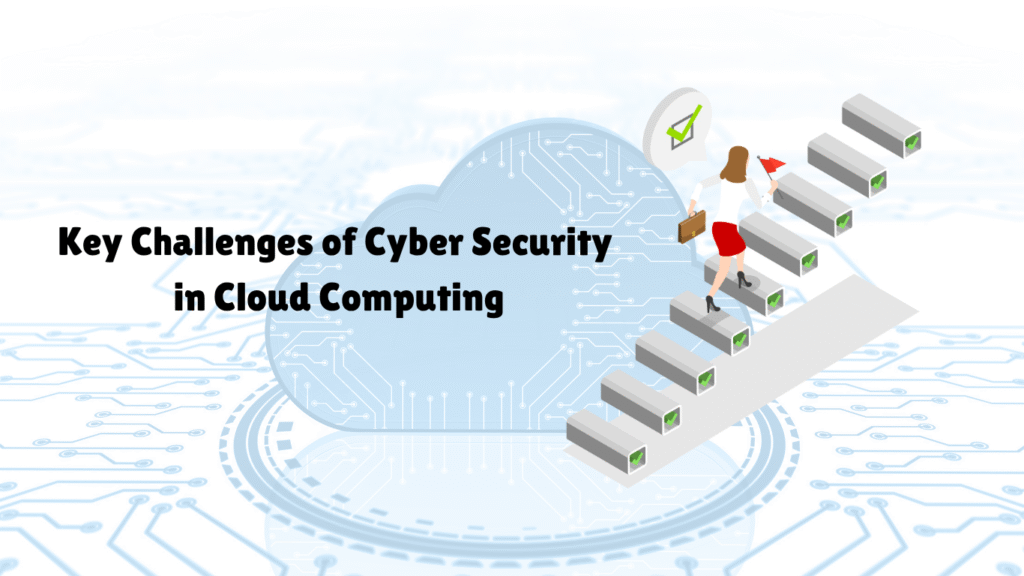
Key Challenges of Cyber Security in Cloud Computing
A. Data Breaches and Data Loss
The cloud hosts vast amounts of sensitive data. Without strong encryption and key management, confidential information can be exposed. A solid Cyber Security in Cloud Computing strategy involves encrypting data at rest, in transit, and in use.
Example: A healthcare provider storing patient data in the cloud must comply with regulations like HIPAA. Professionals who complete cyber security training and placement learn to implement encryption and auditing mechanisms to prevent data leakage.
B. Insider Threats
Employees, contractors, or partners with privileged access can misuse credentials intentionally or accidentally. A proactive Cyber Security in Cloud Computing framework includes access monitoring, privilege limitation, and behavior analytics to detect insider risks early.
C. Identity and Access Management (IAM)
One of the most important skills in Cyber Security in Cloud Computing is managing user identities and access permissions. Mismanagement can lead to unauthorized access.
Professionals learn to set up multi-factor authentication (MFA), implement least-privilege policies, and monitor login patterns through online training for cyber security.
D. Multi-Cloud Complexity
Many enterprises use multiple cloud platforms (AWS, Azure, Google Cloud). This adds layers of complexity to securing each environment.
Proper Cyber Security in Cloud Computing requires unified monitoring, automation, and compliance checks across all platforms all of which are covered in a structured cyber security course with placement.
Real-World Example of Cyber Security in Cloud Computing
In 2024, a cloud misconfiguration incident at a large enterprise exposed millions of customer records. The root cause? An unprotected storage bucket left open to the public.
Had the organization implemented proper Cyber Security in Cloud Computing practices like access control, encryption, and continuous monitoring the breach could have been avoided.
This case reinforces why learners must gain practical experience through cyber security training near me or online classes cyber security programs that teach hands-on skills in real-world cloud environments.
Essential Skills to Master Cyber Security in Cloud Computing
To succeed as a cloud security professional, you need both conceptual and practical knowledge. Below are essential skills taught in top cyber security training and placement courses.
1. Cloud Infrastructure Security
- Configure secure virtual networks and firewall rules.
- Apply encryption and monitor logs.
- Understand infrastructure-as-code (IaC) vulnerabilities.
Hands-on projects within Cyber Security in Cloud Computing teach you to identify risks and apply mitigation techniques in AWS, Azure, or GCP.
2. Encryption and Key Management
Encryption ensures that sensitive data remains unreadable to attackers. In Cyber Security in Cloud Computing, professionals use cloud-native tools like AWS KMS or Azure Key Vault.
Example Python code snippet using AWS KMS:
import boto3

kms = boto3.client('kms')

response = kms.encrypt(

    KeyId='your-key-id',

    Plaintext=b'Confidential Data'

)

print(response['CiphertextBlob'])
This simple exercise, often part of online training for cyber security, helps learners understand data security fundamentals.
3. Threat Detection and Incident Response
Continuous monitoring and automated alerts are pillars of Cyber Security in Cloud Computing.
Students learn to use cloud tools like AWS CloudTrail, Azure Monitor, and SIEM solutions to detect unusual activity.
A robust cyber security course and job placement program ensures you can analyze incidents, isolate affected systems, and restore normal operations efficiently.
4. Compliance and Governance
Cloud environments must comply with global security regulations. Cyber Security in Cloud Computing focuses on frameworks like GDPR, HIPAA, and ISO 27001.
Professionals trained through cyber security training courses learn to audit configurations, document compliance, and maintain cloud security postures aligned with these standards.
5. DevSecOps and Automation
Modern Cyber Security in Cloud Computing integrates with DevOps pipelines. Students learn to embed security into CI/CD workflows, automate vulnerability scanning, and enforce policies at every deployment stage.
Benefits of Learning Cyber Security in Cloud Computing
- High Career Demand – Organizations across industries are hiring cloud security specialists.
- Attractive Salaries – Cloud security experts earn higher pay due to the complexity of their roles.
- Versatile Job Roles – From Cloud Security Engineer to Security Analyst, the opportunities are vast.
- Global Relevance – Skills in Cyber Security in Cloud Computing apply across all regions and industries.
- Practical Training – Courses like those at H2K Infosys combine learning with hands-on labs and projects.
How H2K Infosys Helps You Master Cyber Security in Cloud Computing
At H2K Infosys, our cyber security training and placement program offers comprehensive learning experiences designed for today’s job market.
Here’s how we prepare you for real-world success in Cyber Security in Cloud Computing:
- Structured Curriculum: Covers network, application, and cloud security concepts in depth.
- Hands-On Labs: Students practice on live cloud environments using AWS and Azure.
- Experienced Mentors: Trainers with industry experience guide you through challenges.
- Placement Assistance: Our cyber security course with placement includes resume building, mock interviews, and job connections.
- Flexible Learning: Choose between online classes cyber security, or self-paced modules, depending on your schedule.
By the end of the course, you will have the skills and confidence to protect complex cloud infrastructures and a strong resume that stands out to recruiters.
Step-by-Step Guide to Building a Career in Cyber Security in Cloud Computing
- Start with Fundamentals – Learn networking, Linux, and system security basics.
- Enroll in a Specialized Course – Choose a cyber security training and job placement program that emphasizes cloud security.
- Practice in the Cloud – Set up secure AWS or Azure environments and simulate threats.
- Earn Certifications – Gain credentials like AWS Security Specialty or CCSK.
- Build a Project Portfolio – Document your work in Cyber Security in Cloud Computing to showcase to employers.
- Get Placement Support – Use H2K Infosys’ resources to connect with hiring companies.
- Continue Learning – Stay updated with new threats, technologies, and best practices in cloud security.
Why Employers Value Expertise in Cyber Security in Cloud Computing
Employers recognize that Cyber Security in Cloud Computing is vital to business continuity. Organizations need experts who can manage hybrid and multi-cloud environments, prevent breaches, and ensure compliance.
Professionals with strong credentials from cyber security training near me or online training for cyber security programs often have an edge. They bring both theoretical understanding and practical hands-on ability, making them indispensable to modern enterprises.
Key Industry Insights
- Over 90% of organizations cite cloud misconfigurations as their top security concern.
- The global shortage of cybersecurity professionals exceeds 3 million, with high demand for cloud expertise.
- Cyber Security in Cloud Computing specialists earn 20–25% higher salaries compared to general IT security roles.
These figures show why enrolling in a cyber security course and job placement program focused on cloud security is a smart career move.
Conclusion
The future of digital infrastructure depends on strong Cyber Security in Cloud Computing. As businesses continue migrating data and operations to the cloud, skilled professionals are essential to keep information secure and systems resilient.
Whether you’re new to IT or looking to upgrade your career, enrolling in a Cyber security course with placement at H2K Infosys can help you master these high-demand skills and access global job opportunities.
Take your first step today. Join H2K Infosys’ Cyber Security in Cloud Computing training program to gain hands-on cloud protection expertise and unlock your path to a successful cybersecurity career.