Introduction
Software testing has changed fast in recent years. Companies now expect faster releases, fewer defects, and better user experience. Manual testing alone cannot meet these needs. Automation has become a key skill for testers who want to grow in their careers.
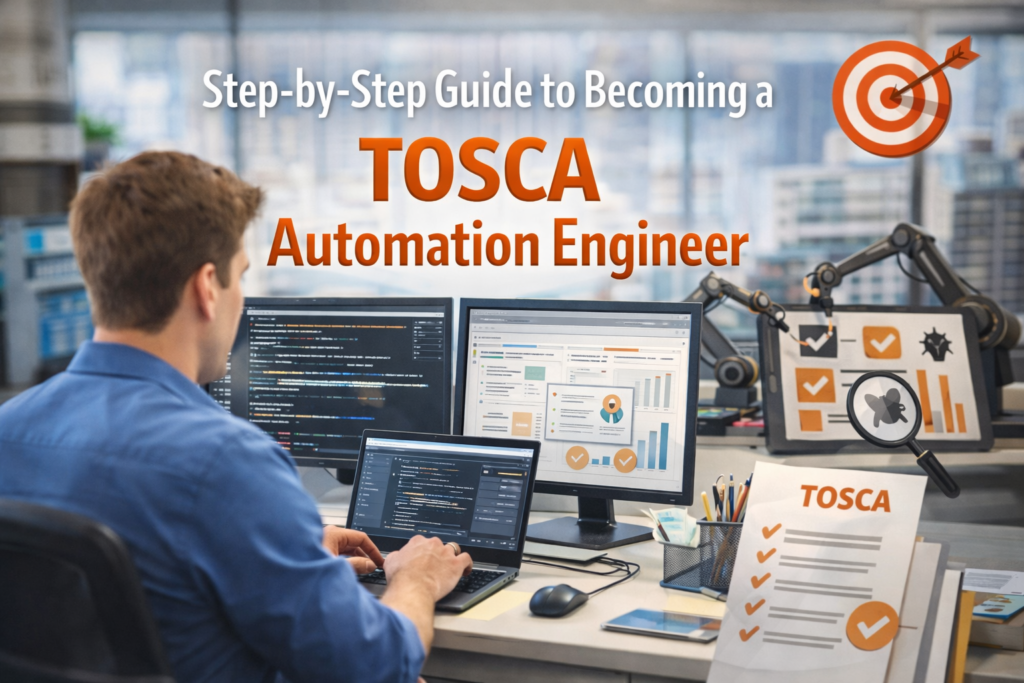
This shift has created strong demand for a tosca automation engineer. Many companies now use Tricentis TOSCA to build stable and scalable test automation frameworks. TOSCA supports model based testing, which reduces maintenance and improves efficiency.
If you want to enter this field, you need a clear plan. This guide explains each step in simple terms. It helps you understand skills, tools, and career growth.
What Is Tricentis TOSCA?
Tricentis TOSCA is a test automation tool that uses a model based approach. It allows testers to design test cases without heavy coding. This feature makes it useful for both beginners and experienced professionals.
Key Features of TOSCA
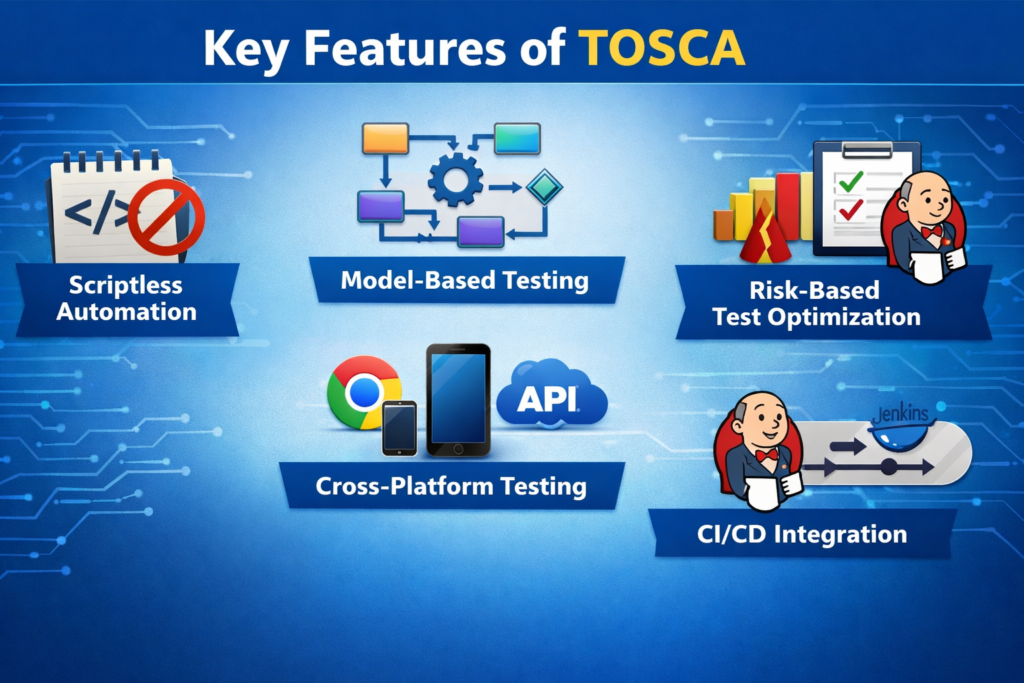
- Scriptless automation
- Model based testing
- Support for web, mobile, API, and SAP testing
- Risk based test optimization
- Easy integration with CI CD pipelines
Many organizations use TOSCA to reduce testing time and cost. Reports show that automation can reduce testing effort by up to 70 percent in large projects.
A tosca automation engineer uses these features to build reliable test cases and improve software quality.
Why Choose a Career in TOSCA Automation?
Automation testing is one of the fastest growing areas in software testing. Companies prefer tools that reduce coding effort and increase speed. TOSCA meets both needs.
Benefits of Choosing This Career
- High demand in IT industry
- Good salary growth
- Opportunity to work on enterprise projects
- Less dependency on coding skills
- Strong future with AI driven testing
A skilled tosca automation engineer can work in banking, healthcare, retail, and telecom sectors. These industries rely on stable and secure applications.
Skills Required to Become a TOSCA Automation Engineer
You do not need advanced coding skills to start. However, you need a strong base in testing concepts.
1. Software Testing Fundamentals
You must understand:
- Test case design
- Test scenarios
- Bug lifecycle
- Regression testing
- Smoke testing
These basics help a tosca automation engineer design effective automation flows.
2. Understanding of Automation Concepts
You should learn:
- What is automation testing
- Difference between manual and automation testing
- Test automation frameworks
3. Basic Programming Knowledge
TOSCA is scriptless, but basic programming knowledge helps in:
- Logic building
- Understanding APIs
- Working with test data
Languages like Java or Python are useful.
4. Knowledge of SDLC and STLC
You must understand:
- Software Development Life Cycle
- Software Testing Life Cycle
This knowledge helps a tosca automation engineer align testing with development.
5. Analytical Thinking
You should be able to:
- Identify test scenarios
- Break down complex workflows
- Predict failure points
Step-by-Step Path to Become a TOSCA Automation Engineer
This section explains the complete journey in simple steps.
Step 1: Learn Software Testing Basics
Start with manual testing concepts. Learn how to:
- Write test cases
- Execute tests
- Report defects
Without this base, automation will not make sense.
A strong foundation helps a tosca automation engineer build better automation logic.
Step 2: Understand Automation Testing
Learn why automation is needed. Focus on:
- Repetitive test execution
- Speed and accuracy
- Continuous testing
Study real world examples. For instance, e-commerce websites use automation to test checkout flows daily.
Step 3: Start TOSCA Training
Now begin structured learning of TOSCA.
Topics to Cover
- TOSCA Commander
- Modules and test cases
- Test case design
- Test data management
- Execution lists
A beginner should focus on TOSCA Online Training For Beginners to understand concepts step by step.
A tosca automation engineer uses these modules to build reusable test components.
Step 4: Practice with Real Scenarios
Practice is important. Try these:
- Automate login page
- Automate form submission
- Automate API requests
Example:
Test Scenario: Login Functionality
Step 1: Open browser
Step 2: Enter username
Step 3: Enter password
Step 4: Click login
Step 5: Verify dashboard
Convert this into TOSCA modules and test cases.
Hands on practice helps a tosca automation engineer gain confidence.
Step 5: Learn Model Based Testing
TOSCA uses model based testing. This means:
- You create reusable modules
- You separate test logic from data
Benefits include:
- Easy maintenance
- Faster updates
- Reduced duplication
A tosca automation engineer relies on this approach for scalable automation.
Step 6: Work with Test Data Management
You must learn how to handle data.
Focus on:
- Test data design
- Data driven testing
- Parameterization
Example:
Instead of hardcoding values, use test data sets.
This skill improves the efficiency of a tosca automation engineer.
Step 7: Learn API Testing in TOSCA
Modern applications rely on APIs.
Learn:
- REST API testing
- Request and response validation
- JSON and XML handling
Example:
API Test: Get User Details
Request: GET /users/1
Validate: Status code = 200
Check: Response contains user name
A tosca automation engineer uses API testing to ensure backend stability.
Step 8: Understand CI CD Integration
Automation works best with CI CD tools.
Learn basics of:
- Continuous Integration
- Continuous Delivery
- Build pipelines
TOSCA integrates with tools like Jenkins.
A tosca automation engineer ensures tests run automatically after each build.
Step 9: Prepare for Certification
A TOSCA Certification Course helps validate your skills.
Benefits of Certification
- Proof of knowledge
- Better job opportunities
- Industry recognition
Certification shows that a tosca automation engineer understands real project requirements.
Step 10: Build a Portfolio
Create a portfolio with:
- Sample automation projects
- Test cases
- Reports
This helps in interviews.
A strong portfolio makes a tosca automation engineer stand out.
Real World Use Case of TOSCA
Let us look at a banking application.
Scenario: Fund Transfer
Steps:
- Login to account
- Enter beneficiary details
- Enter amount
- Confirm transaction
- Verify success message
Automation benefits:
- Faster execution
- Daily regression testing
- Reduced manual effort
A tosca automation engineer automates such flows to ensure reliability.
Common Challenges and How to Overcome Them
Challenge 1: Understanding TOSCA Structure
Solution:
- Practice modules daily
- Break tasks into small steps
Challenge 2: Handling Dynamic Elements
Solution:
- Use proper identification methods
- Update object properties
Challenge 3: Test Data Issues
Solution:
- Use data driven testing
- Maintain clean datasets
A skilled tosca automation engineer solves these issues with experience.
Best Practices for TOSCA Automation
Follow Modular Design
- Create reusable modules
- Avoid duplication
Maintain Clean Test Cases
- Use clear naming
- Keep steps simple
Regularly Update Tests
- Remove outdated steps
- Improve coverage
Use Version Control
- Track changes
- Collaborate with teams
These practices help a tosca automation engineer deliver quality work.
Career Path and Growth
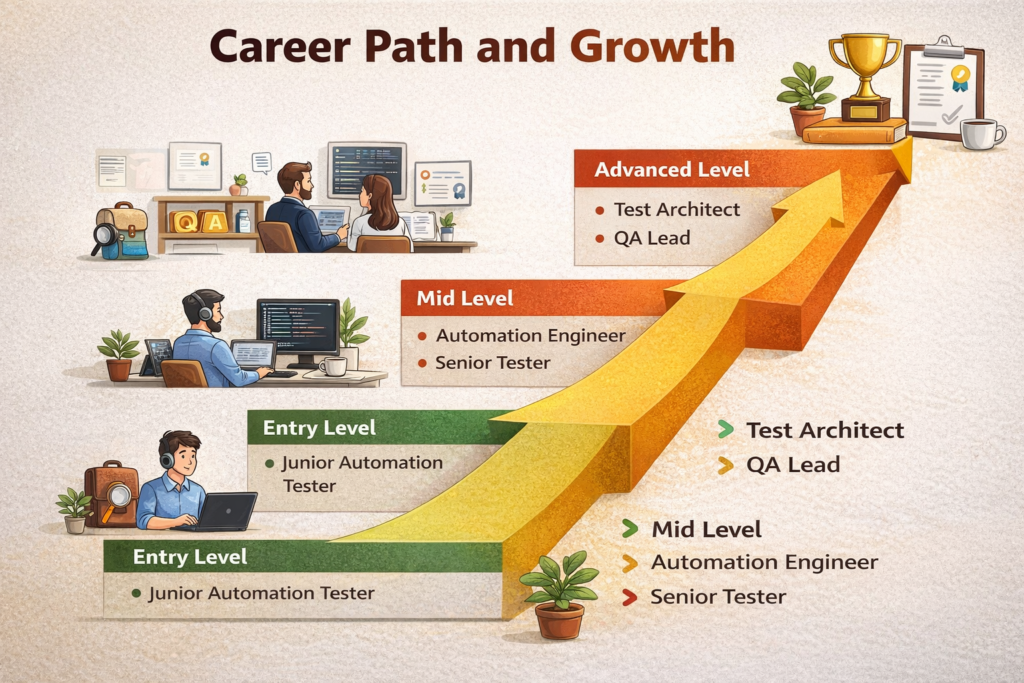
You can grow in many roles.
Entry Level
- Junior Automation Tester
Mid Level
- Automation Engineer
- Senior Tester
Advanced Level
- Test Architect
- QA Lead
With experience, a tosca automation engineer can move into leadership roles.
Salary Trends
Automation professionals earn higher salaries than manual testers.
Factors That Affect Salary
- Experience
- Certification
- Project exposure
- Industry domain
Reports show that automation engineers earn 30 to 50 percent more than manual testers.
A skilled tosca automation engineer can achieve strong financial growth.
Tools That Complement TOSCA
You should also learn:
- Jira for bug tracking
- Jenkins for CI CD
- Git for version control
- Postman for API testing
These tools support the daily work of a tosca automation engineer.
Tips for Beginners
- Start with basics
- Practice daily
- Focus on concepts
- Avoid rushing into advanced topics
- Build small projects
Consistency is key. A dedicated learner can become a tosca automation engineer in a structured way.
Key Takeaways
- TOSCA uses model based automation
- You need strong testing basics
- Practice is essential for growth
- Certification improves career chances
- Real projects build confidence
A focused approach helps you become a successful tosca automation engineer.
Conclusion
Start your journey today with clear steps and consistent practice. Build skills, gain confidence, and move toward a rewarding career as a tosca automation engineer.