Top Cybersecurity Resume Tips Every Student Should Know
Breaking into cybersecurity can feel overwhelming for students, especially when you’re competing with candidates who already have hands-on experience. The good news? A well-crafted resume can bridge that gap and showcase your potential effectively. These Cybersecurity Resume Tips will help you present your skills in the best possible way. Whether you’re just starting or completing Cyber security training courses, your resume is your first opportunity to prove you have what it takes.
Many students begin their journey by exploring structured learning platforms like H2KInfosys to build foundational knowledge and practical exposure. By following the right Cybersecurity Resume Tips, you can turn that learning into a job-ready profile that stands out to recruiters.
In this guide, you’ll learn how to build a powerful cybersecurity resume that stands out, even if you’re a beginner, using proven Cybersecurity Resume Tips.
Why Your Cybersecurity Resume Matters
Recruiters in cybersecurity don’t just look for degrees; they look for skills, problem-solving ability, and hands-on experience. Applying effective Cybersecurity Resume Tips ensures your resume clearly answers:
- What do you know?
- What have you done?
- How can you add value?
A strong resume increases your chances of:
- Landing interviews
- Showcasing practical skills
- Standing out among hundreds of applicants
1. Start with a Strong Professional Summary
Your resume should begin with a clear and concise summary that highlights your goals and skills. One of the most important Cybersecurity Resume Tips is to make your summary impactful.
Example:
“Motivated cybersecurity student with a strong foundation in network security, threat analysis, and risk management. Completed cybersecurity 101 training and hands-on labs, seeking an entry-level role to apply technical and analytical skills.”
Tips:
- Keep it 3–4 lines
- Mention key skills
- Add certifications or training
- Focus on value, not just objectives
2. Highlight Relevant Skills (Technical + Soft Skills)
Cybersecurity is both technical and analytical. One of the key Cybersecurity Resume Tips is to include a balanced skill set.
Technical Skills:
- Network Security
- Ethical Hacking Basics
- SIEM Tools (Splunk, QRadar)
- Firewalls & IDS/IPS
- Linux & Windows Security
- Vulnerability Assessment
Soft Skills:
- Problem-solving
- Attention to detail
- Analytical thinking
- Communication
Pro Tip: Match your skills with the job description keywords. This is one of the most effective Cybersecurity Resume Tips for passing ATS.
3. Add Certifications and Training
Certifications are crucial, especially for students with limited experience. Among the top Cybersecurity Resume Tips, highlighting training adds strong credibility.
Include:
- Completed cybersecurity 101 training
- Any cybersecurity training courses
- Online certifications
Example Format:
Certifications:
- Cybersecurity 101 Training – Completed
- Introduction to Ethical Hacking – Completed
- Network Security Fundamentals – In Progress
4. Showcase Hands-On Projects
Projects are the most important section for students. One of the best Cybersecurity Resume Tips is to demonstrate real-world application of your skills.
Examples of Projects:
- Setting up a firewall and monitoring traffic
- Conducting vulnerability scans
- Creating an intrusion detection system
- Simulating phishing awareness
Example Entry:
Project: Network Security Lab
- Configured firewall rules and monitored suspicious activity
- Identified vulnerabilities and suggested fixes
- Documented security incidents
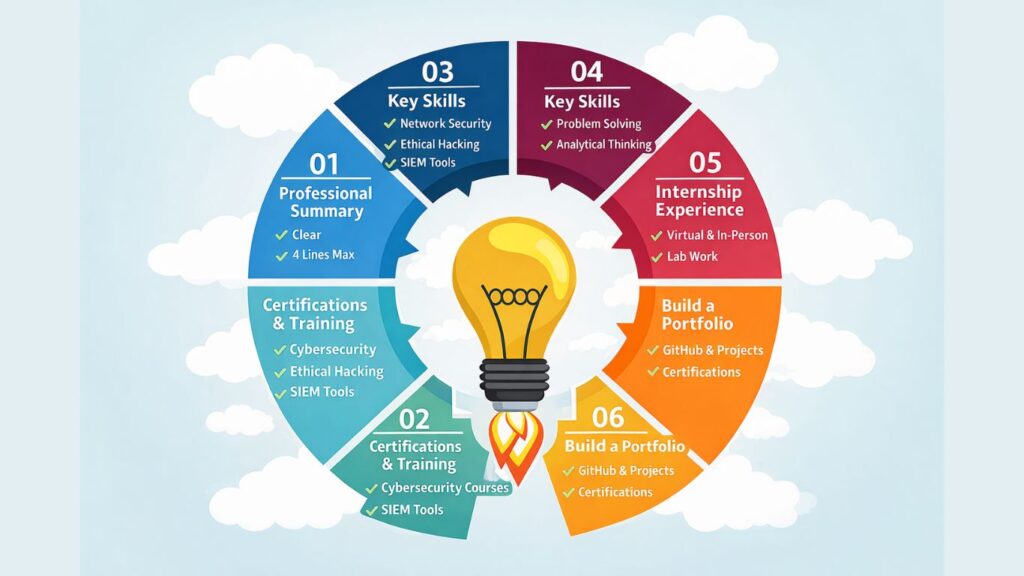
5. Include Internship or Practical Experience
If you have any internships, include them, even if they’re short. A key part of Cybersecurity Resume Tips is showcasing any practical exposure.
Example:
Cybersecurity Intern (Virtual)
- Analyzed simulated cyber threats
- Performed risk assessments
- Created incident response reports
6. Education Section (Keep It Relevant)
Your education should be simple and clear. Following structured Cybersecurity Resume Tips helps keep this section concise and relevant.
Include:
- Degree
- Relevant coursework
- Academic projects
7. Use Keywords to Pass ATS
One of the most critical Cybersecurity Resume Tips is using the right keywords.
Important Keywords:
- Cybersecurity
- Threat Analysis
- Network Security
- Risk Management
- Vulnerability Assessment
Using proper keywords ensures your resume passes automated filters.
8. Keep Formatting Clean and Professional
Another essential part of Cybersecurity Resume Tips is maintaining clean formatting.
Best Practices:
- Use simple fonts
- Keep it 1–2 pages
- Use bullet points
- Avoid clutter
9. Avoid Common Resume Mistakes
Many students miss opportunities due to avoidable mistakes. Smart Cybersecurity Resume Tips help you avoid these errors.
Avoid:
- Spelling errors
- Generic resumes
- Lack of practical examples
Do:
- Customize for each job
- Focus on results
- Keep it concise
10. Add Achievements and Extra Activities
Adding achievements is one of the underrated Cybersecurity Resume Tips that can make your profile stand out.
Examples:
- Hackathons
- Cybersecurity challenges
- Workshops
11. Build a Portfolio Alongside Your Resume
A strong portfolio supports your resume. One of the advanced Cybersecurity Resume Tips is to include proof of your work.
Add links to:
- GitHub
- Projects
- Certifications
12. Tailor Your Resume for Each Role
Never send the same resume everywhere. Personalized applications are among the most effective Cybersecurity Resume Tips.
Customize:
- Skills
- Summary
- Keywords
13. Focus on Entry-Level Roles
Applying for the right roles is another important part of Cybersecurity Resume Tips.
Target Roles:
- Cybersecurity Analyst (Junior)
- SOC Analyst
- IT Security Support
Conclusion
Building a strong resume is all about applying the right Cybersecurity Resume Tips consistently. You don’t need years of experience, just the ability to present your skills, Cybersecurity 101 Training, and projects effectively. By following these proven Cybersecurity Resume Tips, you can confidently step into the cybersecurity job market and increase your chances of getting hired