What is TOSCA Testing?
TOSCA (Test Automation for Software and Continuous Applications) is a modern test automation tool provided by Tricentis, designed to improve the efficiency and scalability of automated testing in software development. Understanding TOSCA vs Traditional Testing is crucial for selecting the right testing approach for your team. Unlike traditional testing methods, which often rely on scripting and manual input, TOSCA uses model-based testing, enabling automation across various stages of the testing cycle. It focuses on user-friendly test creation, flexibility in test execution, and powerful reporting. Obtaining a Tricentis TOSCA Certification can further demonstrate expertise in using this tool to streamline and optimize testing processes.
In contrast, traditional testing involves manual testing or script-based automation tools that require more resources, coding skills, and time. TOSCA vs Traditional Testing becomes a crucial comparison as businesses look for more scalable and efficient solutions, and professionals with a Tricentis TOSCA Certification are increasingly sought after for their specialized skill set in modern test automation.
How Does TOSCA Testing Work in Real-World IT Projects?
In real-world IT projects, TOSCA is used to streamline the testing process by eliminating repetitive tasks and enabling the team to focus on more critical areas. It integrates seamlessly with various development environments and tools such as Jenkins, Jira, and SAP, allowing for continuous integration and continuous delivery (CI/CD).
On the other hand, traditional testing, while still in use in many companies, often leads to slower testing cycles. It typically involves executing pre-written test cases, which might require frequent updates and manual intervention. This makes TOSCA vs Traditional Testing a significant decision for teams aiming to reduce time-to-market and enhance software quality.
Why is TOSCA vs Traditional Testing Important for Working Professionals?
As the industry shifts towards faster and more agile development cycles, professionals must stay current with the latest testing tools and methodologies. TOSCA provides a highly automated environment, reducing the reliance on scripting and enabling testers to use reusable modules for test case creation. This not only saves time but also minimizes human errors.
In contrast, traditional testing relies heavily on repetitive tasks, such as manually writing and executing test scripts. This makes TOSCA vs Traditional Testing an essential consideration for professionals looking to improve productivity, reduce errors, and stay competitive in the fast-evolving IT landscape.
What Skills Are Required to Learn TOSCA Testing?
To master TOSCA testing, professionals should have foundational knowledge in software development life cycles (SDLC), testing frameworks, and test case design. Some key skills include:
- Understanding of Agile methodologies
- Knowledge of model-based test automation
- Proficiency with tools like Jira, Jenkins, and SAP
- Familiarity with CI/CD pipelines
- Strong problem-solving and analytical skills
While TOSCA can be learned with minimal coding expertise, professionals with experience in traditional automation tools such as Selenium or QTP (QuickTest Professional) will find transitioning to TOSCA smoother. This makes understanding the differences between TOSCA vs Traditional Testing crucial when selecting your testing toolset.
How is TOSCA Used in Enterprise Environments?
In large enterprise environments, TOSCA offers scalability and flexibility for handling complex testing requirements. Enterprises often have diverse software applications, requiring various types of testing functional, regression, performance, and security. TOSCA excels in automating tests across these domains without the need for extensive scripting.
Traditional testing tools often require more effort in scaling due to the high demand for customized test scripts and resource-heavy processes. As a result, enterprises that need to run tests across different platforms at scale are increasingly choosing TOSCA, as it integrates with multiple systems and provides centralized test management.
What Job Roles Use TOSCA Testing Daily?
Professionals in the following roles utilize TOSCA testing regularly:
- Test Engineers: Create and execute automated tests using TOSCA’s model-based approach.
- Quality Assurance (QA) Analysts: Monitor test results, verify defects, and enhance test coverage.
- Test Managers: Oversee testing processes, ensuring the integration of TOSCA into continuous integration pipelines.
- Software Developers: Collaborate with testing teams to ensure smooth integration and address issues in the test automation cycle.
In comparison, traditional testing jobs often involve more manual processes, requiring testers to create detailed scripts for every application under test.
What Careers Are Possible After Learning TOSCA Testing?
Learning TOSCA can open doors to various roles in test automation and software quality assurance. With TOSCA’s growing adoption in the industry, positions such as:
- Automation Test Engineer
- QA Automation Specialist
- Test Manager
- Continuous Integration Specialist
are now more accessible to professionals. The decision of whether to pursue TOSCA vs Traditional Testing skills can determine how quickly you advance in these fields, especially as more enterprises move to automated testing solutions.
The Pros and Cons of TOSCA vs Traditional Testing
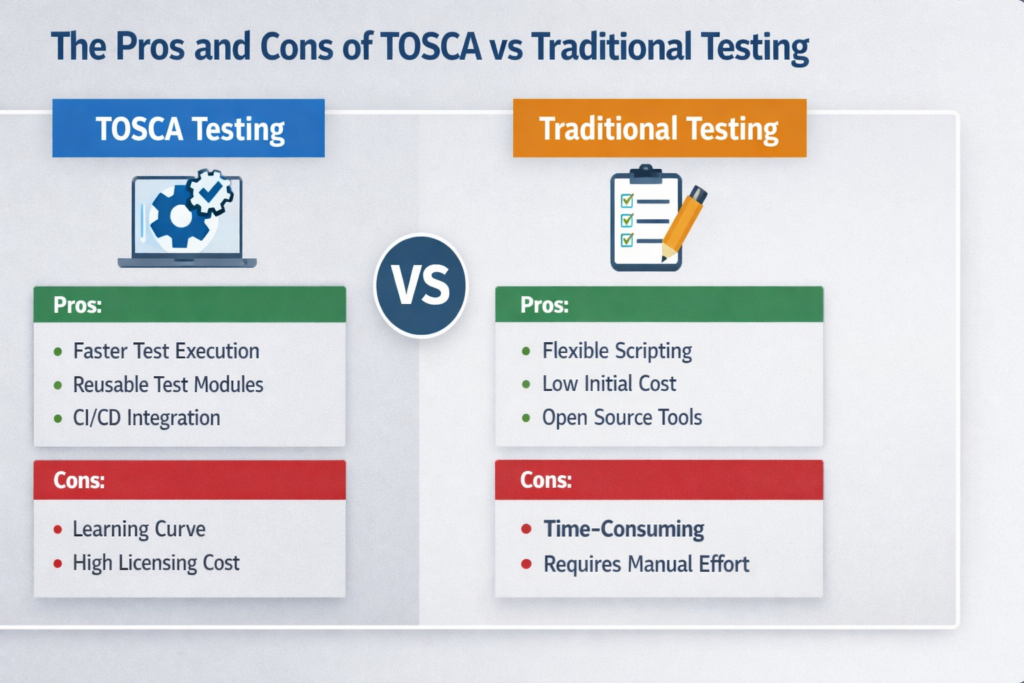
Following are the Pros and Cons of TOSCA vs Traditional Testing
In contrast, traditional testing involves manual testing or script-based automation tools that require more resources, coding skills, and time. The debate of TOSCA vs Traditional Testing continues to shape how organizations approach their software testing processes.
Pros of TOSCA Testing:
- Faster Test Execution: Automation accelerates testing cycles, leading to quicker feedback in the development process.
- Reusability: TOSCA’s modular approach allows teams to reuse test components, saving both time and effort.
- Integration with CI/CD: Seamless integration with Jenkins, Git, and other CI tools ensures continuous testing in modern DevOps workflows.
Cons of TOSCA Testing:
- Learning Curve: While easier than traditional testing for non-developers, TOSCA still requires training for full proficiency.
- Licensing Cost: Tricentis’ licensing fees can be higher than those of open-source tools, making it less accessible for smaller organizations.
Pros of Traditional Testing:
- Flexibility: Testers can design custom scripts for unique testing scenarios, offering greater control.
- Low Initial Cost: Open-source tools like Selenium and JUnit are free to use, making them more cost-effective.
Cons of Traditional Testing:
- Time-Consuming: Writing and maintaining custom scripts is labor-intensive and prone to errors.
- Manual Effort: While automated testing can be implemented, traditional methods still rely heavily on manual testing processes.
TOSCA vs Traditional Testing in Modern Enterprises
As enterprises evolve and adopt agile methodologies, TOSCA’s automated testing framework aligns better with modern software delivery needs. TOSCA allows teams to automate across different testing levels (unit, integration, functional, and UI) without the manual intervention that traditional testing tools demand.
In comparison, traditional testing methods can often slow down teams due to the need for constant manual effort and code updates. This makes TOSCA vs Traditional Testing a defining factor when considering which tool to integrate into an organization’s development lifecycle.
Frequently Asked Questions
1. What is the key difference between TOSCA and traditional testing?
The primary difference lies in automation. TOSCA automates the testing process with a model-based approach, while traditional testing tools often require manual scripting, making TOSCA more efficient and scalable.
2. How does TOSCA work in real-world IT projects?
TOSCA is used for automating functional, regression, and performance tests in various IT projects, particularly those that follow agile or DevOps practices. It integrates with CI/CD pipelines to ensure continuous testing and fast feedback.
3. Is TOSCA suitable for non-technical testers?
Yes, one of TOSCA’s advantages is its user-friendly, no-code interface, which allows non-technical testers to create automated test cases. This reduces the barrier for entry compared to traditional, code-heavy automation tools.
4. Why should I switch from traditional testing to TOSCA?
Switching to TOSCA allows for faster, more efficient testing with better scalability. It minimizes manual effort, promotes reusability, and integrates seamlessly with modern CI/CD environments, making it ideal for agile development.
As businesses seek more scalable solutions, the shift towards TOSCA vs Traditional Testing methods highlights the growing importance of adopting automated testing tools like TOSCA.
Conclusion
Key Takeaways:
- TOSCA offers an automated, model-based approach that accelerates testing and improves scalability compared to traditional testing methods.
- TOSCA supports continuous integration and continuous delivery, making it ideal for modern agile teams.
- Transitioning from traditional testing to TOSCA requires some training, but the investment results in faster, more reliable software delivery.
Ready to take your test automation skills to the next level? Explore our hands-on TOSCA Training Online at H2K Infosys and gain the expertise to enhance your career.
By focusing on the strengths of TOSCA vs Traditional Testing, this guide ensures IT professionals can make an informed decision about the best tool for their development and testing needs.