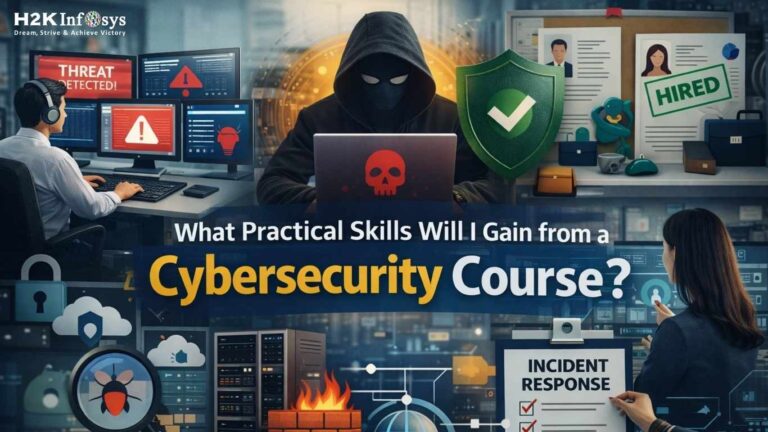
A good cybersecurity course teaches you how to detect, analyze, and stop real cyber threats, not just understand them in theory, and H2K Infosys focuses on this real-world practical skills, hands-on approach. In 2026, employers expect you to work with live tools, real attack simulations, and actual security workflows from day one.
Let me be honest for a second. Years ago, many cybersecurity learners finished training knowing definitions but froze when they saw a real SIEM dashboard or suspicious network log. That gap is exactly what modern cybersecurity learning is trying to fix.
Why Practical Cybersecurity Skills Matter More Than Certificates in 2026
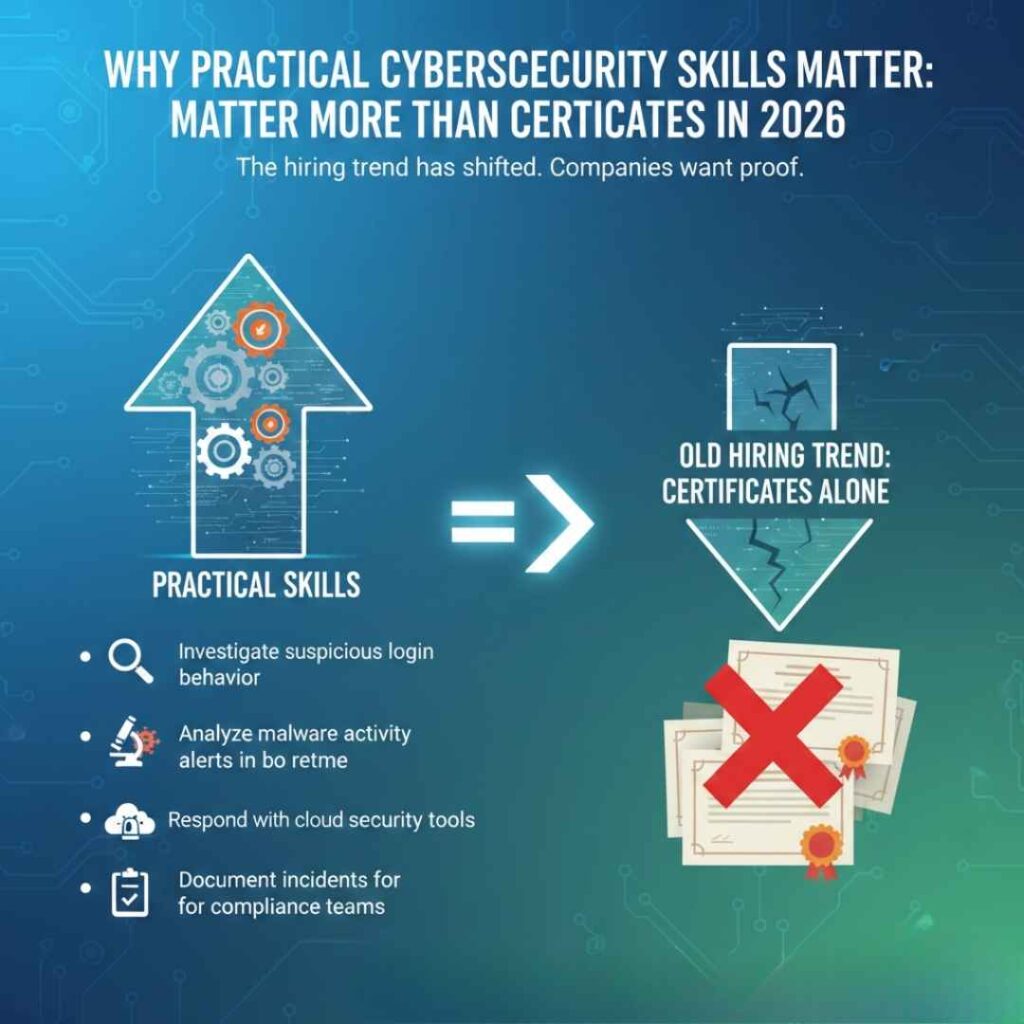
The hiring trend has shifted. Companies are not impressed by certifications alone anymore. They want proof that you can:
- Investigate suspicious login behavior
- Analyze malware activity
- Respond to security alerts in real time
- Work with cloud security tools
- Document incidents for compliance teams
I’ve spoken with a few QA and IT professionals transitioning into security roles recently, and almost all of them said the same thing:
practical skills made the difference between getting interviews and getting rejected.
This is why programs focusing on cyber security training and job placement are becoming more valuable than theory-heavy courses.
Core Practical Skills You Will Learn in a Cybersecurity Course
1. Threat Detection and Monitoring
You learn how to watch systems the way attackers do.
Real Skills You Gain:
- Reading SIEM dashboards
- Identifying unusual user activity
- Detecting brute force login attempts
- Spotting insider threat behavior
Real Example (2026 Reality):
Many companies now use AI-assisted threat monitoring. Security analysts must validate AI alerts and decide if they are real threats or false positives.
This is where practical skills cyber security training with job placement programs focus heavily, teaching you how to think like a defender, not just memorize threats.
2. Security Tools Hands-On Experience
You don’t just learn tool names. You actually use them.
Common Tools You May Practice:
- SIEM Tools (Splunk, Sentinel-type platforms)
- Vulnerability scanners
- Endpoint detection tools
- Cloud security dashboards
A small reality check:
The first time someone sees a real SIEM tool, it can feel overwhelming. There are logs everywhere. Alerts flashing. Data flowing nonstop. Practical skills training helps remove that fear early.
3. Incident Response Skills
This is where cybersecurity becomes very real.
You learn:
- How to respond when systems are compromised
- How to isolate infected machines
- How to document attack timelines
- How to communicate with management teams
I’ve seen candidates fail interviews because they couldn’t explain what they would do in the first 30 minutes after detecting ransomware. practical skills prepares you for exactly that scenario.
4. Network Security Analysis
You learn to read network traffic like a story.
Skills Include:
- Packet analysis basics
- Identifying suspicious IP behavior
- Understanding firewall logs
- Detecting data exfiltration patterns
This is especially important because cloud + remote work environments increased attack surfaces dramatically after 2024–2025.
5. Basics of Cloud Security (Big in 2026)
You can’t skip cloud security anymore.
You learn:
- How to keep an eye on cloud access
- Finding mistakes in identity and access configuration
- Setting up secure cloud storage
- Basic information on API security
A lot of entry-level cybersecurity jobs now need at least a basic understanding of the cloud.
6. Risk Awareness and Vulnerability Assessment
First, you learn how attackers uncover holes and how to remedy them.
Practical Exposure:
- Running scans for vulnerabilities
- How to read CVSS risk scores
- Putting patching in order of risk
- Making reports about security
Some classes now put you in real practical skills business situations where you have to choose which vulnerability to patch first based on how it will affect the business.
Sales and Security Awareness (Important but Often Overlooked)
This is where cyber security sales training suddenly comes in handy.
You learn:
- how to tell non-technical teams about security threats.
- How to explain why you need to spend money on security
- How to talk about the effects of threats in business term
Security experts who can properly communicate hazards generally get promoted to higher-level or leadership positions more quickly.
A Situation from the Real World You Could Practice
Example of a lab simulation:
You get:
- Login attempts that look suspicious from many countries
- Downloading files from internal servers that aren’t normal
- Unusual surges in API traffic
Your job:
- Look into the logs
- Find out what kind of attack it is
- Contain the threat
- Record the situation
- Suggest a way to stop it from happening
That’s how actual practical skills security jobs work.
How Job-Focused Cybersecurity Training Looks in 2026
Modern career-focused programs usually include:
- Live attack simulations
- Real SOC workflow practice
- Resume project building
- Interview scenario training
- Industry tool exposure
Some programs like those designed around cyber security training and job placement focus heavily on practical skills, not just technical knowledge. From what I’ve seen working with learners, that makes a huge difference during interviews.
(Honestly, many learners mention H2K Infosys here because they emphasize real workflow exposure, which is something hiring managers ask about.)
Soft Skills You Will Gain (That No One Talks About)
This part is underrated.
You develop:
- Analytical thinking under pressure
- Documentation discipline
- Risk-based decision making
- Cross-team communication
Security teams don’t work alone. You constantly interact with DevOps, QA, Cloud teams, and management.
A Mistake That Many Students Make
They think cybersecurity is only hacking.
Reality: 70% of cybersecurity jobs involve monitoring, analysis, and response not offensive hacking.
That surprises a lot of beginners.
What Employers Actually Look For in 2026
Based on hiring trends:
Employers Want:
✔ practical skills exposure
✔ Incident response understanding
✔ Cloud security basics
✔ Real project experience
✔ Communication skills
Employers Don’t Prioritize:
✖ Only theory knowledge without practical skills
✖ Certification without lab experience
✖ Tool names without usage knowledge
How These Skills Translate Into Real Job Roles
You can move into roles like:
- SOC Analyst
- Security Analyst
- Cloud Security Associate
- Vulnerability Analyst
- Security Operations Support
Even QA professionals are now moving into Security Testing and DevSecOps roles.
Final Thought
If you choose the right cybersecurity course, you won’t just “learn security.”
You’ll learn how to think like someone who protects systems in real time practical skills.
And honestly?
That mindset shift is what turns learners into security professionals.