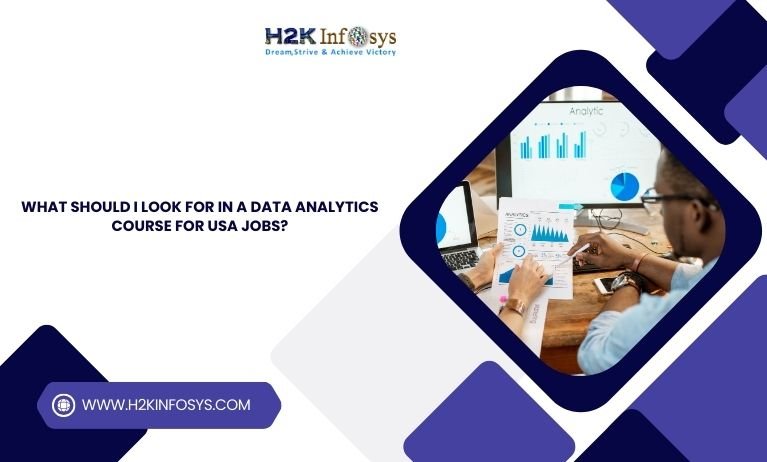
A data analytics course for US jobs should focus on practical skills aligned with enterprise tools, including SQL, Power BI, Tableau, and business intelligence workflows. It should emphasize real-world data handling, reporting, and stakeholder communication rather than theory alone. The course must also reflect how data analytics is used in US-based organizations, including data governance, compliance awareness, and role-specific skill application.
What Is a Data Analytics Course?
A data analytics course is a structured learning program designed to teach how raw data is collected, processed, analyzed, and transformed into actionable insights for business decision-making. In professional environments, data analytics focuses on descriptive and diagnostic analysis using structured data.
A job-oriented data analytics course typically covers:
- Data querying using SQL
- Data modeling and transformation
- Visualization using tools like Power BI and Tableau
- Business intelligence (BI) concepts
- Reporting for operational and executive stakeholders
For US job markets, the emphasis is usually on applied analytics within regulated, data-driven business environments.
Why Is Choosing the Right Data Analytics Course Important for US Jobs?
US-based organizations often expect data analysts to be productive shortly after onboarding. This places importance on courses that align with real enterprise workflows rather than academic examples.
Key expectations include:
- Ability to work with large relational databases
- Experience building dashboards used by business teams
- Understanding of data accuracy, access controls, and reporting standards
- Familiarity with cross-functional collaboration (IT, finance, operations)
A data analytics course that lacks hands-on exposure to these realities may not prepare learners adequately for professional roles.
What Skills Should a Job-Focused Data Analytics Course Teach?
A practical data analytics course should build skills progressively, starting from data access and ending with insight delivery.
Core Technical Skills
- SQL: Writing optimized queries, joins, aggregations, and subqueries
- Data Cleaning: Handling missing values, duplicates, and inconsistent formats
- Data Modeling: Creating fact and dimension tables for reporting
- Power BI: DAX basics, data modeling, interactive dashboards
- Tableau: Visual analytics, filters, calculated fields, dashboard design
Business and Analytical Skills
- Translating business questions into analytical tasks
- Selecting appropriate visualizations
- Validating data accuracy before reporting
- Explaining findings to non-technical stakeholders
A well-designed Data analyst online classes integrates both technical execution and analytical thinking.
How Is Data Analytics Used in Real-World US IT and Business Projects?
In US enterprises, data analytics is embedded into daily decision-making processes rather than used as a standalone activity.
Common project scenarios include:
- Sales performance dashboards updated daily
- Financial reporting aligned with quarterly compliance requirements
- Customer behavior analysis using transactional data
- Operational metrics monitoring for supply chain or support teams
Typical workflow:
- Data extraction from databases using SQL
- Data transformation in BI tools or staging layers
- Modeling data relationships for reporting
- Dashboard creation and scheduled refresh
- Review with business stakeholders
A data analytics course should simulate these workflows using realistic datasets.
How Important Are Power BI and Tableau in a Data Analytics Course?
Power BI and Tableau are widely used visualization tools in US organizations across industries such as finance, healthcare, retail, and technology.
Power BI
- Common in Microsoft-based enterprise environments
- Strong integration with SQL Server and cloud platforms
- Uses DAX for calculations and measures
Tableau

- Known for visual flexibility and exploratory analysis
- Frequently used by analytics and strategy teams
- Strong support for diverse data sources
A data analytics course should teach both tools at a functional level, focusing on how dashboards are built, maintained, and consumed in production environments.
What Should I Look for in the Course Structure?
A structured data analytics course should follow a logical learning path rather than isolated tool tutorials.
Recommended Learning Path
| Stage | Focus Area |
|---|---|
| Foundation | Data concepts, databases, SQL |
| Processing | Data cleaning and transformation |
| Analysis | Metrics, trends, comparisons |
| Visualization | Power BI and Tableau dashboards |
| Application | Business use cases and reporting |
Courses that jump directly into tools without data fundamentals often leave skill gaps.
How Do Data Analytics Courses Compare to Google Data Analytics Certification?
The Google Data Analytics Certification provides a broad introduction to analytics concepts and basic tools. It is commonly used as a foundational credential.
However, job-focused data analytics courses often go deeper into:
- SQL proficiency
- Enterprise BI tools (Power BI, Tableau)
- Real-world reporting scenarios
- Role-specific expectations
For learners targeting US jobs, a data analytics course that complements or extends beyond the Google Data Analytics Certification may provide more applied exposure.
What Job Roles Can a Data Analytics Course Prepare Me For?
A practical data analytics course can support entry to mid-level roles depending on prior experience.
Common roles include:
- Data Analyst
- Business Intelligence Analyst
- Reporting Analyst
- Operations Analyst
Role vs Skill Mapping
| Role | Key Skills Used Daily |
|---|---|
| Data Analyst | SQL, dashboards, trend analysis |
| BI Analyst | Data modeling, Power BI/Tableau |
| Reporting Analyst | Scheduled reports, data validation |
| Operations Analyst | KPI tracking, process metrics |
Courses should clarify which roles they are aligned with.
How Can I Evaluate the Quality of a Data Analytics Course?
Before enrolling, evaluate the course using objective criteria:
- Are real datasets used instead of simplified samples?
- Is SQL taught beyond basic SELECT statements?
- Are dashboards built from raw data to final output?
- Does the course explain enterprise constraints like data access and refresh schedules?
A high-quality data analytics course explains not just how to do tasks, but why they are done that way in organizations.
Frequently Asked Questions
Is a data analytics course suitable for beginners?
Yes, provided it starts with data fundamentals and builds skills progressively.
Do US jobs require prior analytics experience?
Entry-level roles often accept project-based experience gained through structured courses.
Is certification mandatory?
Certifications support credibility, but practical skills and project exposure are equally important.
How long does it take to become job-ready?
Timelines vary, but consistent hands-on practice is essential regardless of duration.
Key Takeaways
- A job-focused data analytics course emphasizes practical workflows, not theory
- SQL, Power BI, Tableau, and BI concepts are core requirements
- Courses should reflect how analytics is used in US enterprise environments
- Structured learning paths and realistic projects matter more than tool counts
To gain hands-on exposure aligned with professional expectations, explore H2K Infosys data analytics courses designed around real-world projects and enterprise tools.
These Google data analytics certification programs support skill development for long-term analytics career growth