A Data Analytics course equips learners with practical skills to collect, clean, analyze, and visualize data to support business decision-making. It focuses on using industry-standard tools such as SQL, Power BI, Tableau, and business intelligence (BI) concepts to transform raw data into actionable insights. For working professionals, the emphasis is on job-ready analytical workflows rather than theoretical modeling.
This article explains the technical, analytical, and professional skills typically gained from a structured Data Analytics course aligned with enterprise requirements.
What Is a Data Analytics Course?
A Data Analytics course is a structured learning program designed to teach how data is gathered, processed, analysed, and presented in organisational environments. It covers both technical tools and analytical thinking required to answer business questions using data.
Unlike data science programs that emphasize advanced algorithms, a Data Analytics course prioritizes:
- Descriptive and diagnostic analysis
- Data querying and transformation
- Dashboarding and reporting
- Stakeholder-focused insights
The goal is to prepare learners for roles where data supports operational, financial, marketing, or strategic decisions.
Why Is a Data Analytics Course Important for Working Professionals?
Organizations increasingly rely on data to guide decisions across departments. As a result, professionals who can interpret data and communicate insights are in demand across industries.
A structured Data Analytics course helps working professionals:
- Transition into analytical roles without a coding-heavy background
- Improve decision-making in existing roles
- Understand how enterprise data systems operate
- Align analytics outputs with business objectives
For professionals in QA, finance, operations, marketing, or IT support, analytics skills often complement existing domain knowledge.
What Core Technical Skills Will You Gain from a Data Analytics Course?
SQL for Data Querying and Data Management
SQL is a foundational skill in any Data Analytics course because most enterprise data resides in relational databases.
Learners typically gain skills in:
- Writing SELECT, JOIN, GROUP BY, and subqueries
- Filtering and aggregating large datasets
- Understanding database schemas and relationships
- Query optimization basics
Real-world usage:
Analysts use SQL daily to extract data from production databases, reporting systems, or cloud data warehouses before analysis.
Data Preparation and Cleaning Skills
Raw data is rarely analysis-ready. A Data Analytics course emphasizes preparing data for accuracy and consistency.
Key skills include:
- Handling missing or inconsistent values
- Data type standardization
- Removing duplicates
- Validating data quality
Enterprise context:
Poor data preparation can lead to misleading dashboards and incorrect business decisions. Analysts often spend a significant portion of their time on data cleaning.
Power BI for Business Reporting
Power BI is commonly used in enterprise BI environments due to its integration with Microsoft ecosystems.
Skills developed include:
- Data modeling using relationships
- Creating calculated measures with DAX
- Designing interactive dashboards
- Publishing and sharing reports securely
How it’s used in organizations:
Power BI dashboards are used by management to monitor KPIs, track performance, and identify trends in near real time.
Tableau for Data Visualization and Storytelling
Tableau focuses on visual analytics and exploratory analysis.
Learners gain experience with:
- Visual best practices
- Filters, parameters, and calculated fields
- Interactive dashboards
- Data storytelling techniques
Professional relevance:
Tableau is often used by analysts to communicate insights to non-technical stakeholders, making complex patterns easier to understand.
How Does Business Intelligence (BI) Work in Real-World IT Projects?
A Data Analytics course introduces BI concepts that explain how analytics fits into enterprise systems.
Typical BI Workflow
| Step | Description |
|---|---|
| Data Sources | ERP, CRM, application databases |
| Data Storage | Data warehouses or data marts |
| Data Processing | SQL queries, transformations |
| Reporting | Power BI or Tableau dashboards |
| Consumption | Business users and leadership |
Understanding this workflow helps analysts collaborate effectively with data engineers and IT teams.
What Analytical Thinking Skills Are Developed?

Beyond tools, a Data Analytics course develops analytical reasoning skills required in professional environments.
These include:
- Translating business questions into data queries
- Identifying trends and anomalies
- Applying logical reasoning to interpret results
- Avoiding common analytical biases
Analytical thinking ensures that insights are accurate, relevant, and aligned with organizational goals.
What Soft and Professional Skills Are Gained?
Data Communication Skills
Analytics professionals must explain findings clearly.
A Data Analytics course helps learners:
- Present insights using visuals and summaries
- Tailor explanations for technical and non-technical audiences
- Document assumptions and limitations
Stakeholder Collaboration
Learners gain exposure to:
- Requirement gathering from business teams
- Iterative feedback on reports
- Aligning dashboards with decision-maker needs
These skills are essential in enterprise analytics roles.
How Are These Skills Applied in Real Projects?
Most structured Data Analytics courses include hands-on projects that simulate workplace scenarios.
Example Project Scenario
- Extract sales data using SQL
- Clean and prepare datasets
- Build dashboards in Power BI or Tableau
- Identify performance trends and insights
This approach ensures that learners can apply tools and concepts in realistic environments.
What Job Roles Use Data Analytics Skills Daily?
A Data Analytics course prepares learners for multiple roles, including:
| Role | Core Skill Usage |
|---|---|
| Data Analyst | SQL, dashboards, reporting |
| Business Analyst | Insights, stakeholder communication |
| BI Analyst | Power BI, Tableau, KPI tracking |
| Operations Analyst | Performance and process metrics |
These roles exist across finance, healthcare, retail, logistics, and IT services.
What Careers Are Possible After Completing a Data Analytics Course?
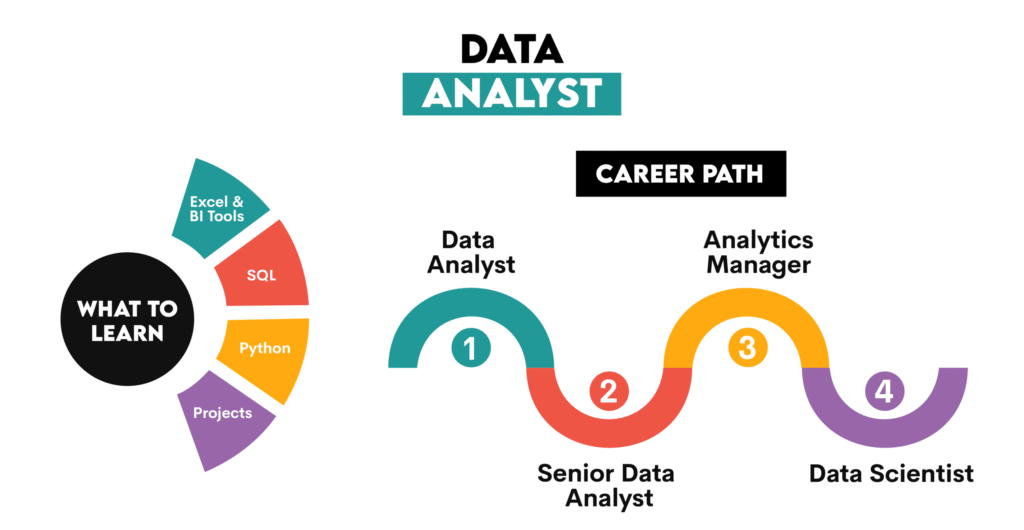
With consistent practice and project experience, learners can pursue:
- Entry-level or mid-level analytics roles
- Domain-specific analyst positions
- Career transitions from non-technical backgrounds
Programs offering a Data analyst course with placement typically align training with hiring requirements, focusing on applied skills rather than academic theory.
Frequently Asked Questions (FAQ)
Is a Data Analytics course suitable for beginners?
Yes. Most courses are designed for beginner-to-intermediate professionals and start with foundational concepts before advancing to tools.
Do I need programming experience?
Basic logic helps, but most Data Analytics courses focus on SQL and BI tools rather than advanced programming.
How long does it take to become job-ready?
Timelines vary, but structured learning combined with projects helps learners build practical competency.
Are certifications important?
A recognized Data Analytics certification can help validate skills, especially when paired with hands-on experience.
Key Takeaways
- A Data Analytics course builds technical, analytical, and professional skills used in enterprise environments
- Core tools include SQL, Power BI, Tableau, and BI workflows
- Emphasis is on real-world reporting, data preparation, and insights
- Skills apply across multiple roles and industries
Explore H2K Infosys Data analytics training to gain hands-on experience with industry-aligned tools.
Learn more about structured training paths designed to support professional growth and practical skill development.