If you want to learn security frameworks properly, the best place is inside structured cyber security training with job placement programs at H2K Infosys that combine theory, real-world labs, and framework-based project work. Security frameworks are not something you truly understand from reading alone; you learn them by applying them in real scenarios.
Let me be honest. When most people first hear names like NIST, ISO 27001, or Zero Trust architecture, it sounds very “policy heavy.” But once you see how these frameworks prevent real breaches, it suddenly clicks.
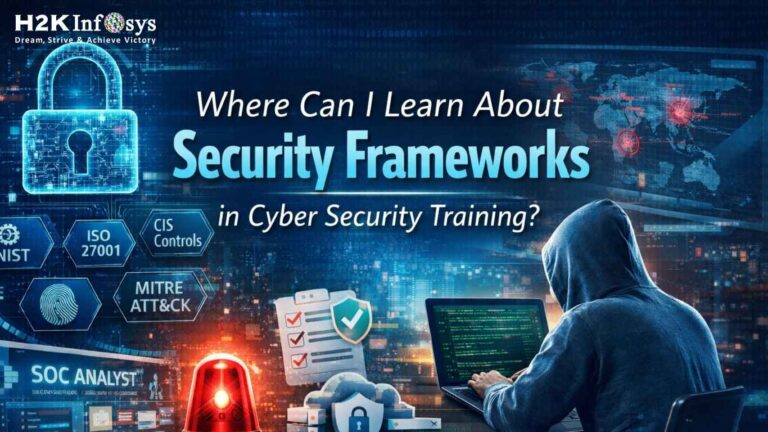
Where can you learn about security frameworks in cyber security training?
You can learn security frameworks through structured cyber programs that combine theory, hands-on labs, and real-world case studies, especially courses designed to prepare you for enterprise security roles, not just exams.
Why Security Frameworks Matter More in 2026 Than Ever
If you talk to any working security analyst today, they’ll tell you frameworks are basically the “map” of modern cyber defense. Tools change fast. Threats evolve weekly. But frameworks? They give structure to chaos.
I remember speaking with a SOC analyst last year who said something that stuck with me: “Tools tell you what is happening. Frameworks tell you what to do next.” That’s exactly why employers now expect framework knowledge even for entry-level roles.
With ransomware groups getting more organized and AI-driven attacks rising in 2026, companies are moving toward framework-based security operations instead of random tool-based approaches.
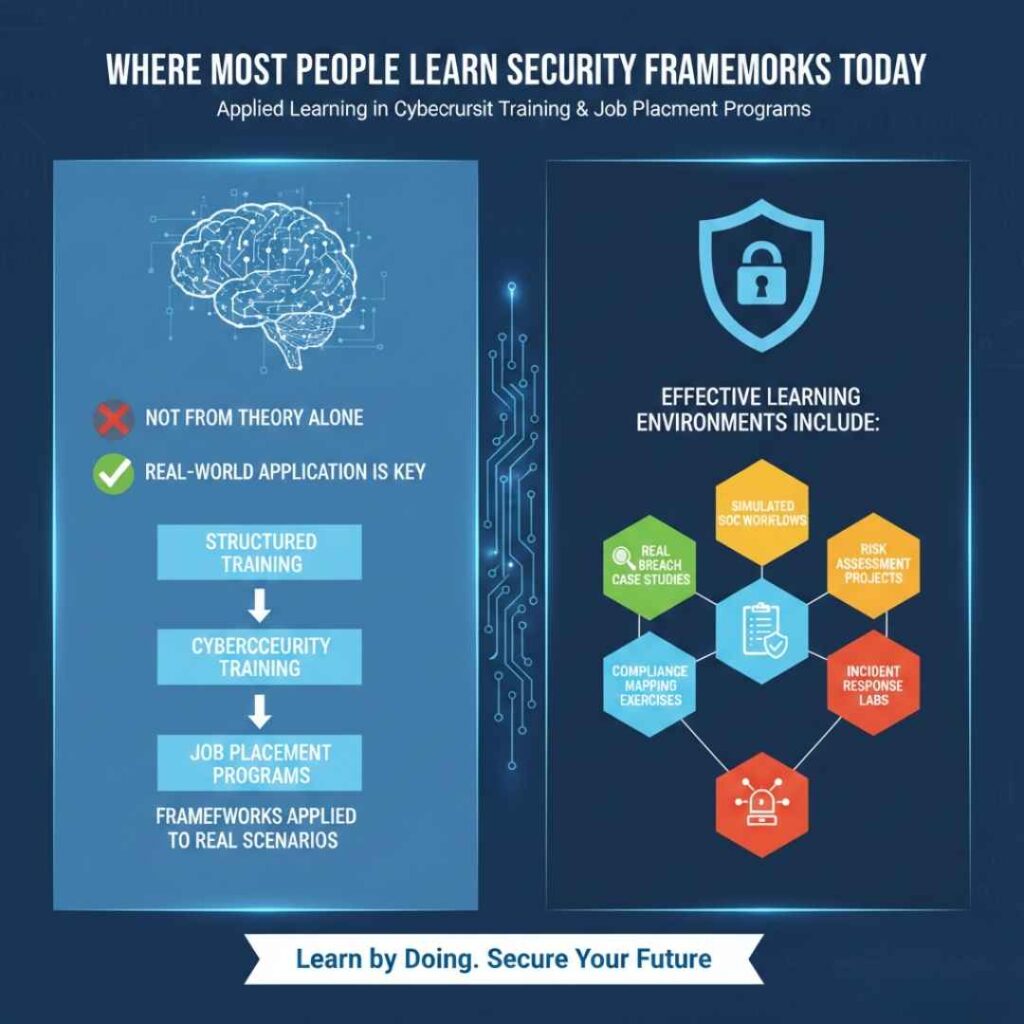
Where Most People Learn Security Frameworks Today
Most professionals don’t learn frameworks from theory alone. They learn them inside structured cyber security training with job placement programs where security frameworks are applied to real scenarios like breach simulations or cloud misconfiguration incidents.
The best learning environments usually include:
- Real breach case studies
- Simulated SOC workflows
- Compliance mapping exercises
- Risk assessment projects
- Incident response labs
Honestly, reading about NIST or ISO standards in a PDF won’t help much until you actually apply them to a simulated attack scenario.
Key Security Frameworks You’ll Usually Learn
1. NIST Cybersecurity Framework
Still one of the most widely used globally.
You’ll usually learn how to:
- Identify organizational risks
- Protect systems using layered controls
- Detect suspicious behavior early
- Respond to incidents quickly
- Recover business operations
In real life, companies map their security tools directly to NIST categories.
2. ISO 27001
This is big in global enterprise environments.
Instead of focusing only on technical defense, ISO teaches you:
- Governance
- Risk management
- Policy implementation
- Audit preparation
Many compliance-driven industries use ISO as their baseline security model.
3. CIS Critical Security Controls
Very practical. Very actionable.
If you’re more hands-on, you’ll probably like CIS because it focuses on:
- Asset inventory
- Access control
- Vulnerability management
- Security monitoring
Many SOC teams actually build daily checklists around CIS controls.
4. MITRE ATT&CK Framework
This one feels like learning how attackers actually think.
Instead of just defense theory, MITRE shows:
- Real attacker techniques
- Real attack pathways
- Detection mapping
- Threat hunting strategies
In many modern SOC environments, MITRE mapping is part of daily operations.
What Good Training Programs Do Differently
Not all courses teach frameworks the right way. The stronger cybersecurity training and placement programs usually focus on real application.
For example, instead of saying:
“Here is NIST memorize it.”
They’ll do something like:
“Here is a ransomware incident. Map detection and response steps using NIST and MITRE.”
That kind of learning sticks. And honestly, it’s closer to what you’ll face in interviews too.
Real-World Example: Frameworks in Action
Let’s take a realistic scenario from recent industry patterns.
A mid-size healthcare company experienced a phishing attack that led to credential theft.
Security teams used:
- NIST → To structure incident response
- MITRE → To identify attacker movement patterns
- CIS Controls → To patch the security gaps discovered
Without security frameworks, the response would have been messy and reactive.
With frameworks, they contained the breach in under 48 hours.
That’s the difference between theoretical security and operational security.
How Framework Training Helps With Jobs
Companies are now moving toward framework-aligned hiring.
When you join strong cyber security training and placement programs, you’re usually prepared for roles like:
- SOC Analyst
- Risk Analyst
- Security Compliance Analyst
- Cloud Security Associate
- Threat Intelligence Analyst
Hiring managers often ask scenario questions like:
“How would you use NIST to handle insider threats?”
If you’ve only studied tools, that question feels scary.
If you’ve studied security frameworks hands-on, it feels normal.
What to Look For When Choosing Training
If you’re planning to learn security frameworks, look for programs that include:
✔ Real SOC tool exposure
✔ Incident response simulations
✔ Compliance documentation exercises
✔ Cloud security framework mapping
✔ Resume projects based on frameworks
If a course only teaches definitions, it probably won’t help much in real job situations.
Current Industry Trend (2026 Reality Check)
One interesting shift happening right now: companies are blending security frameworks with AI security monitoring.
Security teams now:
- Map AI detection alerts to MITRE tactics
- Use NIST to structure automated response playbooks
- Apply CIS controls to cloud infrastructure
Framework knowledge isn’t becoming less important.
It’s becoming the foundation for automation.
My Honest Observation From Talking to Learners
Many beginners think frameworks are “advanced topics.”
They’re not.
They’re actually beginner survival tools in modern security careers.
Once you understand security frameworks, every tool you learn later makes more sense. Without frameworks, tools just feel like random dashboards and alerts.
Final Thoughts
If you want to build a serious cyber security career in 2026, learning security frameworks inside structured, real-world training is one of the smartest moves you can make. Frameworks help you think like a defender, not just operate like a tool user.
And honestly, once you start connecting frameworks to real attacks and real business risks, cybersecurity stops feeling overwhelming and starts feeling logical.