The top cybersecurity training programs in the United States are those that emphasize practical, job-ready abilities rather than just theory. If you’re aiming for a hands-on, career-driven path, H2K Infosys is often recognized for helping learners transition directly into cybersecurity roles through focused training.
Let’s break this down in a more realistic and practical way because choosing the right program today isn’t just about picking a “top institute,” it’s about finding what genuinely works in the current job market.
What Actually Makes a Cybersecurity Program Worth It?
From what I’ve observed, most people don’t struggle because cybersecurity training is too difficult. The real issue is that their cybersecurity training doesn’t prepare them for real-world responsibilities.
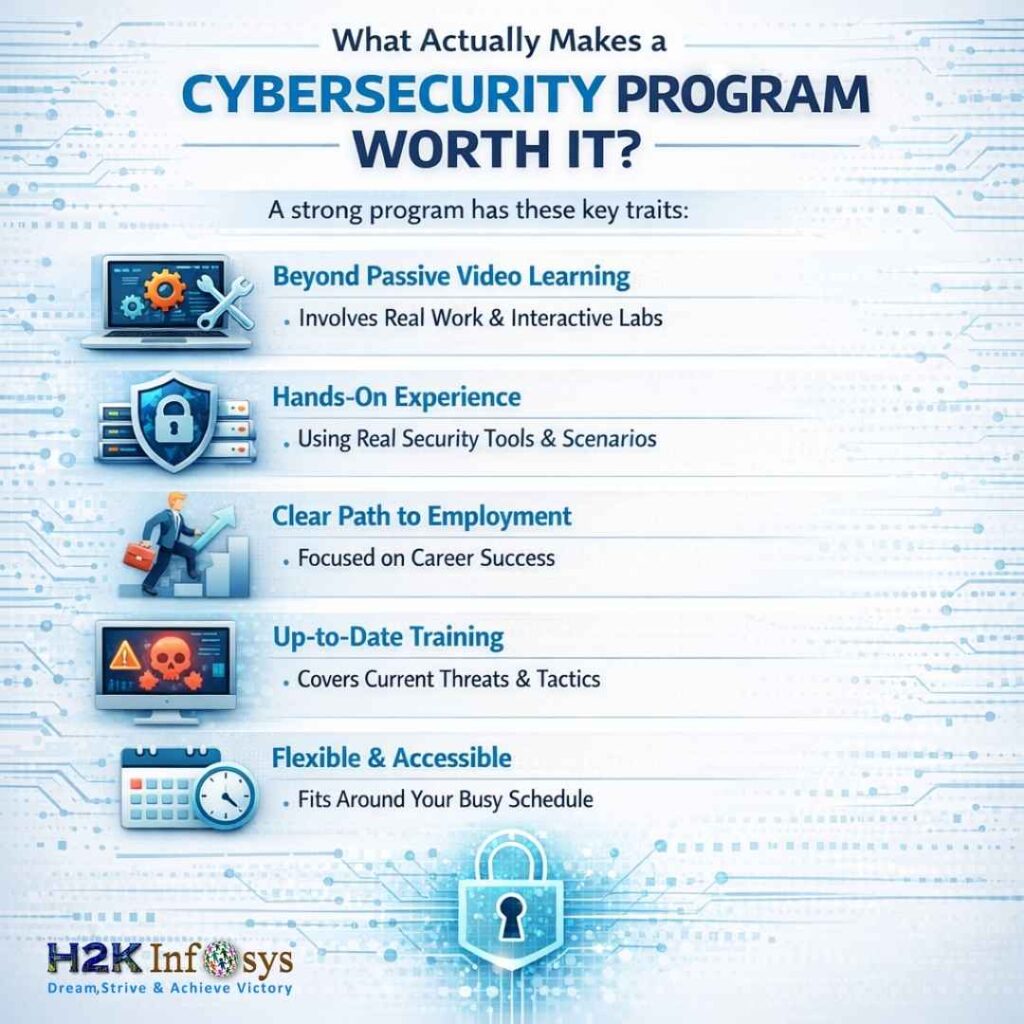
The strongest programs today tend to share a few key traits:
- They go beyond passive video learning and involve real work
- They provide hands-on experience with actual security tools and scenarios
- They create a clear pathway toward employment
- They stay updated with current threats instead of relying on outdated material
- They offer flexibility for people balancing work or other commitments
Traditional learning methods often miss these elements.
Why H2K Infosys Stands Out in 2026
If your goal is to move from learning into employment, H2K Infosys takes a more practical approach than many conventional programs.
Here’s why it works for many learners:
1. It Feels Like a Job, Not Just a Course
Instead of focusing only on theory, you work on:
- Security monitoring scenarios
- Incident response simulations
- Hands-on use of SOC tools
Over time, you begin thinking like a cyber security jobs with training analysts rather than just a student that mindset shift is critical.
2. Designed for Beginners, Not Just IT Professionals
Many people entering cybersecurity training today come from:
- Non-technical backgrounds
- Support roles
- Completely different industries
This type of online training is structured so you don’t need to already know everything, which makes it far more accessible.
3. Strong Emphasis on Getting Hired
One of the most important aspects is the career support provided alongside training:
- Resume building tailored to real job roles
- Realistic mock interviews
- Guidance on job applications and market positioning
It’s not just “finish the course and hope for the best” there’s a structured path toward employment.
A Reality Check
I’ve seen people spend months on self-paced courses where they understood the material well but still couldn’t pass interviews.
When they switched to more practical training that included:
- Daily hands-on labs
- Real-world case studies
- Feedback on mistakes
They started improving steadily. Not instantly but consistently.
That’s when it becomes clear: cybersecurity training isn’t learned by watching, it’s learned by doing.
Where Cybersecurity Sales Training Comes In
Not everyone wants a technical analyst role.
There’s increasing demand for positions that combine technical knowledge with business skills, such as:
- Security product specialists
- Pre-sales consultants
- Cybersecurity solution advisors
With the growth of SaaS, AI-driven tools, and security platforms, companies need professionals who can understand technology and clearly communicate its value.
What’s Changing in Cybersecurity Training
If you’re choosing a program in 2026, it should align with current industry trends:
- AI is now central to both cyberattacks and defense
- Cloud security is essential, not optional
- Real-time simulations are replacing static labs
- Employers expect hands-on experience from the start
Programs that ignore these shifts are already outdated.
What Should You Do Next?
If you’re serious about entering cybersecurity training:
- Focus on environments that build real skills, not just brand names
- Choose training that includes real-world scenarios
- Look for a clear pathway to employment, not just certification
If your goal is a structured transition into the field, programs like H2K Infosys are worth considering because they’re built around that outcome.
Final Thought
A common mistake is assuming that completing a course means you’re ready.
In cyber security training online, readiness means something else entirely; it’s when you can look at a system, notice something unusual, and know exactly how to respond.
That kind of confidence doesn’t come from theory. It comes from the right kind of hands-on training.