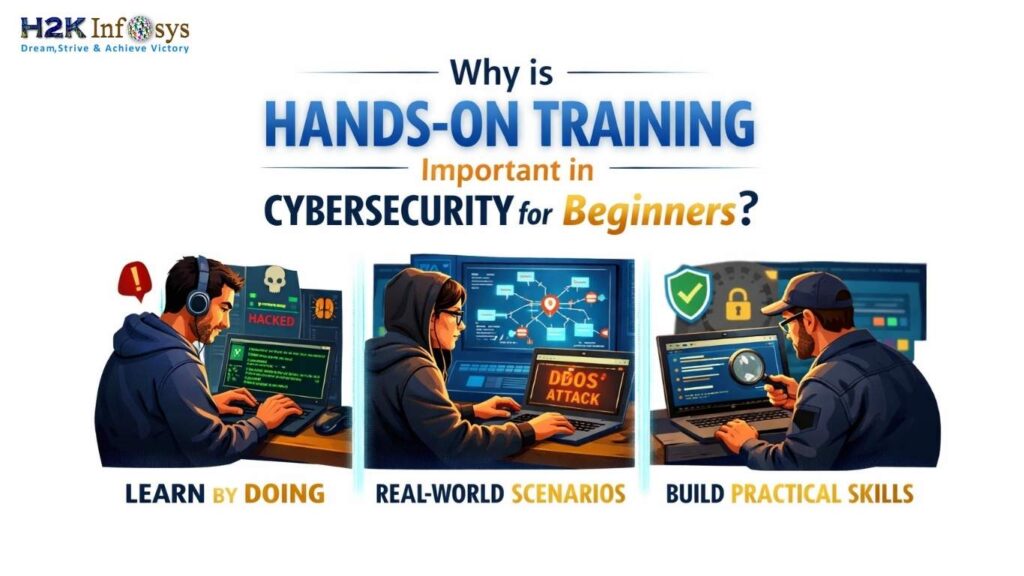
Hands-on training matters in cybersecurity for beginners in one simple reason: it’s the only way beginners actually learn how to detect, analyze, and respond to real threats, not just recognize the terms on paper. Without that kind of exposure, most people hit a wall when it’s time to do the work for real. I’ve seen it happen more times than I can count… especially with learners coming from programs like H2kinfosys who’ve done the theory but haven’t had enough practical reps.
The truth is most beginners realize a bit late…
When people first get into cyber security training and placement programs, there’s this assumption that certifications or video courses will be enough. Sounds reasonable at first.
But then reality kicks in.
Someone finishes hours of lessons, maybe clears an exam… and suddenly they’re staring at a real security alert with no idea where to begin. It’s not a knowledge issue it’s a doing issue.
That gap right there? That’s where hands-on training stops being “helpful” and starts being essential.
Cybersecurity for beginners isn’t something you can just study like history or theory-heavy subjects. It’s more like learning to drive. You can read all the rules, memorize the signs… but until you’re actually on the road, making decisions in real time, it doesn’t quite click.
Why theory alone just doesn’t cut it anymore (especially now)
Over the past couple of years, things have shifted. Quietly, but significantly.
Hiring managers aren’t as impressed by what you know anymore. Their focus has moved to something much more practical:
What have you actually worked on?
And honestly, it makes sense.
With AI-powered attacks, automated ransomware, and faster threat detection systems, companies don’t have the luxury of training people from scratch on the job. They need candidates who can step in and at least understand what’s happening.
That includes things like:
- Looking into suspicious login activity
- Making sense of logs in SIEM tools
- Responding to incidents without freezing up
- Thinking through problems when there’s no clear answer
You don’t build that mindset through theory alone. It comes from practice, sometimes messy, sometimes confusing practice.
That’s why cyber security training with job placement programs that focus on labs, simulations, and real-world scenarios are getting way more attention lately.
What hands-on training actually feels like for cybersecurity for Beginners
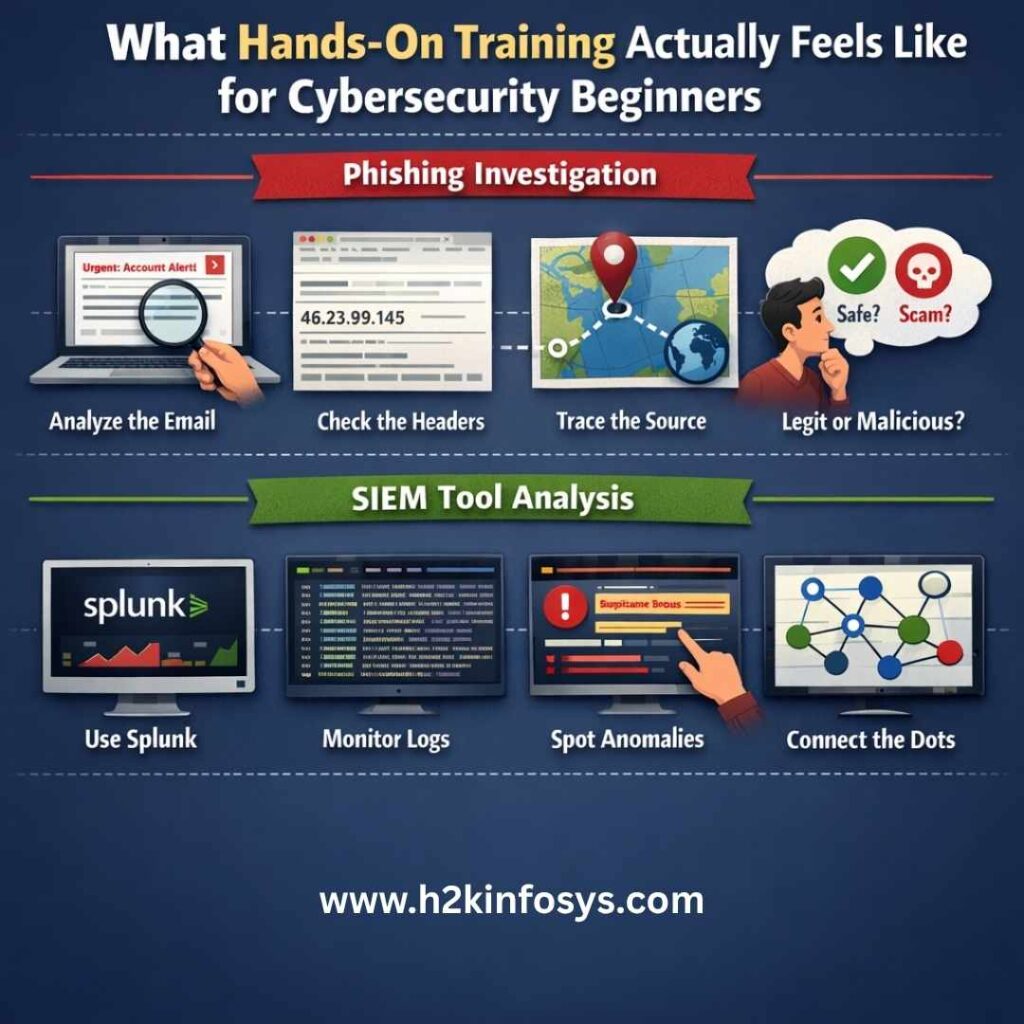
Let me put it in a more real-world way.
Instead of just learning “what is phishing,” you might actually:
- Go through a real phishing email
- Check the headers
- Trace where it came from
- Decide if it’s legit or malicious
Or instead of just hearing about SIEM tools, you’re actually:
- Using something like Splunk
- Watching logs come in
- Trying to spot patterns that don’t look right
- Connecting events to figure out if something’s off
And yeah, in the beginning… It’s confusing. No clean steps, no perfect answers.
You’ll second-guess yourself. Probably a lot.
But weirdly, that’s the point. That’s where the real learning starts.
The confidence boost people don’t expect
One thing that doesn’t get talked about enough hands-on training builds confidence in a very real way.
I’ve noticed this pretty consistently: cybersecurity for beginners who spend time in labs or simulated SOC environments just carry themselves differently.
They:
- Speak more naturally in interviews
- Explain their thinking instead of memorized answers
- Don’t panic when faced with technical questions
It’s not that they know everything. Far from it.
They’ve just seen things before. And that familiarity changes everything.
Even saying something like,
“I’ve worked on log analysis during my training,”
feels more solid than listing certifications alone.
That’s a big reason why cybersecurity for beginners training and placement programs that include mock interviews and real tasks tend to produce better results.
What employers are quietly looking for
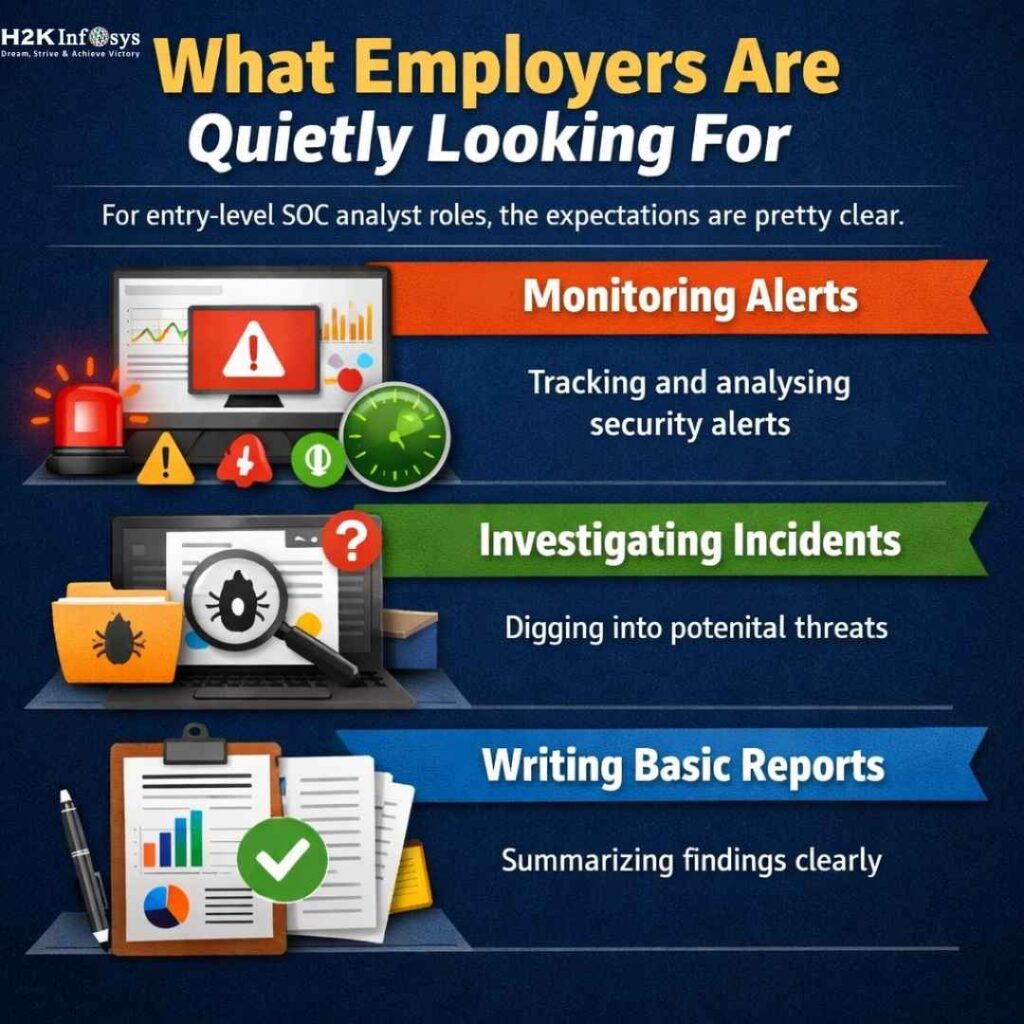
If you look at entry-level SOC analyst roles, the expectations are pretty clear even if they’re not always spelled out.
Things like:
- Monitoring alerts
- Investigating incidents
- Writing basic reports
Now, if you’ve never done any of that even in a practice setup it shows.
But if you have? Even a little?
You can walk into an interview and say something like:
“I’ve handled similar alerts during my training. Here’s how I approached it…”
That one line can shift the entire conversation.
The real meaning of “job-ready”
“Job-ready” gets thrown around a lot. Honestly, it’s almost lost meaning.
But in cybersecurity for beginners, it’s actually pretty simple:
Can you handle basic tasks on day one without being completely lost?
Hands-on training is what gets you there.
It turns:
- Knowledge into skill
- Skill into something closer to experience
- And that into actual employability
That’s why more cybersecurity for beginners are leaning toward cybersecurity training and placement programs that offer:
- Lab-based learning
- Real attack scenarios
- Guided projects
- Resume and interview support
Because at the end of the day… finishing a course isn’t the goal. Getting hired is.
Something I’ve noticed in recent job trends
If you’ve been browsing job listings lately especially in the US you’ve probably seen this pattern:
Even entry-level roles ask for experience.
Feels frustrating, sure.
But what they really mean is:
Show us you’ve practiced in real situations.
That’s it.
And that’s exactly what hands-on training gives you.
Final thoughts (keeping it real)
If you’re just getting started, don’t stress too much about picking the “perfect” course or chasing every certification out there.
Instead, ask yourself:
- Am I actually practicing real tasks?
- Am I using tools that people use on the job?
- Can I explain what I did and why?
Because in this field, knowing something in theory doesn’t take you very far.
You need to show you can handle it when it’s right in front of you.
And honestly… that only happens when you’ve spent some time getting your hands a bit messy.