Introduction
Data protection is no longer optional. Every digital action logging in, shopping, sending emails, using cloud storage depends on encryption. As cyberattacks rise, companies seek professionals who understand Symmetric vs Asymmetric Encryption and can apply them in real-world environments. This knowledge plays a major role in Cyber security training and placement, especially for entry-level and advanced roles.
Whether you are learning through Cybersecurity training and placement, switching careers with Cyber security training and job placement, or searching for Online classes cyber security, you must understand how both encryption types protect systems from data leaks and identity theft.
This blog explains encryption using real examples, detailed comparisons, diagrams, and hands-on concepts. By the end, you will understand how Symmetric vs Asymmetric Encryption protects sensitive data and why it matters for modern cybersecurity.
Understanding Encryption Clearly
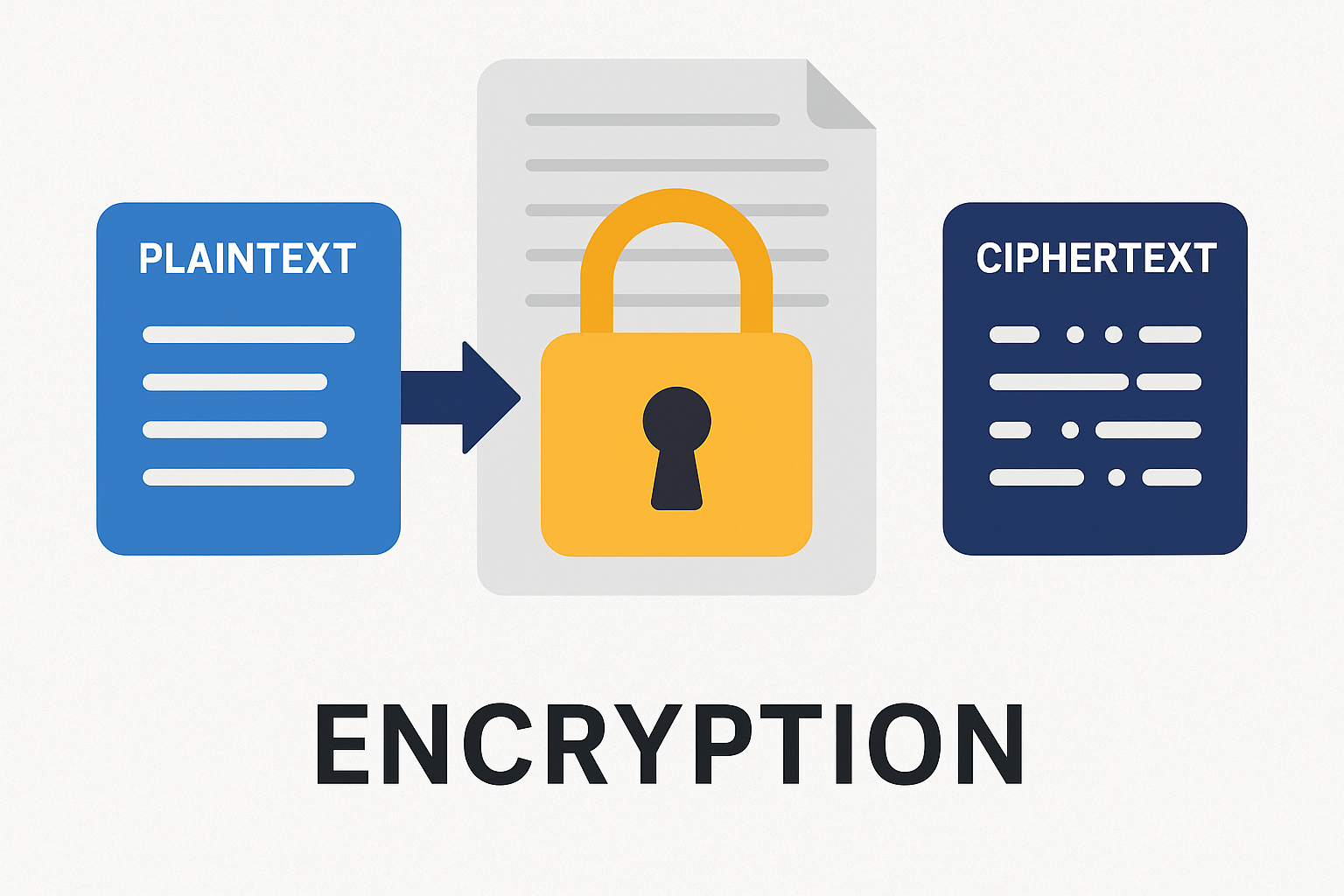
Encryption changes readable data into unreadable code. Only someone with the correct key can unlock it. Strong encryption ensures that even if hackers steal data, they cannot understand or misuse it.
To achieve this level of protection, cybersecurity professionals rely on two main categories:
- Symmetric encryption – one key for locking and unlocking
- Asymmetric encryption – two keys (public + private)
Learning Symmetric vs Asymmetric Encryption helps you understand which method fits which scenario and how organizations use both in their security architecture.
What Is Symmetric Encryption?
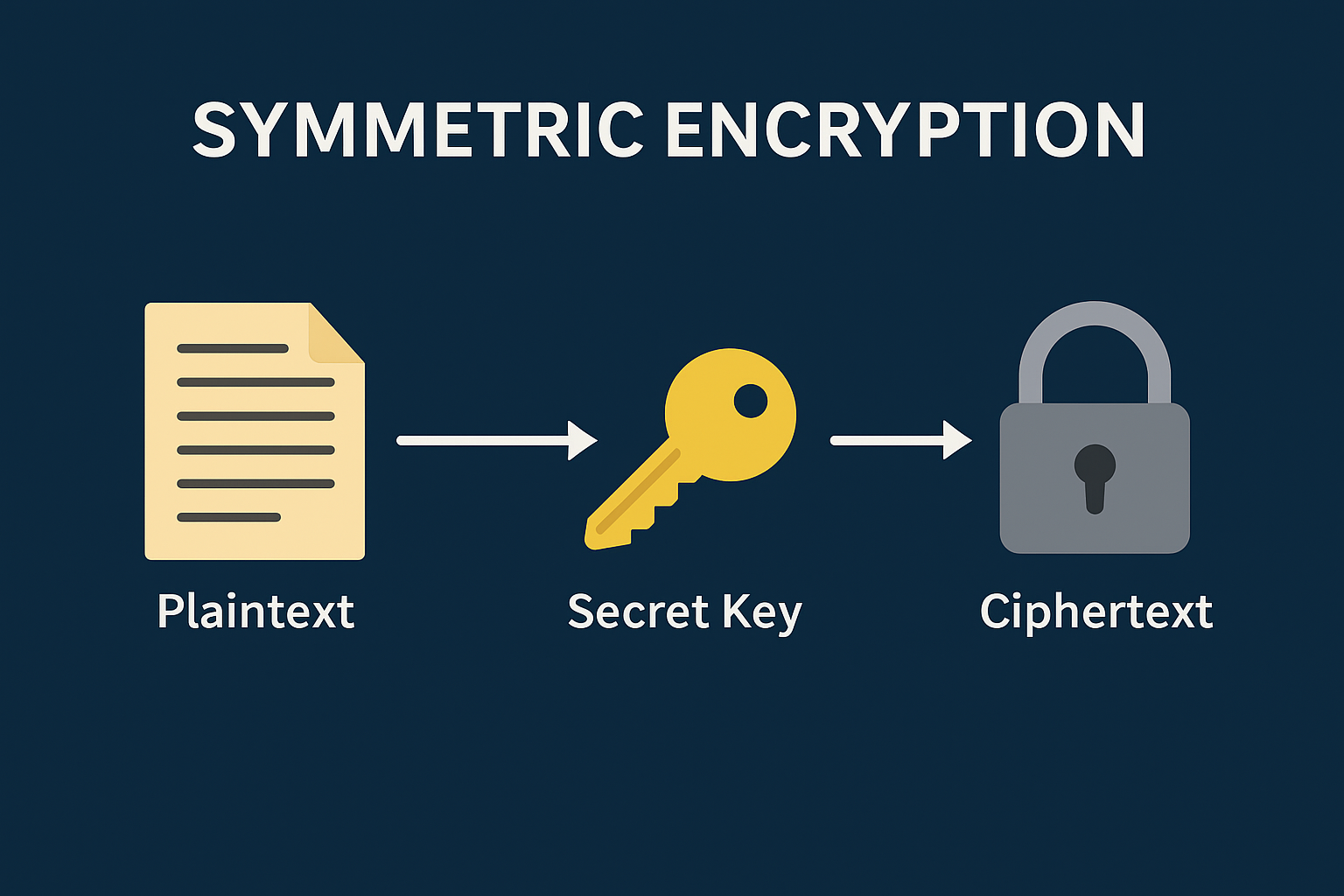
Symmetric encryption uses one secret key to perform both encryption and decryption. This method has been used for decades because it is fast, efficient, and ideal for large data volumes.
How It Works
- Sender encrypts data with a shared secret key
- The receiver decrypts data using the same key
Because both sides use the same key, symmetric encryption is extremely fast.
Where Symmetric Encryption Is Used
- Disk encryption (BitLocker, FileVault)
- Wi-Fi password protection
- Database encryption in enterprise systems
- Payment gateways processing large transactions
When comparing Symmetric vs Asymmetric Encryption, speed is the biggest advantage of symmetric methods.
Advantages of Symmetric Encryption
- It is faster than asymmetric encryption.
- It needs fewer system resources.
- It works well for large files and real-time communication.
- AES, the world’s leading symmetric algorithm, is considered extremely secure.
Limitations of Symmetric Encryption
- Sharing the key securely is challenging.
- It cannot verify user identity.
- It is not suitable for encrypted communication with many users.
These limitations become clear when evaluating Symmetric vs Asymmetric Encryption for enterprise systems.
What Is Asymmetric Encryption?
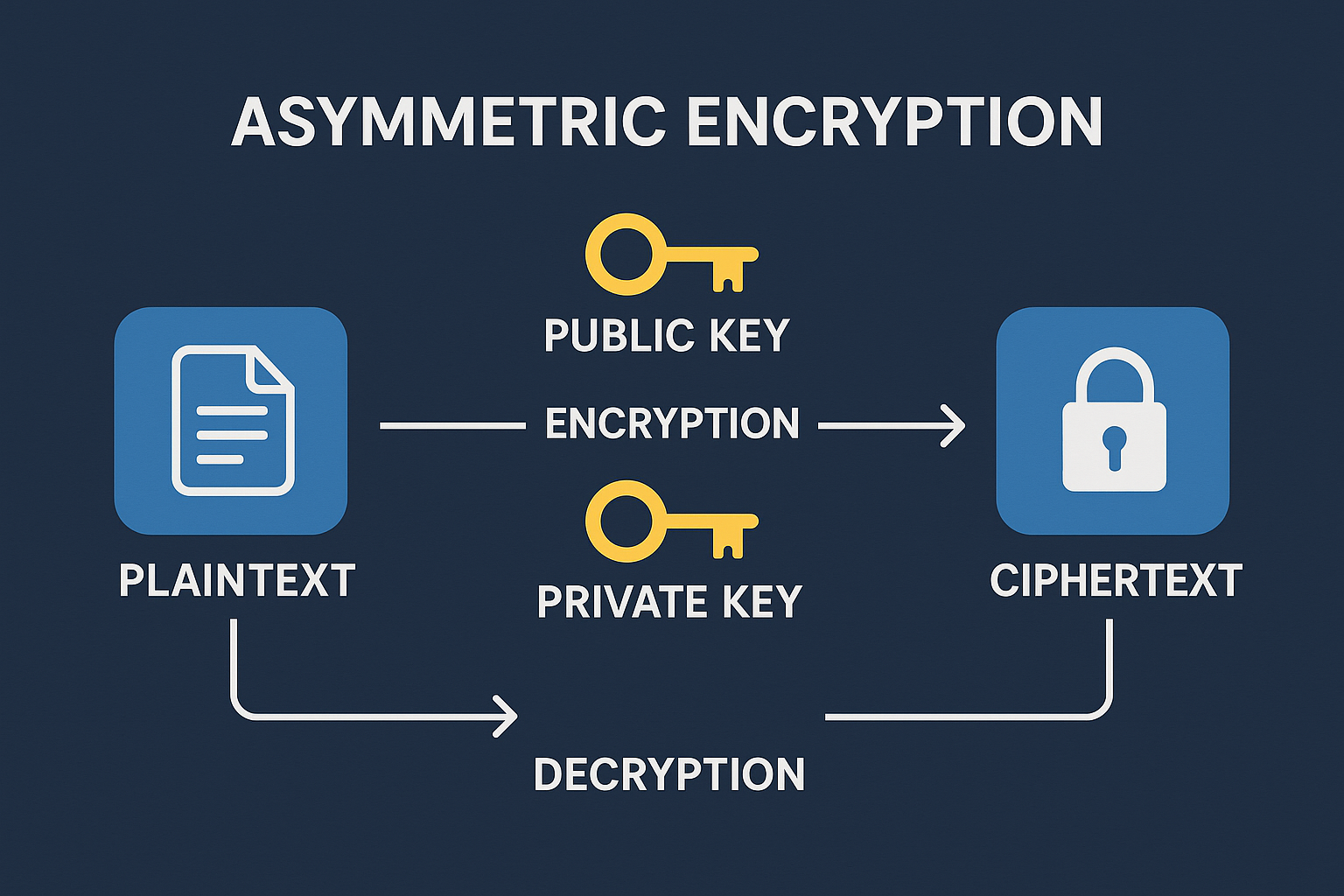
Asymmetric encryption uses two keys:
- Public key — shared with everyone
- Private key — kept secret
Any message encrypted with the public key can only be decrypted by the private key. This makes communication extremely secure.
Where Asymmetric Encryption Is Used
- Secure websites (HTTPS)
- Digital signatures
- Certificate-based authentication
- Secure email communication
- Software update validation
Companies compare Symmetric vs Asymmetric Encryption to design secure login systems, digital identity solutions, and secure channels.
Advantages of Asymmetric Encryption
- It supports secure key exchange.
- It enables digital signatures and user authentication.
- It builds trust between systems and users.
Limitations of Asymmetric Encryption
- It is slower than symmetric encryption.
- It uses larger key sizes.
- It requires more computational power.
This is why organizations rarely use asymmetric encryption alone. They use hybrid techniques that combine Symmetric vs Asymmetric Encryption for better performance.
Symmetric vs Asymmetric Encryption: A Practical Comparison
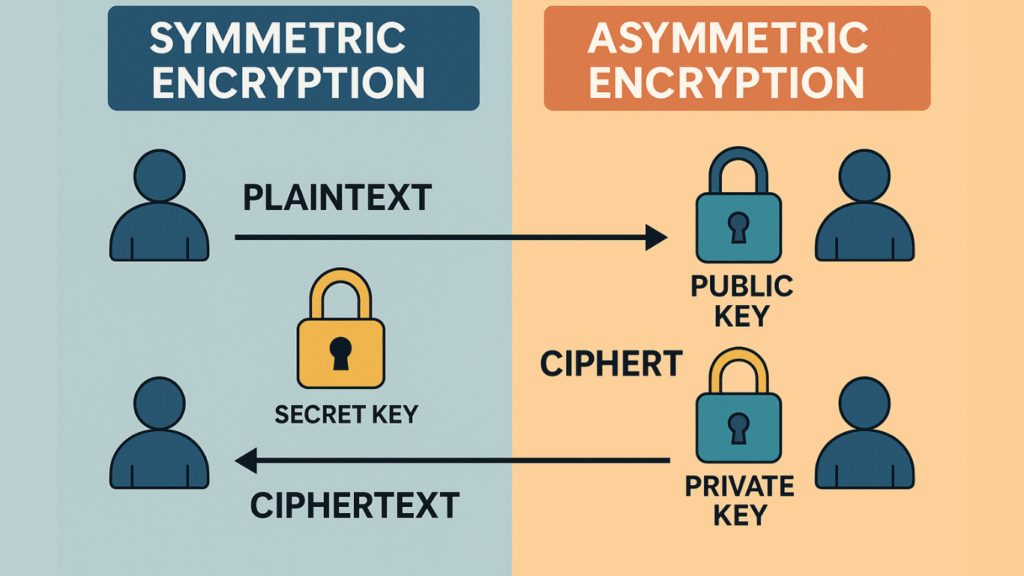
Below is a simple and clear comparison to help you understand Symmetric vs Asymmetric Encryption effectively:
| Feature | Symmetric Encryption | Asymmetric Encryption |
| Key Usage | One shared key | Public + private keys |
| Speed | Very fast | Slower |
| Security Level | Strong but relies on safe key sharing | Very strong |
| Ideal Use Cases | Large data, stored files | Secure communication, authentication |
| Common Algorithms | AES, DES | RSA, ECC |
This table highlights why companies need both technologies.
Hybrid Encryption: The Modern Standard
Most modern systems use hybrid encryption, which combines Symmetric vs Asymmetric Encryption for stronger and faster security.
How Hybrid Encryption Works
- Asymmetric encryption secures the symmetric key.
- Symmetric encryption handles large-scale data transfer.
- Both methods work together to ensure security and performance.
Hybrid encryption is the foundation of HTTPS, online banking, cloud storage, and secure messaging.
Why Symmetric vs Asymmetric Encryption Matters in Cybersecurity Careers
Nearly every cybersecurity project requires you to choose between Symmetric vs Asymmetric Encryption based on the system’s needs. Employers expect students from Cyber security training courses or Cyber security analyst training online to understand:
- When to use AES
- How RSA secures communication
- How digital signatures work
- How hybrid encryption improves performance
- How key exchange happens securely
Mastering this concept strengthens your chances in Cyber security course with placement programs and interviews.
Hands-On Demonstration: Symmetric Encryption in Python
from cryptography.fernet import Fernet

key = Fernet.generate_key()

cipher = Fernet(key)

data = b"Confidential Data"

encrypted = cipher.encrypt(data)

decrypted = cipher.decrypt(encrypted)

print("Key:", key)

print("Encrypted:", encrypted)

print("Decrypted:", decrypted)
This code helps learners understand the performance difference in Symmetric vs Asymmetric Encryption when tested in real scenarios.
Hands-On Demonstration: Asymmetric Encryption in Python
from Crypto.PublicKey import RSA

from Crypto.Cipher import PKCS1_OAEP

key = RSA.generate(2048)

public_key = key.publickey()

encryptor = PKCS1_OAEP.new(public_key)

encrypted = encryptor.encrypt(b"Secure Message")

decryptor = PKCS1_OAEP.new(key)

decrypted = decryptor.decrypt(encrypted)

print("Encrypted:", encrypted)

print("Decrypted:", decrypted)
Comparing outputs helps students understand the operational behavior behind Symmetric vs Asymmetric Encryption.
Real-World Case Studies
1. Banking and Finance
Banks rely on Symmetric vs Asymmetric Encryption to secure customer data, protect transactions, and verify user identity.
2. Cloud Platforms
Cloud providers use symmetric encryption for data storage and asymmetric encryption for access control.
3. Healthcare Systems
Healthcare networks use hybrid encryption to protect medical records and secure patient communication.
These industries hire professionals trained through Online courses for cybersecurity and Cyber security training near me programs.
Industry Insights and Statistics
- Over 80% of data breaches involve poor encryption or key misuse.
- 95% of secure websites use hybrid encryption.
- Organizations increased encryption investment by 28% in two years.
This proves why understanding Symmetric vs Asymmetric Encryption is a core requirement for security professionals today.
Key Takeaways
- Symmetric vs Asymmetric Encryption form the foundation of modern cybersecurity.
- Symmetric encryption is fast and ideal for large data protection.
- Asymmetric encryption ensures identity verification and secure key exchange.
- Hybrid encryption provides the best balance between speed and security.
- Students in Cyber security course and job placement programs must master both techniques.
Conclusion
Understanding Symmetric vs Asymmetric Encryption strengthens your cybersecurity foundation and prepares you for real-world job roles.
Enroll with H2K Infosys to gain hands-on experience and build a strong cybersecurity career.