Introduction
Honestly? Most data analytics certification courses in the US look similar on the surface, but once you get into them, the differences are pretty real. Some teach you concepts, some teach tools… and a few actually prepare you for a job.
And that last part is where things start to separate.
Why This Question Even Comes Up (I’ve Seen This a Lot)
I’ve had a bunch of people ask me this recently, usually after they’ve already started an online data analytics certification courses and feel… stuck.
Not because the content is bad.
But it’s either too theoretical or too disconnected from real work.
And with how fast things are moving in 2026 (AI tools, automation, all that), companies don’t really care if you “completed a course.” They care if you can work with messy data analytics certification courses and explain it like a normal human being.
That’s a very different skill set.
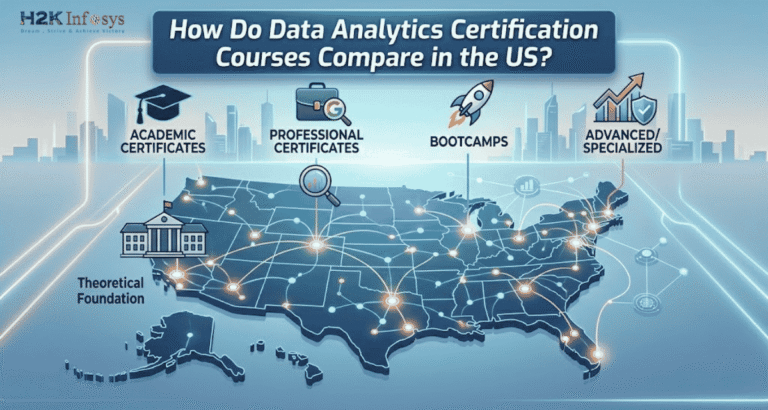
The 3 Main Types of Analytics Courses Online (And What They’re Really Like)
Let me break this down the way I usually explain it to friends.
1. University Programs: Solid, but not always practical
These are the big-name programs. Structured, detailed, sometimes even intense.
You’ll learn:
- Statistics
- Theory behind analytics
- Some tools (depending on the course)
But here’s the thing…
A lot of people finish these and still feel unsure in interviews.
Why?
Because knowing about analytics isn’t the same as doing it under pressure.
Also, they’re expensive. Like, really expensive.
2. Self-Paced Platforms: Flexible, but easy to drift
These are the typical data analytics certification courses, where you log in, watch videos, and maybe do a quiz.
They’re great if you:
- Are self-disciplined
- Already know what you’re doing.
- Just need to brush up on skills.
But if you’re starting from scratch?
It’s very easy to lose momentum. I’ve personally started a couple of these and… yeah, didn’t finish all of them.
No one’s pushing you; there’s no real accountability.
3. Career-Focused Certification Programs: More hands-on, more direct
This is where things feel different.
These programs are built around one idea:
“Let’s get you job-ready.”
Instead of just teaching tools, they:
- Walk you through real-world scenarios.
- Make you work on projects (not optional)
- Help you prepare for interviews.
Programs like H2K Infosys fall into this space, and honestly, this is what most career switchers end up needing.
Because the goal isn’t just learning, it’s getting hired.
So… What’s the Actual Difference?
Here’s how I’d put it in plain terms:
- Some courses teach you what data analytics is
- Some teach you how tools work.
- The better ones teach you how to solve business problems using data.
That third one? That’s what employers care about.
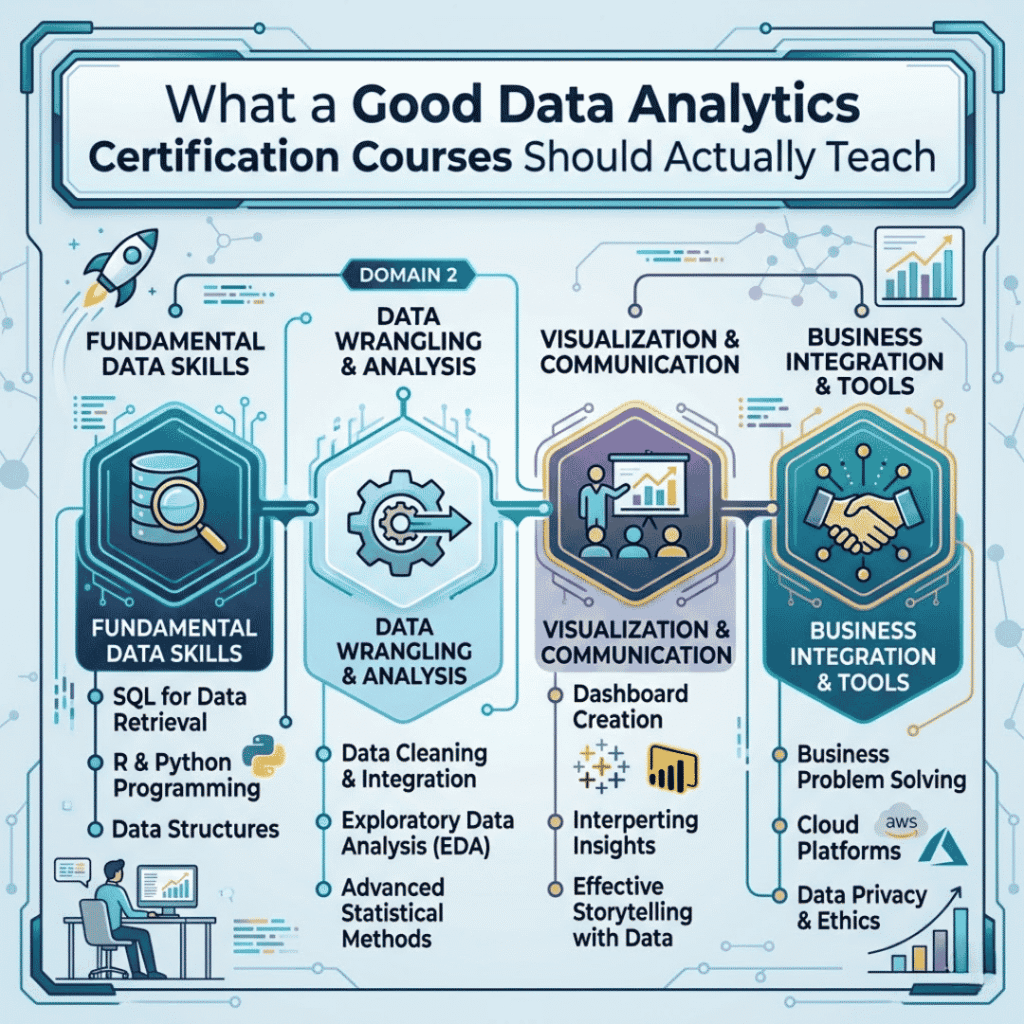
What a Good Data Analytics Certification Courses Should Actually Teach
This part is important, and people often underestimate it.
A solid data analytics certification courses today should include:
- SQL (you’ll use this constantly)
- Excel (still everywhere, surprisingly)
- Python or similar tools
- Visualization (Power BI, Tableau)
- Real datasets (not just clean textbook ones)
But more than that…
You should be practicing things like:
- “Why did sales drop last quarter?”
- “Which customers are likely to churn?”
- “What’s driving revenue in this dataset?”
Because that’s the kind of thinking you’ll need on the job.
A Quick Reality Check (From Hiring Side)
I remember someone telling me this during a hiring discussion:
“Certificates don’t impress me anymore. Show me what you’ve built.”
That stuck.
Because it’s true, if your course doesn’t give you projects you can talk about confidently, it’s not doing enough.
Why Structured Learning Makes a Big Difference
I used to think self-learning was enough. And it can be… but it’s slower.
With a structured data analytics certification courses, you get:
- A clear roadmap
- Less guesswork
- Real feedback
- Some level of pressure to keep going
And honestly, that consistency is underrated. Most people don’t fail because the content is hard—they just lose direction.
Career Outcomes (What You’re Actually Working Toward)
Let’s make this practical.
After completing a solid program, most people aim for roles like:
- Data Analyst
- Business Analyst
- Reporting Analyst
And yes, the demand is still strong in 2026.
Entry-level salaries in the US are typically around:
- $65K–$85K to start
- And it grows fairly quickly once you get experience.
Industries like healthcare, finance, and retail are hiring a lot right now.
Mistakes I See People Make (Worth Avoiding)
A few patterns keep repeating:
- Choosing based on brand name alone
- Ignoring whether projects are included
- Thinking certification = job (it doesn’t)
- Skipping interview prep
The course matters, but how it prepares you matters more.
Where H2K Infosys Fits Into This
Not trying to oversell it, but here’s the practical angle.
Programs like H2K Infosys focus more on:
- Real-time project work
- Job-oriented training
- Interview preparation
Which, if you think about it, is exactly what most people are missing when they struggle after finishing other data analytics certification courses.
So if your goal is just learning, you have options.
If your goal is getting into a job, structured programs like this tend to make more sense.
You Might Also Want to Explore
If you’re going deeper into this path, these topics help a lot:
- How to build a strong data analytics portfolio
- SQL vs Python, which one to start with
- What recruiters actually look for in entry-level analysts
FAQs
1. Which is the best data analytics certification courses online right now?
It depends on your goal, but courses with real projects and job support usually give better results than purely theoretical ones.
2. Are data analytics certification courses enough to get a job?
Not by themselves; you need practical experience and projects to back them up.
3. How long does it usually take to complete a course?
Most people take around 3–6 months, depending on how intensive the program is.
4. Do employers care about certifications?
They care more about what you can do. Certifications help, but skills matter more.
5. Can beginners start analytics courses online?
Yes, but beginners benefit more from structured programs than fully self-paced ones.
Final Thoughts (Just Being Real Here)
If you’re comparing data analytics certification courses, don’t overthink the branding or marketing.
Ask yourself one simple question:
Will this course help me confidently solve real problems and talk about them in an interview?
If the answer is yes, you’re on the right track.
And if you’re serious about turning this into a career, having a structured path like what H2K Infosys offers can honestly save you a lot of trial and error.
That’s usually what makes the difference.