Introduction
If you’re working a full-time job and wondering whether online data analytics training can realistically fit into your schedule, the short answer is yes. Most modern programs are built for people who already have jobs, family responsibilities, or unpredictable work hours.
That’s actually one of the biggest reasons for data analytics classes Online, from H2K Infosys, has become so popular lately. People don’t want to pause their careers anymore just to learn a new skill. They want something practical they can manage after work, on weekends, or during quieter hours.
I’ve noticed this trend, especially among professionals trying to move into tech from non-technical roles. A lot of them assume data analytics requires going back to college full time. It usually doesn’t.
What Is a Data Analytics Program?
A Data Analytics Classes Online teaches you how to work with data so businesses can make smarter decisions.
That includes learning how to:
- organize messy information
- analyze trends
- create dashboards
- build reports
- explain insights clearly
Most programs include tools like SQL, Excel, Power BI, Tableau, and Python.
The better programs also focus heavily on practical projects instead of only theory. That part matters more than people think.
Why Working Professionals Prefer Data Analytics Classes Online
Flexibility is the biggest reason.
Traditional classroom learning often follows fixed schedules that are hard to manage when you already have a full-time job. Data Analytics Classes Online work differently.
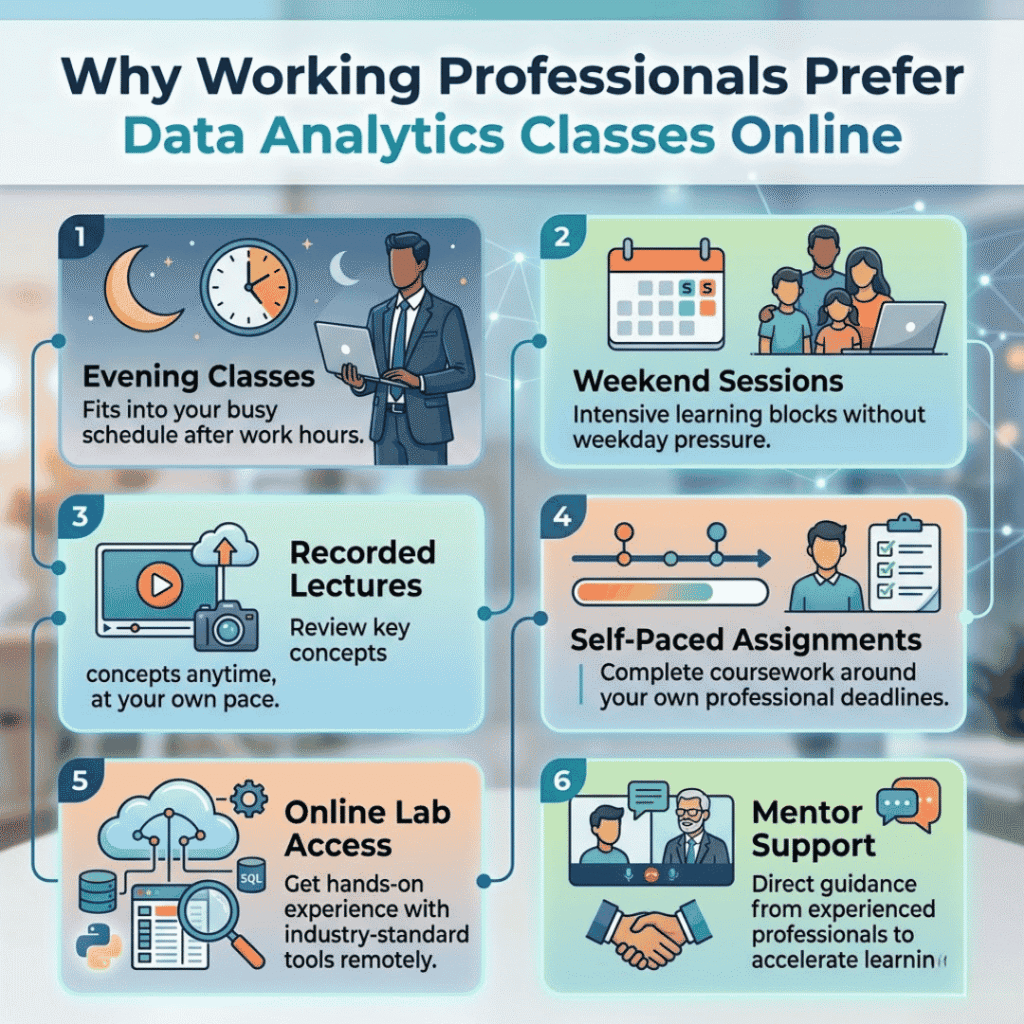
Many Data Analytics Classes Online now offer:
- evening classes
- weekend sessions
- recorded lectures
- self-paced assignments
- online lab access
- mentor support
So instead of sitting in traffic after work to attend a classroom, you can learn from home for an hour or two each evening.
Honestly, that’s what makes the process feel sustainable.
Some learners finish programs faster by studying daily. Others move slower and complete training over several months. Good online programs usually allow both approaches.
What Learning Data Analytics Actually Looks Like
People often imagine that data analytics classes online consist of coding all day.
It’s usually not.
In real projects, a large part of the work involves understanding business problems and figuring out what the data is trying to tell you.
Here’s how most beginners progress.
1. Start With Excel and Basic Reporting
Almost everyone begins here.
You learn:
- spreadsheets
- formulas
- sorting and filtering
- data cleaning
- reporting basics
It sounds simple, but this foundation helps a lot later.
2. Learn SQL
SQL is one of the most important skills for analysts.
You use it to pull information from databases, combine datasets, and answer business questions.
This is usually where beginners slow down a little.
Joins, grouping, and filtering can feel confusing at first. That’s normal.
3. Build Dashboards
Once learners understand data, they move into visualization tools like:
- Power BI
- Tableau
This is where things get more interesting because you start creating dashboards that look similar to what companies actually use.
4. Work on Projects
Good projects make a huge difference.
In many real-world analytics projects, you might analyze:
- sales trends
- customer behavior
- inventory performance
- financial reports
- marketing campaign data
This practical exposure helps during interviews because employers usually ask about problem-solving experience.
5. Prepare for Job Interviews
Strong training programs typically include:
- resume support
- mock interviews
- capstone projects
- portfolio guidance
- career mentoring
A lot of self-learners struggle at this stage because they know tools but don’t know how to present their experience professionally.
A Real Example of Career Transition Into Analytics
One learner I spoke with had a background in retail operations.
No technical degree.
No coding experience.
But they already understood:
- inventory management
- customer purchasing patterns
- sales reporting
- operational workflows
After completing a structured Data Analytics Classes Online they moved into a reporting analyst role.
That transition actually makes sense when you think about it.
Companies value people who understand business operations and can also work with data.
That combination is becoming more valuable in 2025 and 2026.
Online Learning vs Traditional Classroom Training
There’s still a perception that classroom learning is automatically better.
Sometimes it is.
But for working adults, online learning is often more realistic.
| Flexible schedules | Fixed timings |
| Learn from anywhere | Requires commuting |
| Recorded sessions available | Usually live only |
| Easier for working professionals | Harder with full-time jobs |
| Often more affordable | Higher overall costs |
For many adults, flexibility becomes the deciding factor.
Skills You Build in a Data Analytics Classes Online
A quality Data Analytics Classes Online program usually helps learners develop:
- SQL skills
- dashboard creation
- data visualization
- reporting techniques
- analytical thinking
- business communication
- problem-solving abilities
The communication side gets overlooked a lot.
A dashboard means very little if you can’t explain what the numbers actually mean.
Career Opportunities After Completing a Data Analytics Program
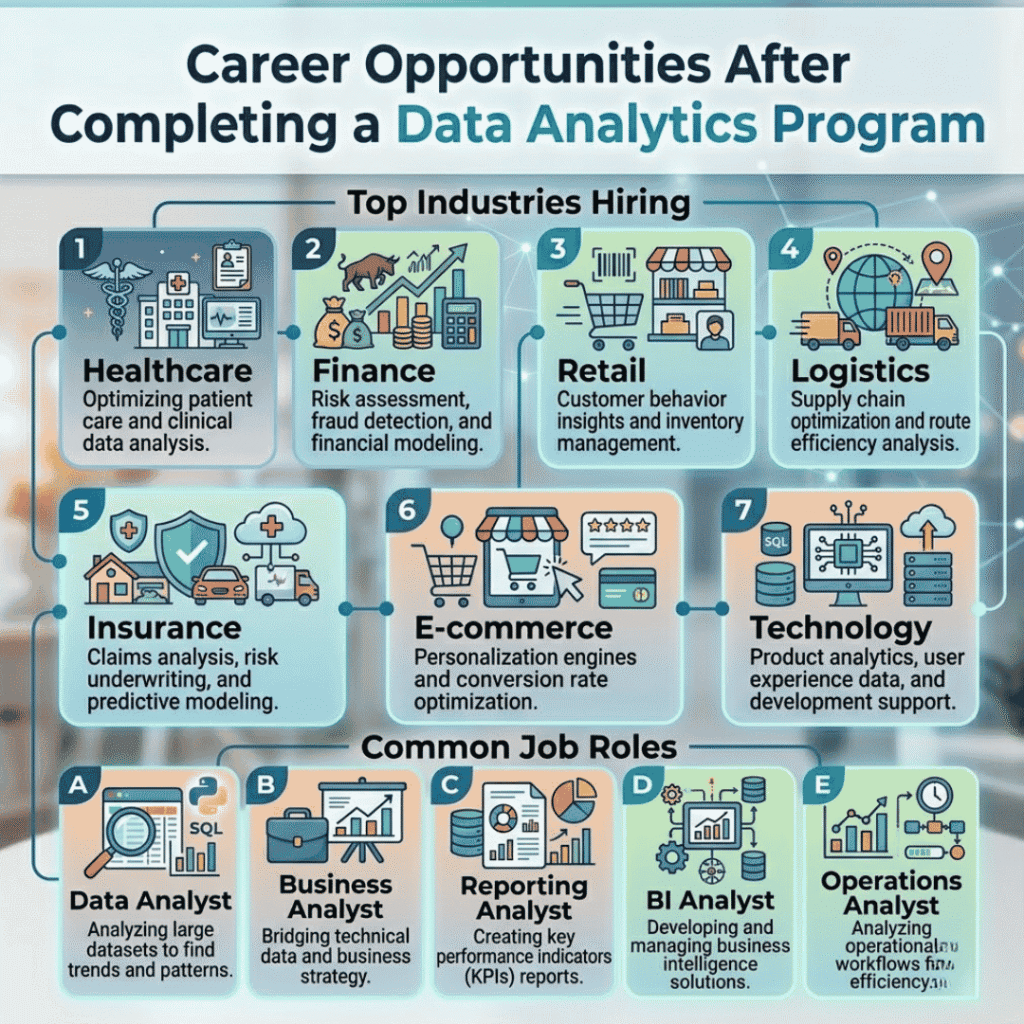
Analytics skills are being used in almost every industry now.
That includes:
- healthcare
- finance
- retail
- logistics
- insurance
- e-commerce
- technology
Common job roles include:
- Data Analyst
- Business Analyst
- Reporting Analyst
- BI Analyst
- Operations Analyst
Hiring demand is still strong because businesses continue generating huge amounts of data and need people who can interpret it.
Why Structured Training Helps Many Beginners
Technically, you can learn analytics for free online.
There are endless tutorials available.
But many people end up overwhelmed because the learning path feels scattered.
One video teaches SQL. Another teaches Python. Another jumps straight into machine learning.
There’s no structure.
That’s one reason many professionals choose organized programs from providers like H2K Infosys.
Programs that include hands-on projects, instructor support, practical assignments, and career guidance often make the learning process smoother.
Especially for career changers.
The accountability also helps. When people try learning entirely alone, consistency becomes difficult.
Common Mistakes Beginners Make
Trying to Learn Everything Immediately
Many beginners jump into advanced topics too early.
Building a strong foundation first usually works better.
Avoiding Projects
Watching videos is not enough.
Practical work matters.
Ignoring SQL
Some learners focus only on visualization tools.
But SQL remains one of the most requested analytics skills.
Learning Without Career Preparation
Technical skills alone don’t always lead to interviews.
Resume building and portfolio projects matter too.
Quick Summary
- Data Analytics Classes Online are flexible for working adults.
- Many programs allow evening, weekend or self-paced study.
- Analytics can be learned by beginners without a technical background.
- SQL, Power BI, Tableau, Excel and Python are commonly taught
- “Hands-on projects and mentorship can often help with job readiness.
- Structured programs like H2K Infosys will help the learner to be organized and career-oriented.
Related Topics You Can Explore Next
You can also use these topics if you are researching analytics careers:
- How long does it take to get a data analyst
- Essential SQL Skills for Beginners
- Power BI vs Tableau for Beginners
- Can non-IT professionals be taught data analytics?
- Entry Level Data Analyst Salary Trends 2026
FAQs
Can I study Data Analytics Classes Online while working full-time?
Yes. Most online programs are designed for working professionals and offer flexible schedules.
Is a Data Analytics Classes Online worth it?
It can be valuable if the program includes practical projects, career support, and hands-on learning.
Do beginners need coding experience?
No. Many beginners start with zero technical experience and gradually build skills.
Which analytics tools are most important?
SQL, Excel, Power BI, Tableau, and Python are among the most commonly used tools.
How long does a Data Analytics Program take?
Many learners complete programs within 4 to 9 months depending on pace and schedule.
Final Thoughts
Online analytics training has become much more practical over the last few years.
It’s no longer just recorded videos and theory-heavy lessons.
The better data analytics classes online now focus on real projects, business scenarios, mentorship, and job preparation. That combination makes a big difference for working professionals trying to move into analytics without stepping away from their current careers.
If you’re serious about building Data Analytics Classes Online skills that employers actually value, choosing a structured and project-focused data analytics program can save a lot of time and confusion later.