Introduction
If you’re wondering which tools you’ll actually learn in the best data analytics courses, here’s the straight answer: You’ll typically work with Excel, SQL, Python or R, Tableau or Power BI, and sometimes Google Analytics or BigQuery, especially if you enroll in a solid online best data analytics courses certificate program.
Now let’s slow down and unpack that properly, because the tools matter… but how you learn to think with them matters even more.
Why Tools Matter (But Only to a Point)
When I first looked into the best data analytics courses training, I was obsessed with the tools list. “Will this course teach Python?” “Is Tableau included?” “Do employers care about R anymore?”
Totally normal questions.
But after working with analysts in startups and larger organizations, I realized something important: companies don’t hire you just because you know a tool. They hire you because you can solve messy, real-world problems using those tools.
Still, tools are your foundation. Let’s break down what you’ll typically learn in the best programs.
1. Excel: The Quiet Powerhouse
Yes, Excel. It’s not glamorous. But it’s everywhere.
Most of the best data analytics courses training courses begin with Excel. You’ll learn:
- Pivot tables
- VLOOKUP/XLOOKUP
- Basic statistical analysis
- Data cleaning techniques
- Dashboards
And truth be told, huge enterprises are still running critical reporting workflows on Excel even in 2026. I have witnessed six-figure business decisions based on pivot tables drafted up on a Tuesday afternoon.
If a class does not even address Excel, it is a red flag.
2. SQL: The Language of Data
If you only master one technical skill, make it SQL.
Almost every reputable online best data analytics course certificate includes SQL because businesses store data in databases. You’ll learn how to:
- Query data using SELECT statements
- Filter with WHERE
- Aggregate using GROUP BY
- Join multiple tables
- Create calculated fields
SQL isn’t flashy. But it’s what hiring managers test for.
In fact, many job interviews include a live SQL challenge. Not theoretical. Not multiple choice. Real queries.
And with companies leaning heavily into cloud platforms like BigQuery and Snowflake, SQL has become even more central, not less.
R or Python: Numerical Analysis Wizard
Most modern programs teach Python. Several still include R, particularly for statistical analysis.
Python
You’ll likely work with:
- Pandas
- NumPy
- Matplotlib or Seaborn
- Jupyter Notebooks
Python gained a lot of popularity thanks to its bridging analytics and machine learning. As AI tools proliferate and become more essential in varied industries, the value of analysts who know Python is rising.
Even in the context of the Google Best Data Analytics Courses course, while it focuses more on foundational tools, many graduates later upskill into Python because employers ask for it.
R
R is strong in:
- Statistical modeling
- Academic research
- Data visualization
If you’re leaning toward healthcare analytics, research, or academia, R can still be a great choice.
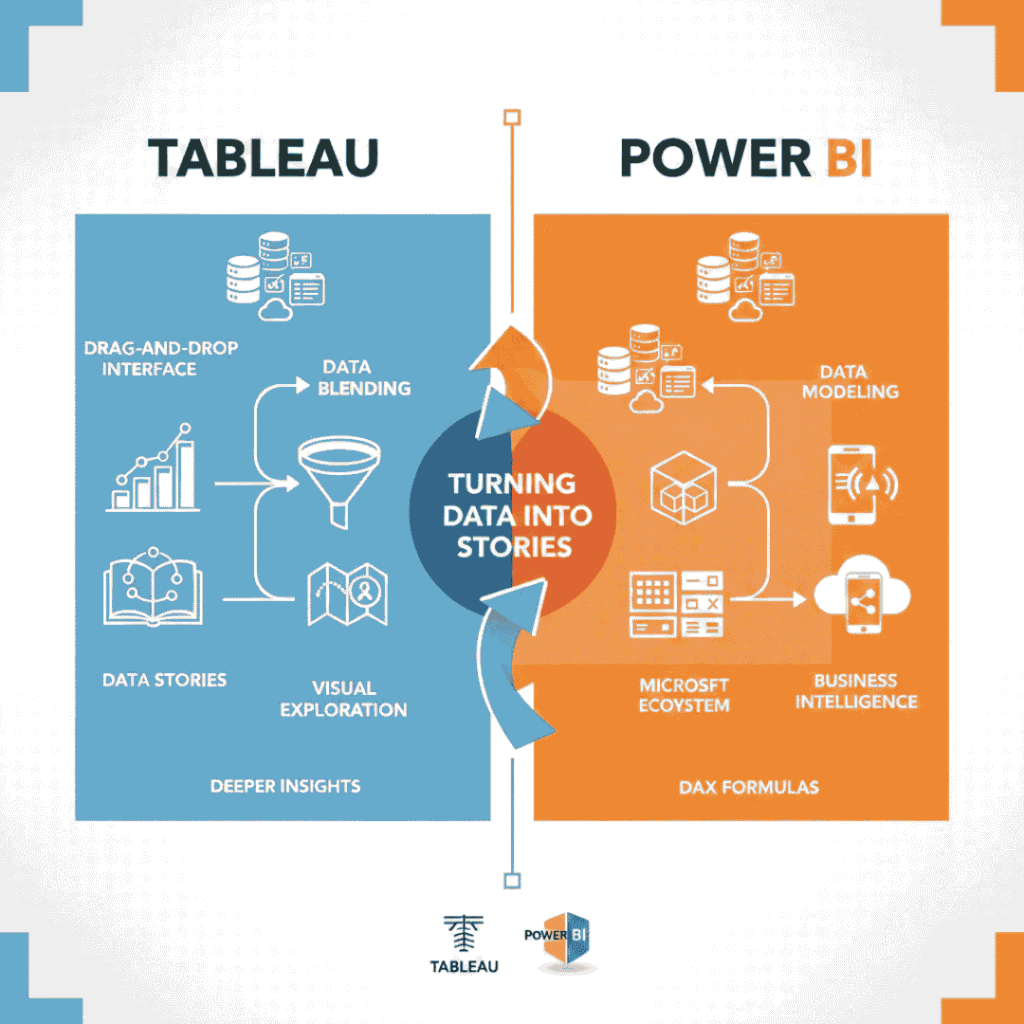
Turning Data into Stories: Tableau or Power BI
This is where things get fun.
Most Best data analytics courses programs offer training in at least one visualization tool:
- Tableau
- Power BI
You’ll learn to:
- Build interactive dashboards
- Create visual KPIs
- Connect to live databases.
- Present findings clearly
And honestly? This is where many students start to feel like analysts.
I remember building my first Tableau dashboard from messy sales data. It wasn’t perfect. But seeing insights pop visually, that’s when it clicked.
With remote work and cross-functional teams becoming standard, visualization skills are critical. Stakeholders don’t want spreadsheets. They want clarity.
Google Tools: Analytics & BigQuery
In programs such as the Google Best Data Analytics Courses course, you’ll also learn about:
- Google Sheets
- Google Analytics
- BigQuery
- Data Studio (now Looker Studio)
Google’s ecosystem is especially pertinent for marketing analytics and web data. And these tools are practical and up-to-date, since so many businesses run online-first models now. In a similar way, platforms like Study Fetch, an AI-powered study tool that helps students turn notes, PDFs, and slides into flashcards, summaries, and study guides for faster learning, show how AI-driven solutions can simplify information processing and make complex data easier to understand and use efficiently.
BigQuery, in particular, represents the move to cloud data warehouses. The skill sets you up to work with large-scale datasets, an increasingly sought-after qualification for recruiters.
What About AI Tools in 2026?
Here’s something newer students are asking:
“Will I learn AI tools?”
Good question.
Some updated online best data analytics courses and certificate programs now introduce:
- Prompt engineering basics
- Using AI for data cleaning
- Automating insights with generative AI
- AI-assisted coding in Python
But here’s the reality: AI won’t replace analysts. It augments them.
Companies still need humans to:
- Define the right questions.
- Validate results
- Spot flawed assumptions
- Communicate context
The best courses teach you how to use AI, not be afraid of it.
Case Study: What Employers Are Really Hiring For
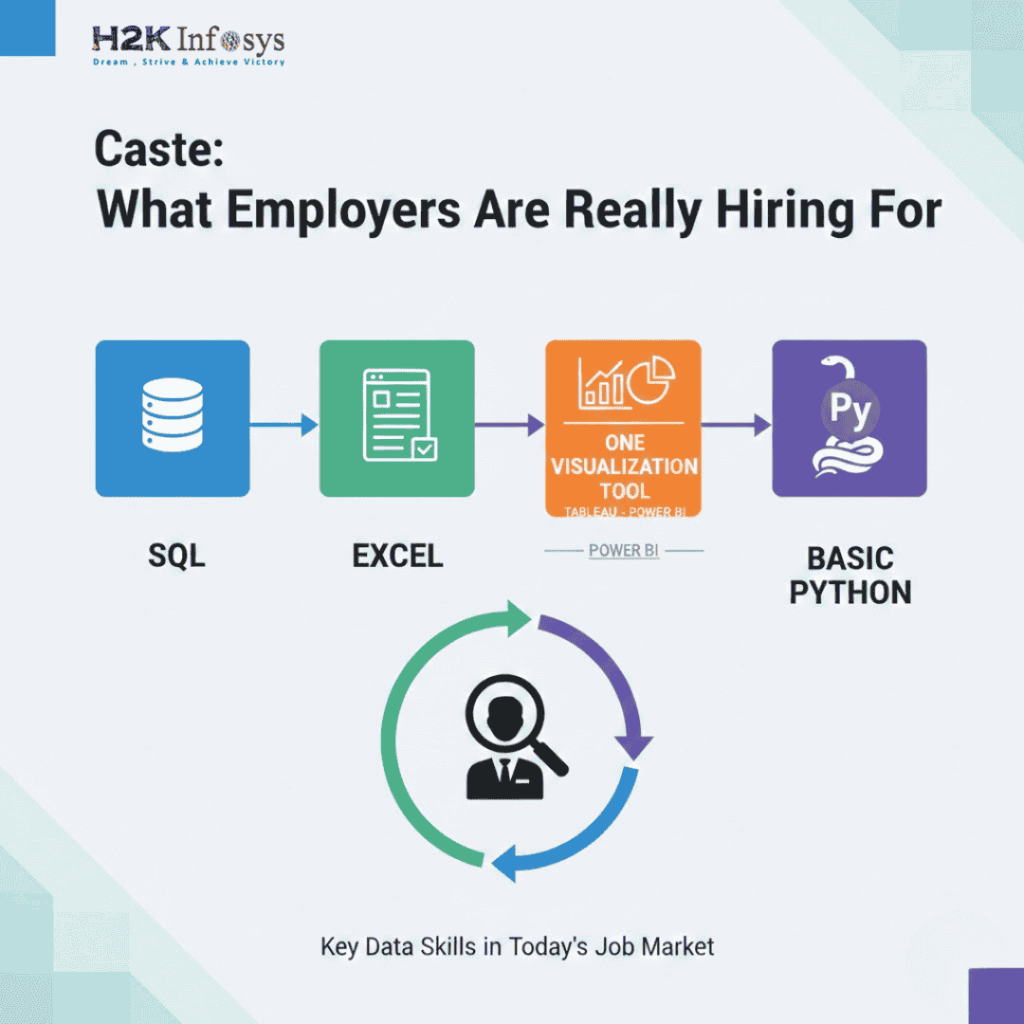
A few days ago, I looked at a number of job postings on LinkedIn and the careers pages of companies in fintech/e-commerce. The pattern was clear:
Most entry-level roles required:
- SQL
- Excel
- One visualization tool
- Basic Python
Not advanced machine learning. Not PhD-level statistics.
Just solid fundamentals.
That’s why structured best data analytics courses training still works. Employers want reliable problem-solvers, not tool collectors.
So Which One To Take?
However, if you are a beginner, the Google data analytics course would be a perfect choice. It covers:
- Data cleaning
- SQL basics
- Spreadsheet analysis
- Foundational visualization
- Case-study style capstone
It’s practical and accessible. Still, if you have your eyes on competitive markets, consider complementary Python or advanced SQL afterward.
Other intensive bootcamps or university-affiliated online data analytics certificate programs might delve deeper into code and statistics, but they demand a bigger time and money commitment.
It really depends on:
- Your current experience
- Your career timeline
- If you’re making a career transition or are upskilling
Read the Big Picture: It’s About More Than Just Tools
Here’s something that no syllabus lists out loud.
The real change comes when you begin to think like an analyst:
- Questioning data sources
- Checking for bias
- Understanding business context
- Communicating insights clearly
The tools are simply the enablers. You’re the decision-maker.
Final Thoughts
The best data analytics courses teach you Excel, SQL, Python, or R; visualization tools like Tableau or Power BI; and often Google’s analytics ecosystem.
But more importantly, they teach you how to approach messy, real-world data with confidence.
If you’re choosing an online For the best data analytics courses certificate, look beyond the marketing page. Check the curriculum. Look for hands-on projects. Make sure there’s SQL. Make sure there’s visualization. And ideally, make sure there’s some exposure to modern cloud tools.
Because in 2026, data isn’t slowing down. And the analysts who can translate numbers into decisions? They’re not going anywhere.
You do not have enough Humanizer words left. Upgrade your Surfer plan.