Introduction
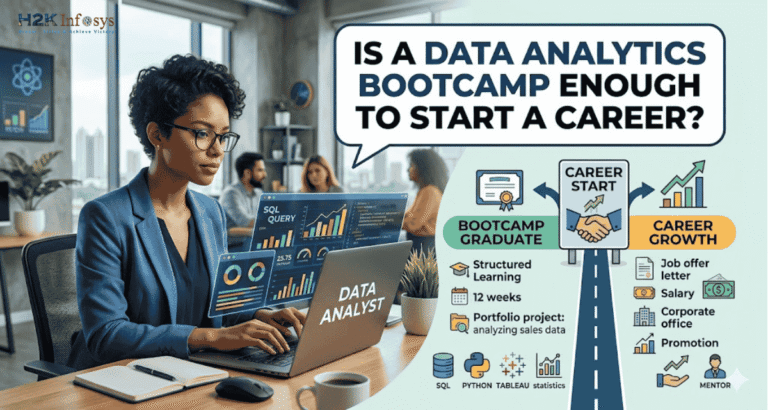
Yes, a Data Analytics Bootcamp can be enough to start a career, but only if it includes real projects and strong fundamentals, and you continue practicing beyond the course.
That last part is where most people underestimate things. Finishing a bootcamp feels like the finish line… but in reality, it’s more like the starting point.
What is a Data Analytics Bootcamp?
A data analytics bootcamp typically refers to an accelerated short-term training program that provides someone with job-ready data skills in anywhere from a few weeks to a couple of months.
Unlike a normal Data Analytics Bootcamp, bootcamps emphasize:
- Practical skills
- Real datasets
- Fast learning
So… Is It Actually Enough?
Short answer: Sometimes yes, but not by default.
A bootcamp gives you:
- Tools (SQL, Excel, Python, Power BI)
- Basic workflow understanding
- Some projects
But getting a job requires:
- Confidence with messy data
- Problem-solving ability
- Interview readiness
This is where things get interesting… Two people can finish the same Data Analytics Bootcamp, and only one gets hired.
Why? Practice and depth.
Step-by-Step: How to Turn a Bootcamp Into a Career
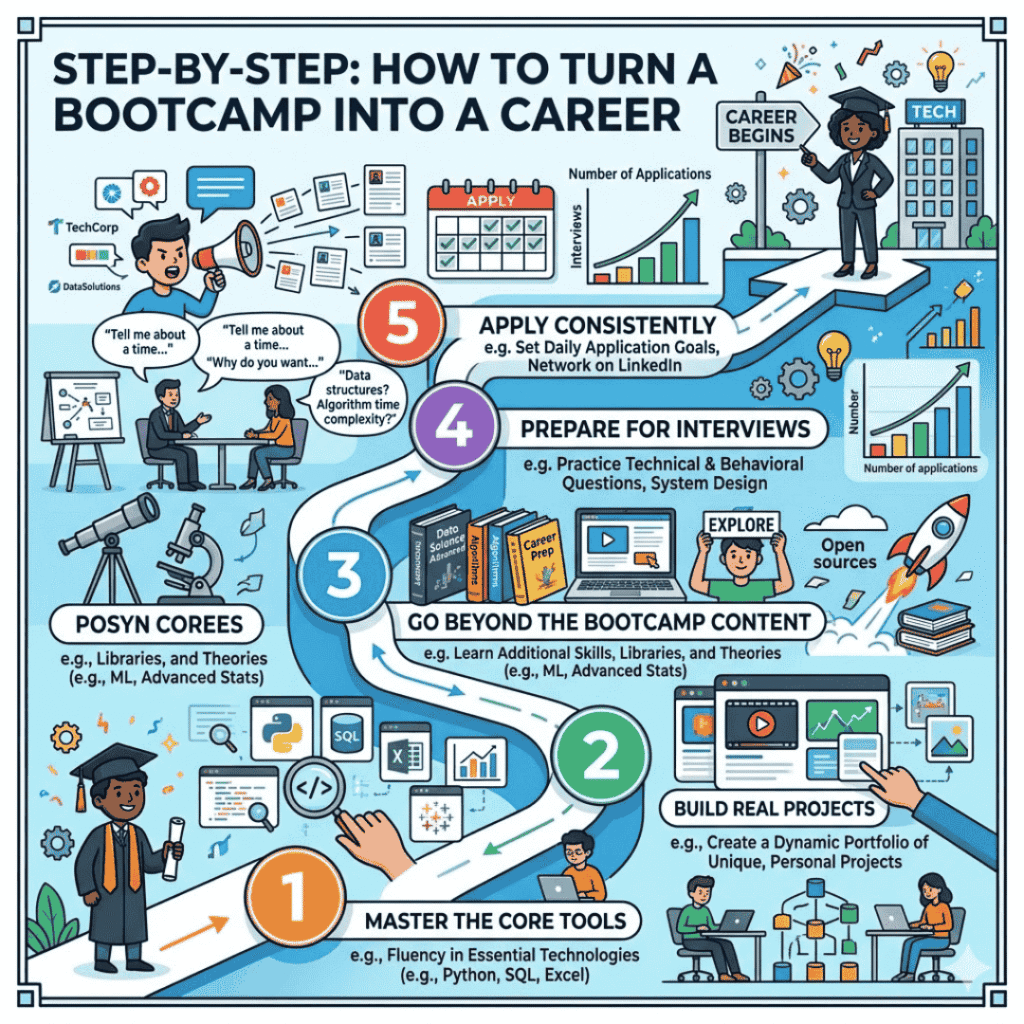
If you’re planning to rely on a Data Analytics Bootcamp, here’s how to make it actually work:
Step 1: Master the Core Tools
Focus on:
- SQL (very important)
- Excel
- One visualization tool (Power BI/Tableau)
Don’t just “complete lessons”; practice queries and dashboards.
Step 2: Build Real Projects (Not Just Course Assignments)
Create at least 2–3 projects like:
- Sales performance dashboard
- Customer churn analysis
- Marketing data insights
In an actual project, the data is messy. That’s where real learning happens.
Step 3: Go Beyond the Bootcamp Content
Honestly, this is where many people stop, and it hurts their chances.
Do extra:
- Practice datasets from Kaggle
- Rebuild dashboards from scratch.
- Try solving real business questions.
Step 4: Prepare for Interviews
Most beginners struggle here.
You need to:
- Please explain your projects clearly.
- Answer SQL questions
- Show business thinking
Bootcamps don’t always cover this deeply.
Step 5: Apply Consistently
Even if you feel “not ready,” start applying.
You’ll learn faster from real interview feedback than endless studying.
Real-World Example (What Actually Happens)
I’ve seen both sides of this.
Case 1:
Someone completed a boot camp in 2 months.
- No extra practice
- Only basic projects
Outcome: Has trouble getting interviews.
Case 2:
Another student finishes that same bootcamp
- Builds 3 strong projects
- Practices SQL daily
- Prepares for interviews
Outcome: Gets a junior analyst position in 3–4 months.
Same bootcamp. Different outcomes
Bootcamp vs Full Data Analytics Course
Here’s a realistic comparison:
| Duration | Short (1–3 months) | Longer (3–6 months) |
| Depth | Moderate | Deep |
| Projects | Limited | More extensive |
| Flexibility | Fast-paced | Flexible |
| Job Readiness | Depends on effort | More structured |
Bootcamps are particularly effective for speed. Full courses are better for depth.
Common Mistakes Beginners Make
Let me be honest; these are super common:
- Thinking of finishing the bootcamp = job-ready
- Not practicing SQL enough.
- Skipping real-world projects
- Avoiding interview prep
- Rushing through content
I’ve seen people complete a data analyst course online in record time… and still feel stuck.
2026 Reality: What Employers Expect Now
Things have changed a bit.
Companies now expect:
- Basic AI tool awareness
- Real-world problem-solving
- Data storytelling skills
It’s no longer sufficient to know only the tools.
And that’s why bootcamps are changing, but you have to double up.
Benefits of Starting with a Bootcamp
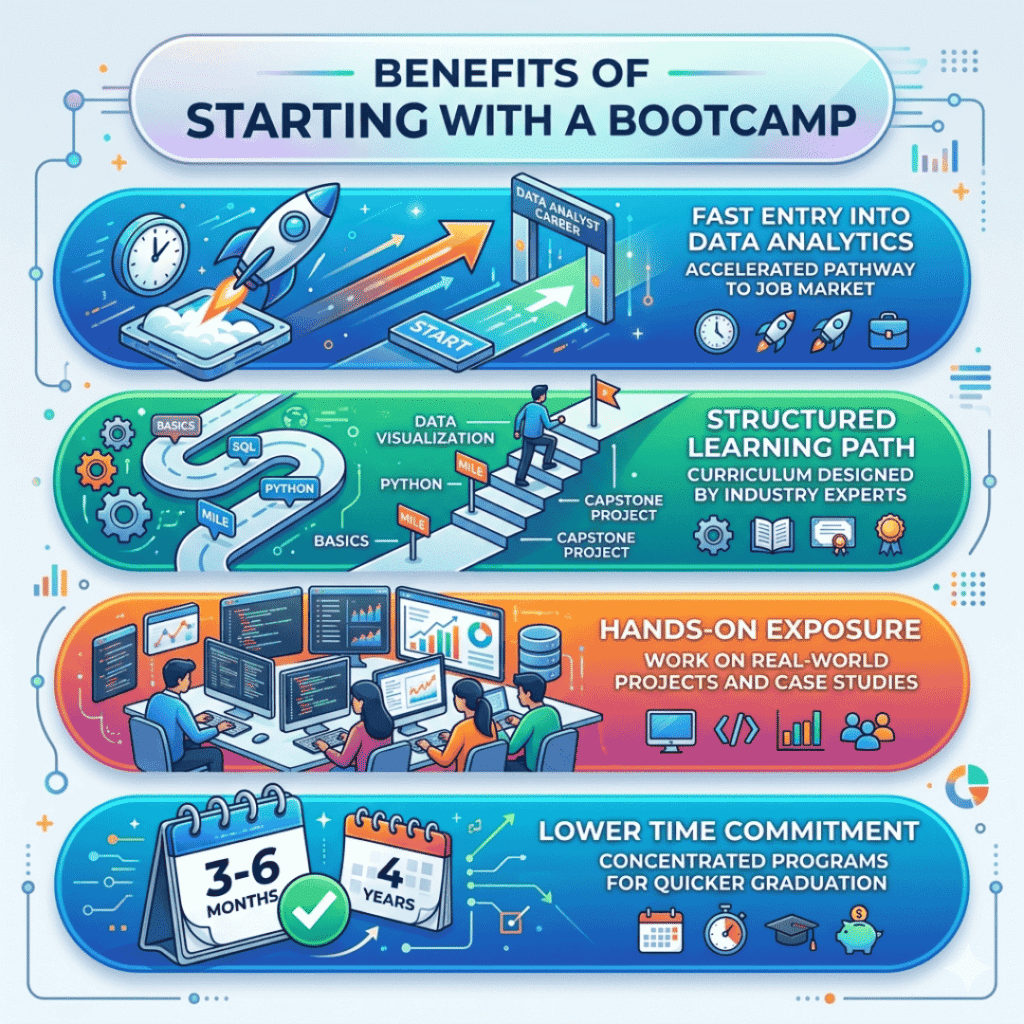
- Fast entry into data analytics
- Structured learning path
- Hands-on exposure
- Lower time commitment
If you’re switching careers or exploring the field, it’s a solid starting point.
When a Bootcamp Is Not Enough
A boot camp alone may not be enough if:
- It lacks real projects.
- There’s no mentorship.
- You don’t practice beyond it.
- You skip interview preparation.
That’s usually where people hit a wall.
TL;DR (Quick Summary)
- Yes, a Data Analytics Bootcamp can start your career.
- But it’s not enough on its own
- Projects + practice + interview prep = success
- Consistency matters more than course type.
Related Topics You Can Explore
- Which Data Analyst Certification Offers the Best Value?
- “How Long Does It Take to Learn Data Analytics?
- “Skills for Data Analysts that will be in Demand by 2026”
Final Thoughts
A data analytics bootcamp is like a launchpad; it gives you direction and momentum.
But you still have to build the rocket.
If you’re serious about turning your passion for this field into a career, don’t stop at the course. If you already practice, build, and apply all day long every day, keep up the outstanding work!
And if you feel like you need more structure or guidance, combining a bootcamp with a deeper data analytics course can make that transition a lot smoother.
FAQs
Can I become a data analyst after completing a bootcamp?
Yes, many beginners transition into data analyst roles after completing a structured bootcamp. A strong foundation in data analysis concepts, real-world projects, and problem-solving skills can improve your chances of getting an entry-level position.
How long does it take to become job-ready after a Data Analytics Bootcamp?
Most learners can become job-ready within a few months with consistent practice. The timeline depends on your learning speed, previous experience, and the amount of time you spend working on projects and improving technical skills.
What skills do I learn in a Data Analytics Bootcamp?
A Data Analytics Bootcamp typically covers data analysis fundamentals, data visualization, reporting, business problem-solving, and tools used by analysts. Many programs also include practical assignments and industry-based projects.
Do I need a technical background to join a Data Analytics Bootcamp?
No, a technical background is not always required. Many bootcamps are designed for beginners, career changers, and professionals from non-technical fields who want to move into data analytics.
Can a Data Analytics Bootcamp help me get a job without experience?
Yes, a bootcamp can help you build the skills and project experience needed for entry-level roles. Creating a portfolio, improving your resume, and preparing for interviews are important steps for candidates without prior experience.