

Database testing is the process of validating the accuracy, consistency, security, and performance of data stored in a database. It ensures that data remains reliable across insert, update, delete, and retrieval operations while meeting performance expectations under real-world workloads. Effective database testing verifies both data integrity and system performance, which are critical for business applications.
What Is Database Testing?
It focuses on validating the backend data layer of an application rather than the user interface. While users interact with forms, APIs, and screens, all business-critical information is stored, processed, and retrieved from databases.
Database testing ensures that:
- Data is stored correctly
- Business rules are enforced at the database level
- Queries return accurate and consistent results
- The database performs efficiently under load
- Security and access controls are enforced
For professionals pursuing QA tester training is a foundational skill because most enterprise defects originate from data inconsistencies rather than UI failures.
Why Database Testing Is Critical in Modern Applications
Modern applications rely heavily on complex data operations. Financial systems, healthcare platforms, e-commerce applications, and analytics tools all depend on accurate and fast data access.
Key reasons This testing is essential:
- Data integrity drives business trust
Incorrect data can lead to compliance issues, financial losses, or operational failures. - Backend defects are costly
Database errors often go unnoticed until production, making them expensive to fix. - Performance impacts user experience
Slow queries and poorly designed indexes degrade application performance. - Automation and analytics depend on clean data
BI tools, dashboards, and machine learning models require reliable datasets.
These realities explain why database testing is emphasized in professional QA Testing courses.
Core Objectives
It is not limited to checking table values. Its objectives are broader and more strategic.
1. Ensuring Data Integrity
- Validate primary key and foreign key relationships
- Ensure constraints and triggers work correctly
- Prevent duplicate, orphaned, or invalid records
2. Validating Business Rules
- Confirm stored procedures and functions enforce logic
- Verify calculations and transformations at the database level
3. Ensuring Transaction Consistency
- Test commit and rollback behavior
- Validate ACID properties during concurrent operations
4. Measuring Performance and Scalability
- Identify slow queries
- Validate indexing strategies
- Ensure acceptable response times under load
Types of Database Testing
It is typically divided into multiple categories, each addressing a specific risk area.
Data Integrity Testing
This ensures that data remains accurate and consistent across operations.
Examples:
- Primary key uniqueness
- Foreign key relationships
- NOT NULL and CHECK constraints
- Default values
CRUD Operation Testing
CRUD stands for Create, Read, Update, and Delete.
Tests include:
- Correct insertion of records
- Accurate data retrieval
- Proper updates without data loss
- Safe deletion without breaking references
Stored Procedure and Trigger Testing
Stored procedures and triggers often contain core business logic.
Validation includes:
- Correct execution based on inputs
- Proper error handling
- Expected output values
- Performance under repeated execution
Database Performance Testing
Performance testing evaluates how well the database handles workload.
Focus areas:
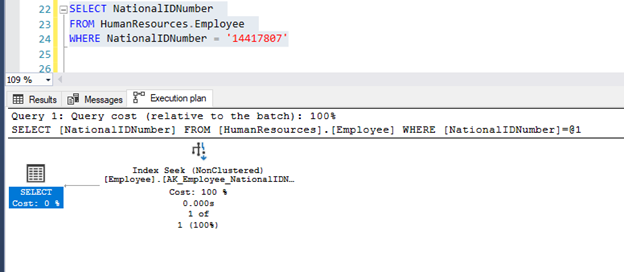
- Query execution time
- Index effectiveness
- Locking and blocking issues
- Connection pooling behavior
Security and Access Control Testing
Security testing ensures sensitive data is protected.
Checks include:
- Role-based access
- Permission restrictions
- Data masking
- SQL injection prevention
Database Testing vs Application Testing
Database testing differs significantly from UI or API testing.
| Aspect | Database Testing | Application Testing |
|---|---|---|
| Focus | Data accuracy and performance | User behavior and workflows |
| Tools | SQL, database clients | Automation frameworks |
| Skills | Queries, schemas, indexing | Functional scenarios |
| Defect impact | High business risk | Often visible to users |
For learners in QA tester training, understanding this distinction helps build well-rounded testing expertise.
Common Database Testing Challenges
Despite its importance, database testing presents several challenges.
Complex Data Relationships
Large systems have hundreds of tables with complex dependencies, making validation difficult.
Limited Database Access
Testers may have read-only access, restricting validation depth.
High Data Volumes
Big datasets make manual verification impractical.
Performance Bottlenecks
Identifying the root cause of slow queries requires strong SQL and database knowledge.
These challenges are why structured QA Testing courses emphasize hands-on database practice.
Database Testing Techniques Used by QA Professionals
Black-Box Database Testing
- Focuses on inputs and outputs
- Validates data changes without knowing internal logic
White-Box Database Testing
- Examines schema, indexes, and stored procedures
- Requires deeper database knowledge
Gray-Box Database Testing
- Combines application behavior with database validation
- Most commonly used in enterprise QA environments
Role of SQL in Database Testing
SQL is the primary language for database testing.
Testers use SQL to:
- Validate inserted and updated records
- Compare expected and actual results
- Identify duplicate or missing data
- Analyze performance issues
Basic SQL skills are a mandatory requirement in professional QA tester training programs.
Database Performance Testing Explained
Database performance directly affects application speed.
Key metrics include:
- Query execution time
- Throughput
- CPU and memory usage
- Disk I/O
Common performance issues:
- Missing indexes
- Inefficient joins
- Excessive locking
- Poor schema design
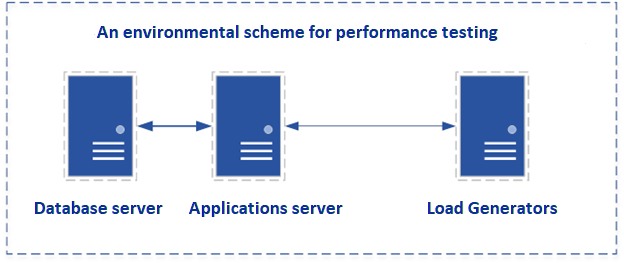
Performance testing ensures the database can scale as user traffic grows.

Data Integrity: The Backbone of Reliable Systems
Data integrity ensures that stored data remains trustworthy throughout its lifecycle.
Key integrity components:
- Entity integrity: Unique identification of records
- Referential integrity: Correct relationships between tables
- Domain integrity: Valid data types and value ranges
Database testing verifies these continuously to prevent corruption and inconsistency.
Automation in Database Testing
While database testing is often manual, automation plays a growing role.
Automated database testing helps with:
- Regression testing of stored procedures
- Repeated validation of large datasets
- Performance benchmarking
Automation complements manual testing and is often introduced in advanced QA Testing courses.
Best Practices for Effective This Testing
- Understand the database schema thoroughly
- Validate data before and after transactions
- Test boundary and negative scenarios
- Use realistic test data
- Monitor performance trends, not just single results
- Collaborate with developers and DBAs
These practices improve defect detection and reduce production risks.
How Database Testing Fits into the QA Career Path
Database testing is a core competency for:
- Manual testers
- Automation engineers
- Data quality analysts
- Performance testers
Professionals with strong database testing skills are often preferred for senior QA roles because they understand system behavior beyond the UI.
This is why database concepts are a consistent part of industry-aligned QA tester training programs.
Database Testing in Agile and DevOps Environments
In Agile and DevOps, database testing must be fast and repeatable.
Common practices include:
- Automated database validations in CI pipelines
- Version-controlled database scripts
- Continuous performance monitoring
QA teams collaborate closely with developers to ensure database changes do not introduce regressions.
Key Tools Used in This Testing
While SQL remains central, testers may use:
- Database clients and query editors
- Performance monitoring tools
- Data comparison utilities
- Test management platforms
Tool knowledge is usually combined with conceptual understanding in professional QA Testing courses.
Real-World Example
Consider an e-commerce application where:
- Orders are placed correctly through the UI
- Inventory updates fail due to a trigger defect
Without This testing, the issue reaches production, causing overselling and customer dissatisfaction.
Database testing detects such issues early by validating backend logic independently of the UI.
Skills Gained Through This Testing
Database testing builds:
- Strong analytical thinking
- SQL proficiency
- Understanding of backend systems
- Attention to data quality
- Performance awareness
These skills are transferable across industries and roles
Conclusion
It plays a critical role in ensuring data integrity, reliability, and performance in modern applications. By validating backend logic, enforcing business rules, and identifying performance bottlenecks, This testing protects organizations from costly data-related failures.
For professionals pursuing QA tester training, mastering database testing strengthens backend understanding and increases career opportunities. Likewise, structured QA Testing courses that emphasize database concepts prepare testers for real-world enterprise challenges where data accuracy and performance are non-negotiable.























19 Responses
Database Testing: Database is used for a long period data storage, standard and organised way of storing process.
Parts of database are data and schema.
Data is information of an entity. Data is stored in table format as rows and columns. Schema contains tables, columns, views, functions, triggers and stored procedures.
Data is information of an entity. Data is stored in table format as rows and columns. Schema contains tables, columns, views, functions, triggers and stored procedures. Database is used for a long period data storage, standard and organised way of storing process. Parts of database are data and schema.
Database testing includes performing data validity, data integrity testing, performance check related to database and testing of procedures, triggers and functions in the database.
Database Testing:
Database is used for a long period data storage, standard and organised way of storing process. Parts of database are data and schema.
Data:
Data is information of an entity. Data is stored in table format as rows and columns.
Schema:
Schema contains tables, columns, views, functions, triggers and stored procedures.
How to test the Schema?
We can test schema by selecting design in tables. The name of every column or field should be appropriate neither too short or neither too long and all the data should match the data type. Check if the primary key is unique.
What is a view?
View is a section of data from a table.
– Database is used for a long period data storage, standard and organised way of storing process. Parts of database are data and schema.
1. Data: Data is information of an entity. Data is stored in table format as rows and columns.
2. Schema: Schema contains tables, columns, views, functions, triggers and stored procedures.
Database is used for a long period data storage, standard and organised way of storing process. Parts of database are data and schema.
Data is information of an entity. Data is stored in table format as rows and columns. Eg: Here we can see the organized structure of data in the form of table ‘Customers’ in MySQL.
Schema contains tables, columns, views, functions, triggers and stored procedures.
Every software application is associated to the database. The database is maintained using a DBMS like MySQL, Oracle or any other DBMS to store all its data .Database is used for a long period data storage, standard and organised way of storing process. Parts of database are data and schema.
Selenium Web Driver is used for testing web applications and operations are performed like submitting information, retrieving data and validating!
Every software very application is associated to the database. The database is maintained using a DBMS like MySQL, Oracle or any other DBMS to store all its data. Selenium Web Driver is used for testing web applications and operations are performed like submitting information, retrieving data and validating them. When there is a need of getting data from the database in selenium scripts, we may use API’s which help to interact with database like JDBC.
Database is used for a long period data storage, standard and organised way of storing process. Parts of database are data and schema.
What is data?
Data is information of an entity. Data is stored in table format as rows and columns.
Eg: Here we can see the organized structure of data in the form of table ‘Customers’ in MySQL.
What is Schema?
Schema contains tables, columns, views, functions, triggers and stored procedures.
How to test the Schema?
We can test schema by selecting design in tables. The name of every column or field should be appropriate neither too short or neither too long and all the data should match the data type. Check if the primary key is unique.
How to test a view?
View is a section of data from a table. The below is a view which shows the order of the customers which can be tested by opening the view design. The name of the view is ordered Products.
1. The design of view shows the products ordered by the customers with the help of information produced by two tables ‘Products’ and ‘Orderdetails’
2. The join in the query above shows the intersection of ‘Products’ table and ‘Orderdetails’ table and finds those products which are present in ‘Orderdetails’ table. When it is executed the result displayed as
For database testing we have to write queries. To test view we have to write a new query, use Select statement check.
Now check stored procedures
We have a name called deletecustomer stored procedures.
1. Insert a customer details in the table using Insert query
2. Test the ‘deletecustomer’ stored procedure by providing the query of delete. Provide the customer id as 4, then execute the statement, the customer id 4 is deleted. Then check the table data using select statement.
Database is used for a long period data storage, standard and organized way of storing process. Parts of database are data and schema.
Data is information of an entity. Data is stored in table format as rows and columns. Eg: Here we can see the organized structure of data in the form of table ‘Customers’ in MySQL.
Database is used for a long period data storage, standard and organized way of storing process. Parts of database are data and schema. Every software application is associated to the database. The database is maintained using a DBMS like MySQL, Oracle or any other DBMS to store all its data. Selenium Web Driver is used for testing web applications and operations are performed like submitting information, retrieving data and validating them. When there is a need of getting data from the database in selenium scripts, we may use API’s which help to interact with database like JDBC.
What is data?
Data is information of an entity. Data is stored in table format as rows and columns. Eg: Here we can see the organized structure of data in the form of table ‘Customers’ in MySQL.
What is Schema?
Schema contains tables, columns, views, functions, triggers and stored procedures.
How to test the Schema?
We can test schema by selecting design in tables. The name of every column or field should be appropriate neither too short or neither too long and all the data should match the data type. Check if the primary key is unique.
How to test a view?
View is a section of data from a table. The below is a view which shows the order of the customers which can be tested by opening the view design. The name of the view is ordered Products The design of view shows the products ordered by the customers with the help of information produced by two tables ‘Products’ and ‘Order details’
The join in the query above shows the intersection of ‘Products’ table and ‘Order details’ table and finds those products which are present in ‘Order details’ table. When it is executed the result displayed as For database testing we have to write queries. To test view we have to write a new query, use Select statement check. Now check stored procedures
We have a name called delete customer stored procedures.
Every software very application is associated to the database. The database is maintained using a DBMS like MySQL, Oracle or any other DBMS to store all its data. Selenium Web Driver is used for testing web applications and operations are performed like submitting information, retrieving data and validating them. When there is a need of getting data from the database in selenium scripts, we may use API’s which help to interact with database like JDBC.
Database Testing:
Database is used for a long period data storage, standard and organized way of storing process. Parts of database are data and schema.
What is data?
Data is information of an entity. Data is stored in table format as rows and columns. Eg: Here we can see the organized structure of data in the form of table ‘Customers’ in MySQL.
A database is an organized collection of structured information, or data, typically stored electronically in a computer system. A database is usually controlled by a database management system (DBMS). Together, the data and the DBMS, along with the applications that are associated with them, are referred to as a database system, often shortened to just a database
What is data?
Data within the most common types of databases in operation today is typically modeled in rows and columns in a series of tables to make processing and data querying efficient. The data can then be easily accessed, managed, modified, updated, controlled, and organized. Most databases use structured query language (SQL) for writing and
querying data.
What is Schema and how to test the Schema?
The schema contains tables, columns, views, functions, triggers, and stored procedures. We can test schema by selecting design in tables. The name of every column or field should be appropriate neither too short nor neither too long and all the data should match the data type. Check if the primary key is unique.
How to test a view?
The view is a section of data from a table. View shows the order of the customers which can be tested by opening the view design. The name of the view is ordered products.
Database Testing
Every software very application is associated to the database. The database is maintained using a DBMS like MySQL, Oracle or any other DBMS to store all its data. Selenium Web Driver is used for testing web applications and operations are performed like submitting information, retrieving data and validating them. When there is a need of getting data from the database in selenium scripts, we may use API’s which help to interact with database like JDBC.
Database Testing:
Database is used for a long period data storage, standard and organized way of storing process. Parts of database are data and schema.
What is Schema?
Schema contains tables, columns, views, functions, triggers and stored procedures.
How to test the Schema?
We can test schema by selecting design in tables. The name of every column or field should be appropriate neither too short or neither too long and all the data should match the data type. Check if the primary key is unique.
How to test a view?
View is a section of data from a table. The below is a view which shows the order of the customers which can be tested by opening the view design. The name of the view is ordered Products.
The design of view shows the products ordered by the customers with the help of information produced by two tables ‘Products’ and ‘Order details’
The join in the query above shows the intersection of ‘Products’ table and ‘Order details’ table and finds those products which are present in ‘Order details’ table. When it is executed, the result displayed as
For database testing we have to write queries. To test view, we have to write a new query, use Select statement check.
Now check stored procedures
We have a name called delete customer stored procedures.
Insert a customer detail in the table using Insert query
Test the ‘delete customer’ stored procedure by providing the query of delete. Provide the customer id as 4, then execute the statement, the customer id 4 is deleted. Then check the table data using select statement.
What is data?
Data is information of an entity. Data is stored in table format as rows and columns. E.g.: Here we can see the organized structure of data in the form of table ‘Customers’ in MySQL.
Database is used for a long period data storage, standard and organized way of storing process. Parts of database are data and schema. Data is information of entity. Data is stored in table format as rows and columns. Schema contains tables, columns, views, functions, triggers and stored procedures.
Database Testing: Database is used for a long period data storage, standard and organized way of storing process.
Parts of database are data and schema.
Data is information of an entity. Data is stored in table format as rows and columns. Schema contains tables, columns, views, functions, triggers and stored procedures. We can test schema by selecting design in tables. The name of every column or field should be appropriate neither too short or neither too long and all the data should match the data type. Check if the primary key is unique.
The database is maintained using a DBMS like MySQL, Oracle or any other DBMS to store all its data. Selenium Web Driver is used for testing web applications and operations are performed like submitting information, retrieving data and validating them. When there is a need of getting data from the database in selenium scripts, we may use API’s which help to interact with database like JDBC.
Database is used for a long period data storage, standard and organised way of storing process. Parts of database are data and schema.
Data is information of an entity. Data is stored in table format as rows and columns.
Database is used for a long period data storage, standard and organized way of storing process. Parts of database are data and schema.
Data is information of an entity. Data is stored in table format as rows and columns.
Schema contains tables, columns, views, functions, triggers and stored procedures.
We can test schema by selecting design in tables. The name of every column or field should be appropriate neither too short or neither too long and all the data should match the data type. Check if the primary key is unique.
View is a section of data from a table.