

Introduction to Dependency Testing
In the realm of software quality assurance (QA), ensuring the functionality of applications is not just about testing individual components or modules. It’s also crucial to examine how these components interact with each other and other systems. This is where Dependency testing comes into play.
Dependency testing focuses on verifying that the interdependencies between various components, modules, and systems work as expected. As software systems grow more complex, with multiple integrated parts and external interfaces, ensuring that all dependencies function correctly becomes a critical aspect of the testing process.
This blog will explore the significance of dependency testing, its methodologies, and why it’s a vital skill for QA testers. Additionally, we’ll discuss the best QA testing training programs that can equip you with the necessary skills to master this type of testing.
What Is Dependency Testing?
Dependency testing is a form of testing that verifies how different parts of a software system interact with each other. In any complex software system, various components are often dependent on others, both internally (e.g., modules or functions) and externally (e.g., APIs, databases, and third-party services). These interdependencies must be tested to ensure that the software performs as expected in real-world scenarios.
For example, in an e-commerce platform, the payment gateway depends on the inventory system to confirm product availability. If there’s a dependency failure in this interaction, it could lead to customer dissatisfaction or, worse, a financial loss.
Dependency testing goes beyond simple unit testing or functional testing because it checks how the individual parts of the software collaborate and communicate. It ensures that these interdependencies, whether between modules or systems, work smoothly under different conditions.
Why Is Dependency Testing Important?
- Increased Complexity of Modern Software Systems:
As software systems become more complex and modular, the interactions between different components grow. Dependency testing helps identify potential failures that could arise from these interactions. For instance, a microservices-based application may have numerous interdependent services, each requiring thorough testing to ensure that they communicate properly. - Preventing Integration Issues:
Integrating different components, libraries, or systems can lead to unforeseen issues if dependencies aren’t tested. Dependency testing catches these problems before the software is deployed, reducing the risk of integration failures in production. - Ensuring System Reliability:
Dependencies often include third-party services, which may not be under the direct control of the development team. Ensuring that these services or libraries interact correctly with your system is vital for maintaining overall system reliability. - Faster Time to Market:
By catching issues early in the development process, dependency testing helps prevent costly delays. This allows the development team to resolve potential issues before they escalate, resulting in faster deployment cycles.
Types of Dependencies in Software
Understanding the different types of dependencies that can exist in a system is essential for effective dependency testing. Some common types of dependencies include:
- Module or Component Dependencies:
This type of dependency arises when one module or component of a software system relies on the functionality of another module. For example, in a web application, the user authentication module might depend on a session management module. - Data Dependencies:
Data dependencies occur when different parts of a system rely on shared data sources. For example, a reporting module may depend on data collected by the analytics module. Dependency testing ensures that the flow of data between these modules works seamlessly. - Service Dependencies:
Many modern applications rely on external services, such as APIs or third-party platforms. Service dependencies need to be tested to verify that the application can handle the integration correctly. For example, an online travel booking system may depend on a flight service provider’s API. - Configuration Dependencies:
Configuration settings can also create dependencies. For instance, a configuration file may control the behavior of various modules or services within the application. If there are errors in the configuration, it can affect the behavior of the entire system. - Hardware/Software Dependencies:
In some applications, specific hardware or software environments are required for proper functioning. For instance, a high-performance application may depend on specific hardware configurations. Dependency testing ensures that these dependencies are met.
How Dependency Testing Works
Dependency testing involves verifying that all the dependent components or services are available and functioning as expected. The testing approach can vary depending on the nature of the dependencies, but it generally involves the following steps:
- Identify Dependencies:
The first step in dependency testing is identifying all the components, modules, and services that the software depends on. This includes internal and external dependencies, such as databases, APIs, and third-party services. - Create Dependency Mapping:
Once dependencies are identified, creating a dependency map is crucial. This map visually represents the relationships between components and shows how data and functions flow across the system. A well-designed map helps testers understand how failures in one part of the system can affect other parts. - Simulate Dependencies:
Often, dependency testing involves simulating the behavior of dependent components to observe how the system reacts. This could mean mocking external services or creating test environments that simulate third-party services. - Verify Dependency Behavior:
With the dependencies identified and mapped, testers verify that they behave as expected under different conditions. This could involve checking the response times of external APIs, verifying data integrity between different modules, or simulating network failures to observe how the system recovers. - Monitor and Report:
As with any testing phase, monitoring the behavior of the software and documenting the results is vital. If issues arise with the dependencies, these should be reported to the development team with detailed information, such as the nature of the issue, the affected components, and potential solutions.
Dependency Testing Techniques
There are several techniques used for dependency testing, each aimed at testing different aspects of the system’s dependencies.
- Stubbing and Mocking:
In situations where external services are involved, stubbing and mocking can be used to simulate the behavior of these services. This allows testers to isolate specific components of the system and verify that the internal components handle dependencies correctly. - Load and Performance Testing:
Some dependencies, especially external services, can affect the performance of the entire system. Load testing can simulate heavy usage and ensure that dependencies, such as APIs or databases, can handle large volumes of requests without causing failures. - Regression Testing:
Whenever a new component is integrated into the system or a dependency is updated, regression testing ensures that the change doesn’t break existing functionality. This is especially important for identifying issues caused by changes to dependencies. - End-to-End Testing:
End-to-end testing ensures that all dependencies work together seamlessly to support the system’s overall functionality. It tests the software in a real-world scenario, ensuring that all components, modules, and external services function as a cohesive unit.
The Role of QA Testers in Dependency Testing
QA testers play a critical role in dependency testing by identifying potential issues that can arise from the interaction between different parts of the system. Their responsibilities include:
- Creating Test Scenarios:
Testers create test cases that specifically address different dependencies and ensure that they behave as expected in various scenarios. - Simulating Real-World Conditions:
By simulating real-world scenarios, such as system failures or network issues, testers can identify how the system reacts to dependency failures. - Collaboration with Developers:
QA testers must work closely with developers to ensure that all dependencies are correctly identified and mapped. This collaboration ensures that the testing process is thorough and efficient.
How QA Testing Training Can Help
Mastering dependency testing requires a solid understanding of QA methodologies and tools. A QA testing training program will equip you with the necessary skills to conduct effective dependency testing and understand the broader context of software testing.
A course for QA testers will typically cover the following key areas relevant to dependency testing:
- Software Testing Fundamentals:
Understanding basic testing concepts such as functional, integration, and system testing. - Advanced Testing Techniques:
Learning advanced techniques like mocking, stubbing, load testing, and regression testing, which are essential for effective dependency testing. - Real-World Testing Scenarios:
Hands-on practice with real-world testing scenarios, including dependency testing in complex systems. - Tools and Frameworks:
Gaining proficiency in testing tools like Selenium, JUnit, TestNG, and others that are commonly used in dependency testing. - Collaboration Skills:
Learning how to work effectively with developers and other stakeholders to ensure that all dependencies are tested comprehensively.
Conclusion
Dependency testing is an essential aspect of the QA process that ensures the smooth interaction of components within complex software systems. By mastering this testing methodology, QA testers can help prevent integration issues, improve system reliability, and enhance the overall user experience.
For anyone looking to specialize in this area, enrolling in QA testing training courses is a great way to gain the necessary skills. With the right knowledge and tools, you can ensure that your software not only functions well in isolation but also operates seamlessly in a connected and interdependent environment.


























11 Responses
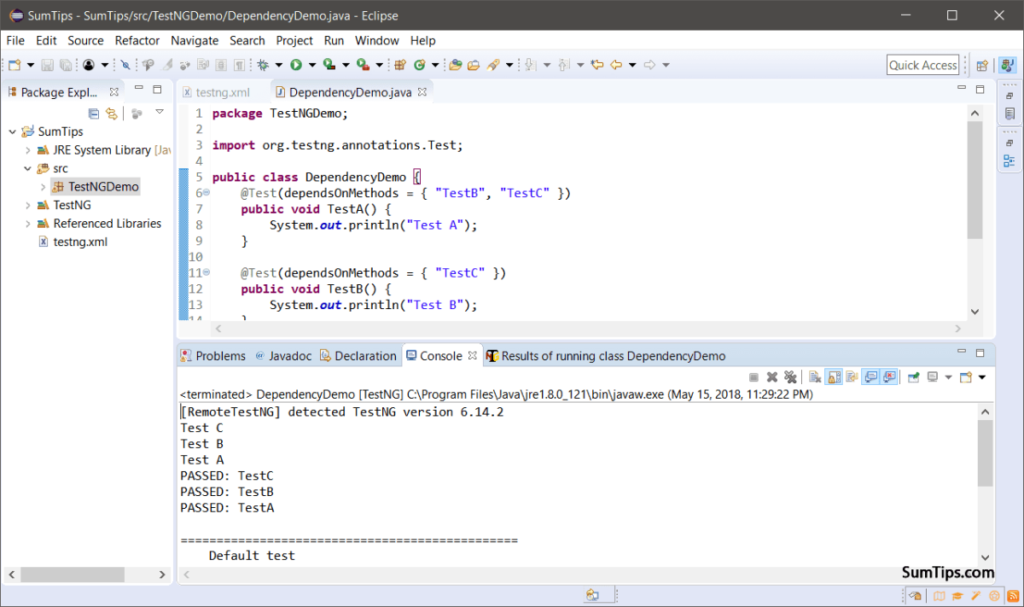
Dependency Testing is a technique in which an application’s requirements are pre-examined for an existing software, initial states in order to test the proper functionality. Dependency Testing allows single test method which depends on one or more test methods. It becomes very important when our program relies on ordering of test. Good example is a launching a web server would definitely execute before deploying code to an environment. If launching a web server fails, then there is no server for testing the application.
Dependency Testing, a testing technique in which an application’s requirements are pre-examined for an existing software, initial states in order to test the proper functionality.
dependency testing it is a testing technique in which an application’s requirements are pre-examined for an existing software, initial states to test the proper functionality. Dependency testing is done in using testNG, using some method. How testNG can handle one method to depends on another method. The depends on methods attribute is an attribute of @test annotation. TestNG enables our program to say an array representing a Test method depends on.
Dependency Testing, it is a testing technique in which an application’s requirements are pre-examined for an existing software, initial states in order to test the proper functionality. Dependency Testing allows single test method which depends on one or more test methods. This is important feature when our program relies on ordering of test. Test Method such as launching a web server must execute before deploying code to an environment.
Dependency Testing, a testing technique in which an application’s requirements are pre-examined for an existing software, initial states in order to test the proper functionality. The impacted areas of the application are also tested when testing the new features or existing features.
Dependency testing ,it is a testing technique in which requirements of applications are pre examined for an existing software ,intial states in order to test the proper fuctionality.
it allows sigle testing method which depends on one or more test method .
Dependency test is a testing technique in which pre requirements for the software under test is tested in order to achieved the desired functionality.
Dependency Testing, a testing technique in which an application’s requirements are pre-examined for an existing software in order to achieve desired functionalities. Under dependency testing, one functionality of an application will depend on other. So, while we test the new functionality of an application, we also test the impacted area of the application.
Dependency Testing is a technique in which an application’s requirements are pre-examined for an existing software, initial states in order to test the proper functionality. Dependency Testing allows single test method which depends on one or more test methods. It becomes very important when our program relies on ordering of test. Good example is a launching a web server would definitely execute before deploying code to an environment. If launching a web server fails, then there is no server for testing the application.
Dependency Testing is a testing technique in which an application’s requirements are pre-examined for an existing software, initial states in order to test the proper functionality. Dependency Testing allows the single test method which depends on one or more test methods. This is an important feature when the program relies on ordering of test. Test Methods must execute before deploying code to an environment.
Dependency Testing, it is a testing technique in which an application’s requirements are pre-examined for an existing software, initial states in order to test the proper functionality. Dependency Testing allows a single test method which depends on one or more test methods. This is an important feature when our program relies on ordering of tests. Test Methods such as launching a web server must execute before deploying code to an environment.