Introduction: Why DevOps Security Integration Matters Today
Modern software moves fast. Teams deploy code many times a day. Cloud platforms scale systems in minutes. This speed creates risk if teams ignore security. DevOps Security solves this problem by embedding security into every stage of delivery. Many breaches happen because teams test security too late or monitor systems too weakly. DevOps Security addresses this gap by balancing prevention and detection. Organizations now adopt two key approaches: shift-left controls and shift-right controls. Both play different roles, and both matter. This guide explains DevOps Security in clear terms. It compares shift-left and shift-right controls with real examples. It also shows how these skills connect to azure devops training, AWS Devops Training, and devops and aws training paths.
What Is DevOps Security?
DevOps Security means integrating security practices into DevOps workflows. Teams treat security as a shared responsibility, not a final checklist. Engineers build, test, deploy, and monitor security continuously. DevOps Security focuses on three goals:
- Prevent vulnerabilities early
- Detect threats quickly in production
- Respond fast with automation
DevOps Security replaces slow manual reviews with automated checks inside pipelines. It aligns developers, operations, and security teams under one process.
Why Traditional Security Models Fail in DevOps
Traditional security models rely on late-stage audits. Security teams review code after development ends. This approach worked for slow release cycles. It fails in modern CI/CD pipelines. Key problems include:
- Late discovery of vulnerabilities
- Costly fixes close to release
- Poor visibility into runtime threats
- Tension between security and delivery teams
DevOps Security fixes these issues by moving controls earlier and extending visibility later.
Understanding Shift-Left and Shift-Right in DevOps Security
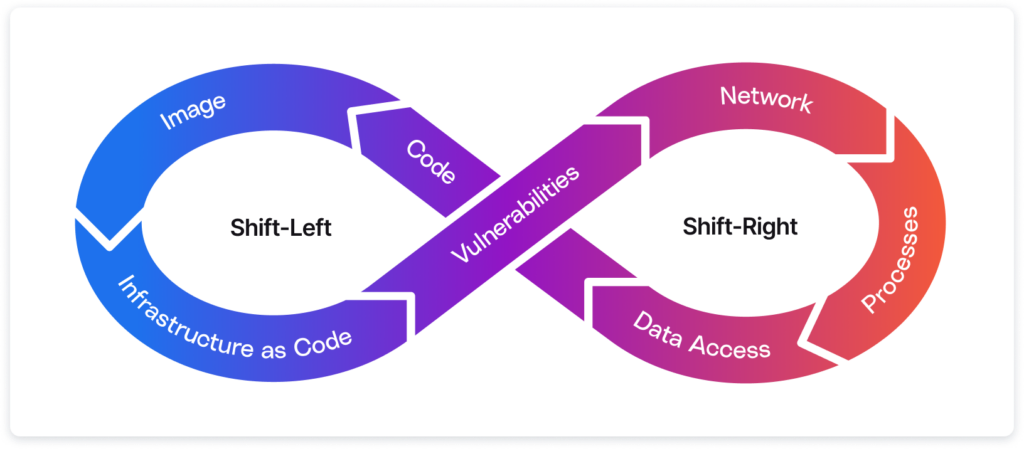
Shift-left and shift-right describe where security controls operate in the lifecycle.
- Shift-left focuses on prevention before deployment
- Shift-right focuses on detection and response after deployment
DevOps Security succeeds when teams apply both together.
Shift-Left Controls Explained
Shift-left controls move security checks closer to developers. Teams detect issues before code reaches production.
Core Goal of Shift-Left DevOps Security
The goal is simple: stop vulnerabilities early. Fixing a flaw during coding costs far less than fixing it after release. DevOps Secure uses automation to make this practical.
Key Shift-Left Security Practices
1. Secure Coding Standards
Teams define clear coding rules. Developers follow secure patterns by default. Linters and IDE plugins enforce these rules automatically.
2. Static Application Security Testing (SAST)
SAST scans source code for flaws. Tools detect issues like injection risks or weak cryptography. DevOps Secure integrates SAST into pull requests.
3. Software Composition Analysis (SCA)
Most apps use open-source libraries. SCA scans dependencies for known vulnerabilities. DevOps Security blocks builds when high-risk libraries appear.
4. Infrastructure as Code Scanning
Teams define infrastructure using code. Tools scan Terraform or ARM templates for misconfigurations. DevOps Sec prevents unsafe cloud setups before deployment.
Shift-Left Example in a CI/CD Pipeline
Scenario: A fintech team uses Azure DevOps.
Step-by-step flow:
- Developer commits code
- Pipeline triggers SAST and SCA scans
- Pipeline fails if severity exceeds policy
- Developer fixes issues before merge
This approach saves time and reduces risk. DevOps becomes part of daily development work.
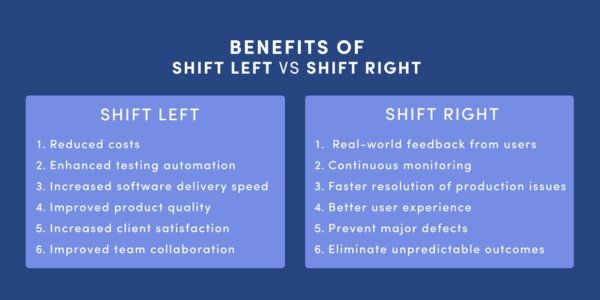
Benefits of Shift-Left DevOps Security
- Lower cost of fixing issues
- Faster release cycles
- Strong security awareness among developers
- Fewer production incidents
Shift-left DevOps Security builds quality into code from day one.
Limitations of Shift-Left Controls
Shift-left alone does not solve everything.
- Some threats appear only at runtime
- Misuse of APIs may bypass static checks
- Insider threats emerge after deployment
DevOps Sec needs runtime visibility to stay effective.
Shift-Right Controls Explained
Shift-right controls operate in production. They monitor systems, detect attacks, and support fast response.
Core Goal of Shift-Right DevOps Security
The goal is visibility and resilience. DevOps assumes some risks will reach production. Teams prepare to detect and respond quickly.
Key Shift-Right Security Practices
1. Dynamic Application Security Testing (DAST)
DAST tests running applications. It simulates real attacks against live endpoints. DevOps Sec uses DAST in staging or production safely.
2. Runtime Application Self-Protection (RASP)
RASP tools run inside applications. They block attacks in real time. DevOps uses RASP to reduce exploit impact.
3. Cloud Security Posture Management (CSPM)
CSPM monitors cloud accounts for misconfigurations. DevOps Security alerts teams when exposure appears after deployment.
4. Security Monitoring and SIEM
Logs, metrics, and alerts feed into SIEM systems. DevOps teams track anomalies and respond fast.
Shift-Right Example in Production
Scenario: An e-commerce platform runs on AWS.
Step-by-step flow:
- Application logs user activity
- SIEM detects unusual API calls
- Alert triggers automated response
- System blocks IP and scales safely
This approach limits damage and improves resilience. DevOps supports business continuity.
Benefits of Shift-Right DevOps Security
- Real-time threat detection
- Faster incident response
- Better understanding of attack patterns
- Improved system reliability
Shift-right DevOps Sec keeps systems safe after release.
Limitations of Shift-Right Controls
- Does not prevent all vulnerabilities
- Requires mature monitoring skills
- Can increase operational cost
DevOps Sec needs prevention and detection together.
Shift-Left vs Shift-Right: A Direct Comparison
| Aspect | Shift-Left | Shift-Right |
|---|---|---|
| Focus | Prevention | Detection & response |
| Stage | Development | Production |
| Tools | SAST, SCA, IaC scan | SIEM, DAST, RASP |
| Cost impact | Lower fix cost | Lower breach impact |
| Team role | Developers | Ops and security |
DevOps uses both to create balance.
Why Modern DevOps Security Needs Both
Industry studies show that no single control stops all attacks. Reports consistently show that early testing reduces vulnerabilities, while runtime monitoring limits breach impact.
DevOps Security works best when teams:
- Prevent known issues early
- Monitor unknown threats later
- Automate responses across stages
This balanced model supports scale and speed.
Mapping DevOps Security to Cloud Platforms
DevOps Security in Azure DevOps
Azure pipelines support built-in security scanning. Teams integrate SAST, SCA, and policy gates. Runtime monitoring connects with Azure Monitor and Sentinel. These skills form a core part of Azure devops training.
DevOps Security in AWS
AWS supports native security services for runtime monitoring. Teams combine CI/CD scans with cloud posture checks. This approach aligns closely with aws devops training and enterprise cloud roles.
Tools Commonly Used in DevOps Security
Shift-left tools:
- Code scanners
- Dependency checkers
- Infrastructure policy engines
Shift-right tools:
- Monitoring platforms
- SIEM solutions
- Runtime protection agents
Learning how these tools work together is central to any devops engineer course.
Hands-On: Simple Shift-Left Pipeline Example
steps:
- task: SASTScan@1
- task: DependencyCheck@1
- task: IaCScan@1
This pipeline enforces DevOps Security before deployment. Teams fail fast and fix early.
Hands-On: Simple Shift-Right Monitoring Flow
Application Logs → SIEM → Alert → Automated Response
This flow shows how DevOps Security detects and responds in real time.
Career Skills Built Through DevOps Security
DevOps skills improve career value. Employers seek engineers who understand prevention and monitoring.
You gain:
- Secure CI/CD design skills
- Cloud security awareness
- Incident response knowledge
- Automation and policy experience
These skills align strongly with devops courses and advanced cloud roles.
Long-Term Impact of DevOps Security Adoption
Organizations that adopt DevOps Security see:
- Fewer critical incidents
- Faster recovery times
- Better compliance outcomes
- Stronger customer trust
DevOps becomes a business advantage, not a blocker.
Key Takeaways
- DevOps Security integrates protection across the lifecycle
- Shift-left focuses on prevention during development
- Shift-right focuses on detection and response in production
- Both approaches work best together
- Cloud platforms rely heavily on this balance
Conclusion
Build real-world DevOps Sec skills with hands-on labs and guided projects.
Enroll in H2KInfosys DevOps programs today to advance your cloud and security career.