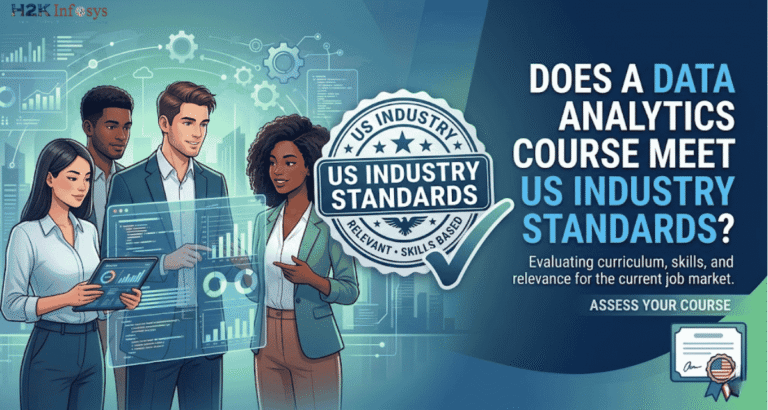
Let’s Be Honest About Data Analyst Online Classes
Here’s the thing… a lot of data analytics course look impressive on the surface. Fancy curriculum, big promises, maybe even a certificate at the end.
But when it comes to actually applying for jobs? That’s where reality kicks in.
I’ve seen people finish a course and still feel stuck like, “Okay… I learned something, but can I actually do the job?”
And honestly, that’s a fair question.
Because US companies don’t really care how many hours of video you watched. They care about whether you can:
- Pull data using SQL
- Clean messy datasets (which is most of the job, by the way)
- Build dashboards
- Explain what the numbers actually mean
If a course doesn’t train you for that… it’s missing the point.
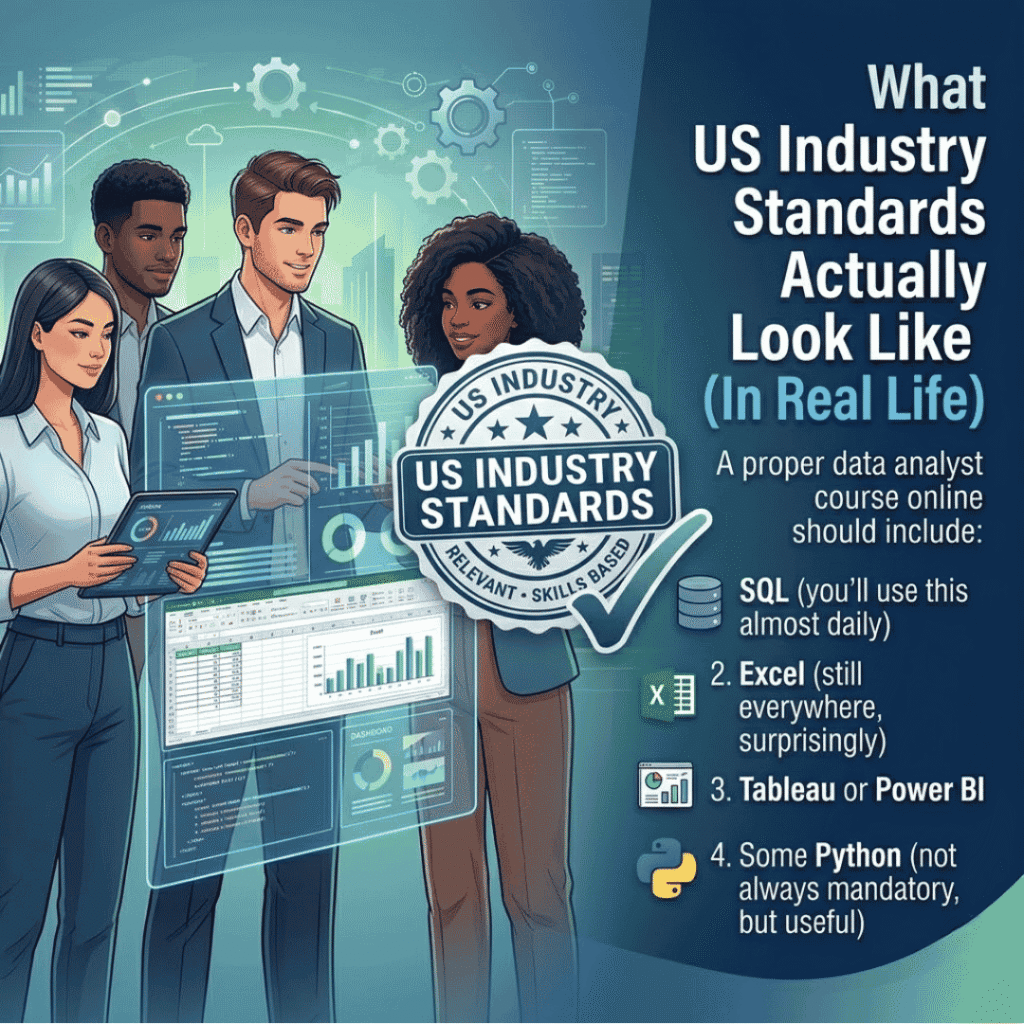
What US Industry Standards Actually Look Like (In Real Life)
People throw around the phrase “industry standard” a lot. But what does it really mean?
From what I’ve seen and from conversations with folks already working in the field it comes down to a few practical things.
You’re Using the Same Tools Companies Use
No shortcuts here.
A proper data analyst course online should include:
- SQL (you’ll use this almost daily)
- Excel (still everywhere, surprisingly)
- Tableau or Power BI
- Some Python (not always mandatory, but definitely useful)
A friend of mine joined a healthcare analytics team last year, and guess what? His first two weeks were just SQL queries and Excel reports. No advanced AI, no complex models just solid basics done well.
That’s the job.
You Actually Build Things (Not Just Watch)
This is where a lot of data analytics course fall apart.
Watching someone else analyze data ≠ knowing how to do it yourself.
Good courses will make you:
- Work on real datasets
- Solve messy, imperfect problems
- Create dashboards from scratch
- Explain your findings
If you don’t walk away with 2–3 solid projects, it’s going to be tough to convince employers you’re ready.
You Learn How to Think Like an Analyst
This part doesn’t get enough attention.
Being a data analytics course isn’t just “numbers and charts.” It’s more like:
“What is the business trying to solve and what does the data say about it?”
For example, instead of just reporting:
- “Sales dropped last quarter”
You’d go a step further:
- “Sales dropped mainly due to reduced repeat customers; maybe we should look at retention strategies.”
That extra layer? That’s what hiring managers notice.
What’s Changed Recently (2026 Trends)
There’s definitely been a shift.
A few years ago, having a degree or certificate might’ve been enough to get your foot in the door. Now? Not really.
What matters more today:
- A strong portfolio
- Practical skills
- Real-world project experience
Companies are moving faster, and they want people who can contribute quickly even at entry level.
So yeah, the bar is different now.
So… Do These data analytics course Really Prepare You?
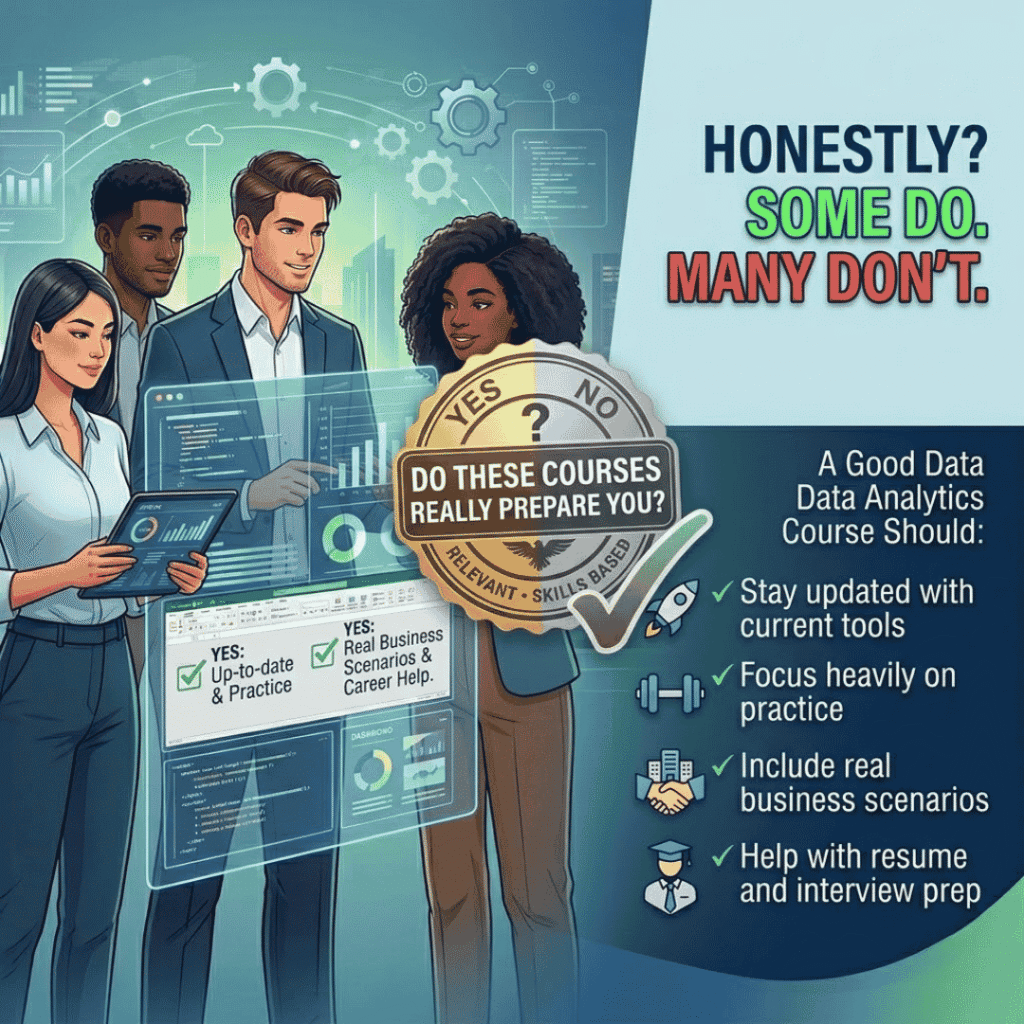
Honestly? Some do. Many don’t.
A good data analytics course should:
- Stay updated with current tools
- Focus heavily on practice
- Include real business scenarios
- Help with resume and interview prep
If it’s missing those pieces, you might learn concepts, but you won’t feel job-ready.
Why Structured Learning Still Helps (Even If You’re Self-Learning)
You can learn everything online for free. No doubt about it.
But here’s what usually happens (and I’ve been there too):
- You jump between YouTube videos
- You’re not sure what to learn next
- You don’t get feedback
- You lose momentum
That’s where structured programs come in.
Platforms like H2K Infosys, for example, focus more on how things actually work in US companies. Not just theory, but real-time project exposure and job-focused training.
And that makes a difference.
It’s less about “learning everything” and more about learning the right things in the right order.
What You Actually Gain From a Good Course
If you pick the right data analytics course, you’re not just collecting knowledge you’re building something useful.
You’ll end up with:
- Hands-on experience
- A portfolio you can show in interviews
- Confidence working with real tools
- A clearer idea of how businesses use data
Career-wise, you’re looking at:
- Data Analyst roles
- Business Analyst positions
- Reporting or BI roles
Salary range (US):
- Entry level: around $65K–$85K
- With some experience: $90K+
Demand is still strong, especially with companies leaning more into data-driven decisions.
Mistakes I See People Make (A Lot)
Just to save you some time:
- Picking a course just because it’s cheap
- Skipping SQL (this one hurts later)
- Not doing projects seriously
- Relying only on certificates
- Expecting quick results without practice
A course helps but you still have to put in the work.
If You’re Thinking About Starting
If you’re serious about getting into this field, don’t just look for “any” data analytics course
Look for one that:
- Feels practical
- Includes real-world projects
- Prepares you for interviews
Structured training like what H2K Infosys offers can really help if you want something closer to actual US job expectations.
FAQs
Are data analytics course enough to get hired?
They can be but only if they include real projects and hands-on practice.
How long does it take to become job-ready?
Usually 3 to 6 months, depending on how consistently you practice.
Do employers care about certifications?
Not much. They care more about what you can actually do.
Is coding required for a data analytics course?
SQL is essential. Python helps but isn’t always required at the entry level.
What should I focus on first?
Start with SQL and Excel; they form the base of most analyst roles.
You Might Also Want to Explore
If you’re going deeper into this, these topics can really help:
- Building a data analyst portfolio that actually gets noticed
- Real SQL interview questions and how to solve them
- Choosing between Tableau and Power BI
Final Thoughts
So yeah a data analytics course can meet US industry standards… but only if it’s built the right way.
If it’s practical, hands-on, and aligned with real job tasks, you’re on the right track.
If not, you might just end up with notes and no confidence.
If I had to give one simple takeaway?
Focus less on the data analytics course and more on what you can actually do with the skills.
That’s what gets you hired.